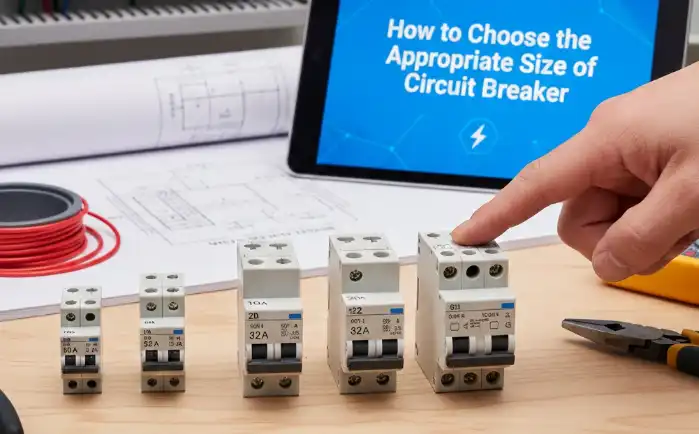
Choosing the right size of circuit breaker is essential for keeping your system safe. Start by adding up the total amps used by devices. This number indicates how much power the breaker needs to handle. Select a breaker that supports 125% of the regular load. This extra capacity helps prevent overheating and reduces fire risks. Always adhere to safety rules and local electrical codes. These steps not only protect your home but also ensure compliance with regulations.
Key Takeaways
- Add up the amps your devices use to find the right breaker size.
- Pick a breaker 125% bigger than the continuous load to stop overheating.
- Follow local electrical rules to keep your system safe and legal.
- For devices that need more power to start, use a breaker rated higher than the normal amps.
- Ask a licensed electrician for help with tricky setups to stay safe.
Safety notice — general information only: This article provides general guidance and is not a substitute for legal or manufacturer requirements. Always follow the applicable edition of the NEC (or your local code) and device nameplate ratings. For motor/HVAC equipment verify MCA/MOCP on the nameplate. If unsure, hire a licensed electrician.
Understanding the Size of Circuit Breaker
What does a circuit breaker rating mean?
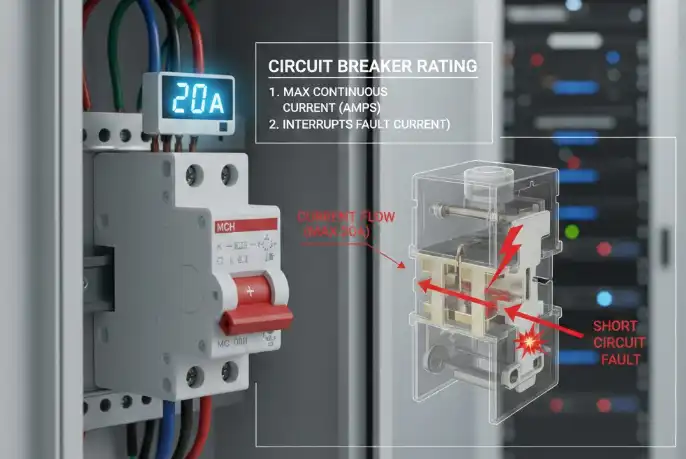
A circuit breaker rating shows the highest current it can handle. This current is measured in amps and prevents overheating or failure. It’s important to match the breaker to your system’s needs. For example, if your devices use 20 amps, pick a breaker rated for at least 20 amps.
Circuit breakers also stop high fault currents during short circuits. This protects your system from major damage. Other features like voltage ratings ensure the breaker works in different situations.
| Parameter | Meaning |
|---|---|
| Rated Voltage Ue | The voltage the breaker is designed for, based on poles. |
| Rated Insulation Voltage Ui | The highest voltage the breaker can safely handle. |
| Rated Impulse Withstand Voltage Uimp | The voltage the breaker can resist during sudden surges. |
| Rated Current Ie | The current the breaker can handle with its rated voltage. |
| Ultimate Short-Circuit Breaking Capacity Icu | The largest short-circuit current the breaker can stop safely. |
| Operational Short-Circuit Breaking Capacity Ics | The short-circuit current the breaker handles during normal use. |
| Short-Time Withstand Current Icw | The current the breaker can handle briefly without damage. |
The 80% rule for continuous loads
The 80% rule keeps your breaker safe during long use. Continuous loads are devices that run for three hours or more, like heaters or air conditioners. Use only 80% of the breaker’s rated amps for these loads.
For example, a 20-amp breaker can handle up to 16 amps safely. This prevents overheating and helps the breaker last longer. Always check your device’s amperage to stay within this limit.
Why proper sizing ensures safety and efficiency
Picking the right breaker size keeps your system safe and working well. A breaker that’s too small may trip often, causing interruptions. A breaker that’s too big might miss faults, leading to fires or damage.
Correct sizing also follows safety rules like the National Electrical Code (NEC). These rules help prevent dangers and keep your system reliable. Use tools like clamp meters or check appliance labels to measure amps correctly.
Calculating Amperage Rating for Your Circuit Breaker
Finding device wattage and voltage
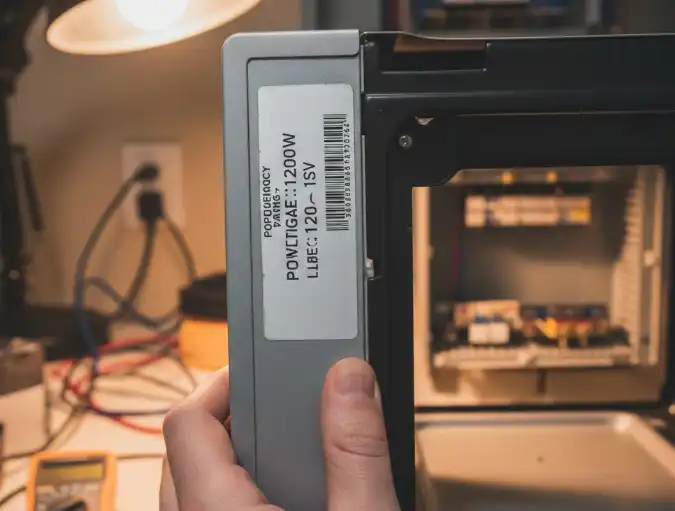
To figure out the right breaker size, first find the wattage and voltage of each device. Look at the appliance’s label or manual for this information. For example, a microwave might say it uses 1,200 watts and 120 volts. If wattage isn’t listed, check for amps and voltage instead. These details help you know how much power your devices need.
Formula: Watts ÷ Volts = Amps
After finding wattage and voltage, use this formula to calculate amps:
Amps = Watts ÷ Volts
This tells you how much current each device uses. Here’s an example:
- Find the wattage of the device. Let’s say a heater uses 1,500 watts.
- Check the voltage. Most U.S. homes use 120 volts.
- Divide wattage by voltage. For the heater:
1,500W ÷ 120V = 12.5A
This means the heater uses 12.5 amps. Do this for every device on the circuit.
Adding up all device amperages
Once you know the amps for each device, add them together. For example:
- A microwave uses 1,200 watts at 120 volts:
1,200W ÷ 120V = 10A - A refrigerator uses 800 watts at 120 volts:
800W ÷ 120V = 6.67A - A heater uses 1,500 watts at 120 volts:
1,500W ÷ 120V = 12.5A
Add these numbers:
10A + 6.67A + 12.5A = 29.17A
Example (compliant): don’t simply sum device currents and upsize. Per NEC 210.20(A), apply 125% only to the continuous portion (loads ≥3 hours). For a kitchen small‑appliance branch (20 A dedicated circuit) you must use 12 AWG conductors and terminals rated for 20 A — you do not add multiple appliance nameplate currents to justify a larger OCPD. If a continuous load exists on a general branch, size conductor ampacity = 125% of that continuous load and select the OCPD from standard ratings (240.6); verify terminal and conductor temperature column per NEC 310.16.
Picking the Right Circuit Breaker
Using the 125% rule for total load
To pick the correct circuit breaker, use the 125% rule. This rule helps the breaker handle long use safely. Multiply the total amps by 1.25 to find the smallest breaker size. For example, if your devices use 30 amps:
30 × 1.25 = 37.5
You’ll need a breaker rated at least 40 amps. This extra capacity stops overheating and keeps the breaker from tripping often.
Focus on devices that run for hours, like heaters or fridges. These are continuous loads and need more capacity. Following the 125% rule protects your system and meets safety rules.
Tip: Always round up to the next breaker size. If your result is 37.5 amps, choose a 40-amp breaker.
For motors/compressors follow nameplate data and NEC 430/440 rather than simply “upsizing” the breaker. Example nameplate: MCA 45 A, MOCP 90 A, LRA 280 A (460 V, 3φ compressor). Steps: 1) Select branch-circuit conductors with ampacity ≥ MCA (NEC 440.4(B)); 2) Size the overcurrent device ≤ MOCP (use the nameplate MOCP or manufacturer recommendation); 3) Verify coordination with motor starter and breaker curve (NEC 430 guidance). Don’t oversize the breaker—doing so defeats short‑circuit protection and can violate NEC coordination rules.
Following NEC safety rules
The National Electrical Code (NEC) sets rules for safe electrical setups. These rules ensure your circuit breaker is the right size and installed correctly. NEC says breakers must match the circuit’s amps and connected devices.
For example, a 20-amp circuit needs a 20-amp breaker. Using a bigger breaker can cause overheating or fires. A smaller breaker may trip too often, causing problems.
NEC also covers continuous loads and high-starting-current devices. It stresses the 125% rule and proper sizing for special equipment. Following these rules keeps your system safe and legal.
Reminder: If unsure about NEC rules, ask a licensed electrician. They can make sure your system follows all safety codes.
NEC authoritative clause checklist
- NEC 210.20(A) — Branch-circuit OCPD: size overcurrent devices for continuous loads at 125% of the continuous portion (or use listed 100%‑rated devices).
- NEC 215.3 — Feeder protection: apply the same 125% rule for feeders when supplying continuous loads.
- NEC 310.16 / 310.15(B)(16) — Conductor ampacities: select wire sizes using the correct temperature column and apply adjustment/correction factors.
- NEC 430.52 — Motor OCPD: allow higher OCPD settings to accommodate motor starting per motor branch-circuit tables.
- NEC 440.22 — HVAC/compressor branch‑circuit limits: follow equipment-specific OCPD upper limits in Table 440.22(A).
- NEC 690.13 / 690.15 / 706.15 — PV and ESS disconnects: disconnect all ungrounded conductors; provide labeling, accessibility, and lockable/open options per PV (690) and ESS (706) rules.
Also consult UL listings and manufacturer installation manuals to verify device Vdc and kAIC markings for the selected disconnect.
Tools and Tips for Measuring Electrical Load
Using a clamp multimeter to measure current easily
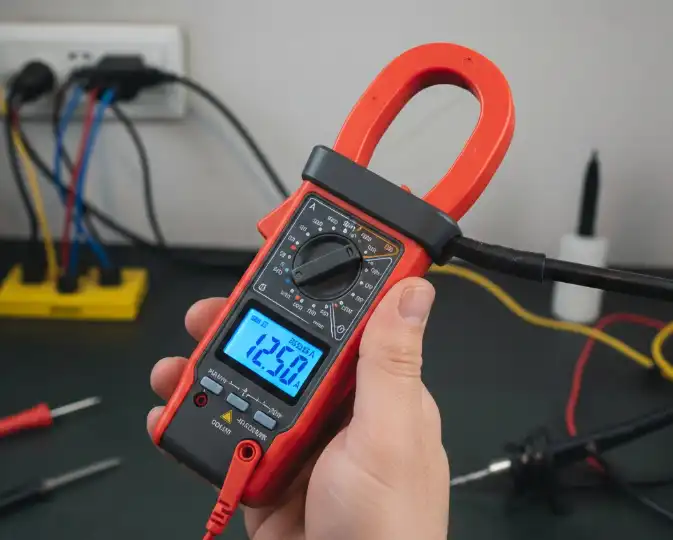
A clamp multimeter is a helpful tool for checking amps. It measures current without needing to disconnect wires. To use it, clamp the device around a live wire. The screen will show the amps being used. This method is fast and safe, even for high-amp circuits.
Clamp multimeters can do more than measure current. Many can also check voltage, resistance, and continuity. When picking one, make sure it can handle your circuit’s amps. For example, if your circuit uses 50 amps, choose a meter rated for at least 50 amps.
Tip: Always read the instructions before using a clamp multimeter. This helps you get correct readings and stay safe.
Reading appliance data plates for accurate details
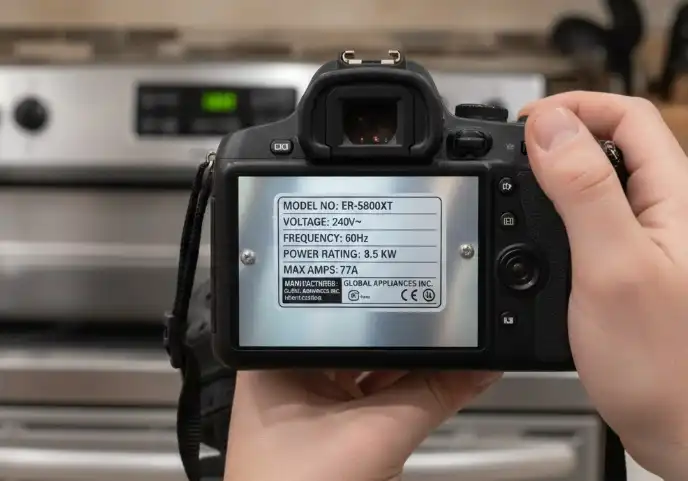
Appliance data plates show important electrical information. They list wattage, voltage, and amperage. For example, an air conditioner might use up to 58 amps. Ovens and ranges often range from 8.8 to 22.5 KW.
| Appliance Type | Amperage Range |
|---|---|
| A/C Unit | 58A (max draw) |
| Range/Oven | 8.8 – 22.5 KW |
| 40 or 50A |
Use this data to calculate your circuit’s total load. Then, pick a breaker that matches the amps listed on the plates. This ensures your breaker works safely with your devices.
Note: The NEC load calculation is usually less than the total load on the plate. For a 50-amp circuit, use a 50-amp cord with the kit.
Asking an electrician for tricky setups
Some setups need expert help. Devices like pumps or compressors use more amps when starting. A licensed electrician can help you pick the right breaker for these surges.
Electricians also make sure your setup follows NEC rules. They check that your breaker matches the circuit’s amps and devices. This keeps your system safe and efficient.
Reminder: Don’t change electrical systems without knowing how. Electricians ensure safety and follow all rules.
Picking the right circuit breaker size needs a few steps. First, find out the total amps your devices use. Next, use the 125% rule to ensure safety for long use. Make sure the breaker fits the circuit’s voltage and amp needs.
Correct sizing stops overheating and keeps things working well. For instance, if a breaker doesn’t trip, it can cause big damage. The table below shows why proper sizing and placement matter:
| Problem | Why It Matters |
|---|---|
| Breakers that don’t trip can cause serious damage | Proper sizing keeps the system stable |
| Resetting breakers after faults won’t fix the output | Shows why transient responses matter in breaker design |
| Breakers should be on both DC and AC sides | Helps improve system strength and reliability |
If you’re unsure about these steps, ask an electrician. They’ll make sure your system is safe, works well, and follows the rules.
If you need to purchase high-quality circuit breakers, you can check out our circuit breaker product line
FAQ
What happens if I pick the wrong circuit breaker size?
Choosing the wrong size can cause big problems. A breaker that’s too small will trip often, stopping your devices. A breaker that’s too big might not stop faults, causing overheating or fires. Picking the right size avoids these issues and makes fixing problems easier.
How can I tell if my circuit breaker is overloaded?
An overloaded breaker may trip often, make lights flicker, or feel warm. Use a clamp multimeter to check the current. Compare the reading to the breaker’s limit. If the current is too high, reduce the load or get a bigger breaker.
Can I change a circuit breaker myself?
You can replace a breaker if you know basic electrical work. Always turn off the main power first. If the setup is tricky or you’re unsure, call an electrician. This keeps you safe and prevents mistakes.
Why does my circuit breaker trip so much?
Frequent tripping can mean the circuit is overloaded, has a short, or a ground fault. Check how much power the breaker is handling. If it’s not overloaded, look for wiring problems. Fixing these issues keeps your system safe.
What tools help with fixing circuit breaker problems?
A clamp multimeter measures current easily. A voltage tester checks if wires are live. Appliance labels show wattage and voltage. These tools make finding and fixing problems faster and easier.
See also
How to Calculate the Size of Small Circuit Breakers Step by Step
How to Calculate the Load Capacity of a 32 Amp MCB
How to Calculate the Number of 20 Amp Breakers in a 100 Amp Panel
How many watts can a 20 ampere circuit breaker handle
What happens when using circuit breakers with higher current?