

You may wonder if your television could cause electrical problems at home. Sometimes, a TV can make an Arc fault circuit breaker tripped. Most TVs work safely. Some older or faulty models might trigger issues. You need to watch for any warning signs from your TV or breaker. Knowing what to look for helps you keep your home safe.
Key Takeaways
- Old or broken TVs can make arc faults happen. This can make circuit breakers trip. Look for loose wires or cords that are damaged to stop problems.
- If you plug in too many things, the circuit can get overloaded. This can make the breaker trip. Use other outlets for your devices so they do not get too hot.
- Look for things like screens that flicker or weird sounds from your TV. These can mean there are electrical problems that might trip the breaker.
- Use surge protectors and unplug your TV when there are storms. This helps keep your TV safe from power spikes and damage.
- Call a licensed electrician if the breaker trips a lot or if you see burnt outlets or cables that are damaged. Do not ignore these signs because they can be very dangerous.
Why TVs Trip Breakers
Arc Faults and TVs
Some TVs, like old plasma or flat screens, can make an Arc fault circuit breaker tripped. These breakers keep your home safe from fires by finding dangerous arcing. Arcing is when electricity jumps between wires. This can happen if wires are worn out or loose. You might notice this if your TV plug wiggles or you see sparks when plugging it in. Electrical codes now say homes need arc-fault circuit interrupters (AFCIs). About 50,000 house fires each year start from electrical problems. AFCIs stop these fires by turning off power when they find arcing. If your Arc fault circuit breaker tripped when you use your TV, look for loose wires or broken cords.
Overloaded Circuits
You can overload a circuit by plugging in too many things. Living rooms often have TVs, speakers, and game consoles all running. Each circuit can only take so much current. If you use too much, the breaker trips to stop overheating and fire. Signs of overload are breakers tripping a lot or warm outlets. To stop this, use different outlets for your devices. Do not put everything on one power bar. Overloaded circuits often cause an Arc fault circuit breaker tripped event at home.
- Common electrical problems that trip breakers:
- Too many things on one power bar
- Short circuits from loose wires touching
- Ground faults from water or metal touching wires
Device Incompatibility
Not every TV works well with all breakers. Some TVs use a lot of power when you turn them on. This can confuse sensitive breakers. Problems inside the TV can also cause trouble. If your TV is broken, it may leak electricity and cause a ground fault. Ground Fault Circuit Interrupters (GFCIs) and AFCIs can both trip if they sense this. Sometimes, a bad antenna cable or poor grounding can make the breaker trip. Companies sometimes recall TVs for electrical dangers, like overheating resistors that can start fires.
| Type of Circuit Breaker | Function |
|---|---|
| Standard Circuit Breakers | Protect against overloads and short circuits |
| GFCI Breakers | Protect against ground faults and shocks |
| AFCI Breakers | Detect arc faults that could lead to fires |
If your TV acts weird or your breaker trips a lot, you might have a problem with compatibility or something inside the TV.
Arc Fault Circuit Breaker Tripped: TV Causes
Common Signs
If your Arc fault circuit breaker tripped, your TV might be the reason. You can notice some signs at home.
- The breaker trips when you use big appliances with your TV, like heaters or microwaves.
- The breaker trips when your TV shows bright pictures or lots of color changes. This happens because the TV uses more power then.
- The breaker trips more when you plug in or unplug the TV. This is worse if the plug is loose or the cord looks old.
Tip: If the breaker only trips when the TV is on, your TV could be the main problem.
Patterns to Watch
You can look for patterns to see if your TV makes the Arc fault circuit breaker tripped.
- Old GFCI or AFCI breakers can trip when you use HDTVs or TVs with special tuners.
- Some people see the breaker trip every time they turn on the TV, but not with other things on the same outlet.
- Moving the TV’s breaker to another spot in the box can stop the tripping. This means where the breaker is matters.
- Loose wires or shared neutral wires in your house can make the breaker trip when the TV is running.
- Some TVs and other electronics do not work well with AFCI breakers. This can make the breaker trip even if the TV is not broken.
Here is a table that shows what AFCI breakers do and what they check:
| Feature | AFCI Breaker Description |
|---|---|
| Detection Method | Uses smart technology to watch for normal and dangerous arcing. |
| Monitoring | Always checks the electricity wave for problems that show sparking. |
| Types of Arcs Detected | Finds parallel arcs (line to line, line to neutral, line to ground) and series arcs. |
| Indicators | May light up one or two LEDs to show the kind of fault (hot-to-ground or hot-to-neutral). |
| Conditions Monitored | Looks for sputtering, sparking, or overheating that can mean loose or hot connections. |
Unusual TV Behavior
Your TV can act strange before you see the Arc fault circuit breaker tripped. Watch for these changes in your TV:
- The screen flickers or shows weird colors, especially when you turn on other appliances.
- The TV turns off by itself or restarts without warning.
- You hear buzzing or see the picture freeze and get blurry.
- The sound gets weird or stops during normal use.
These problems mean your TV is not getting steady power. Fast voltage changes or bad wiring can cause this. If you see these signs, your TV might make the breaker trip. Some TVs leak small amounts of current, which can set off sensitive breakers. If you notice these problems and the breaker trips a lot, your TV may need help.
Troubleshooting and Prevention
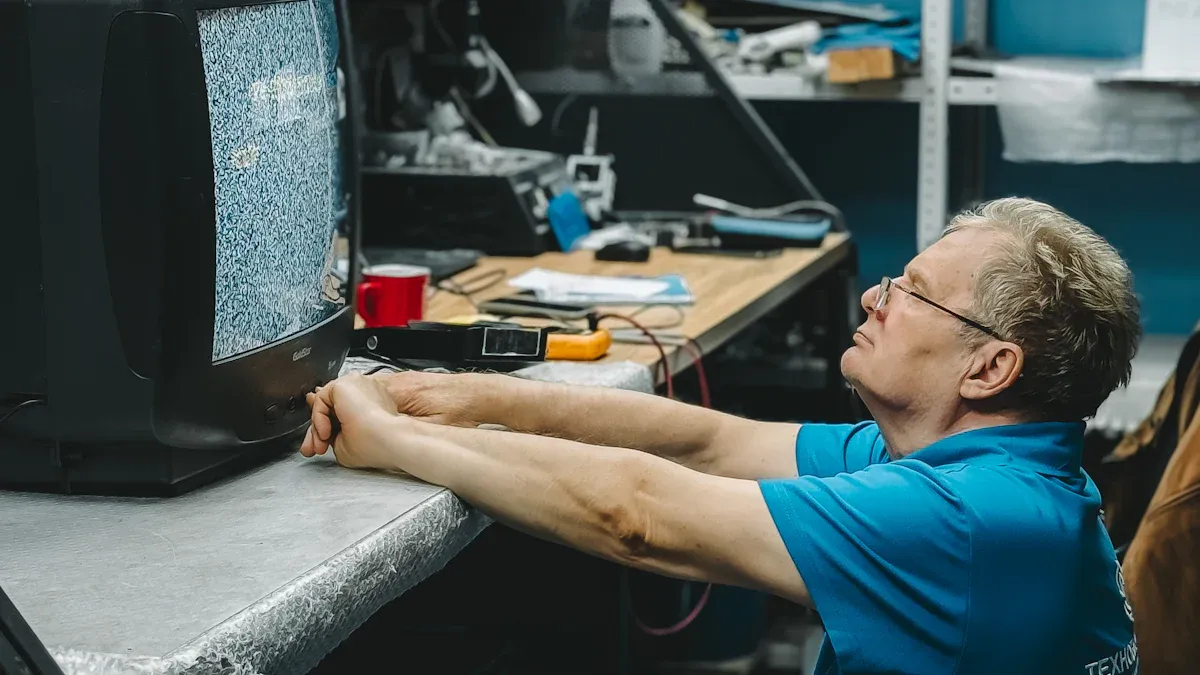
Step-by-Step Checks
You can use easy steps to see if your TV is the problem.
- Take out all plugs from outlets on the tripped breaker.
- Turn the circuit breaker back on to reset it.
- Plug in each device one by one. See which one makes the breaker trip again.
- Try your TV in a different outlet on another circuit. If the Arc fault circuit breaker tripped again, your TV might have something wrong inside.
The Siemens Intelli-Arc Diagnostic Tool helps find where a fault happens. Electricians use this tool to check for arc faults. Eaton’s AFDD+ device also keeps homes safe by watching for arc faults and turning off power if needed.
Preventing Future Trips
You can do some things to help stop your TV from making the breaker trip:
- Use a surge protector with a high joule rating to keep your TV safe from power spikes.
- Unplug your TV during storms so lightning does not hurt it.
- Look at your home’s wiring to see if there are any broken or frayed wires.
- Plug your electronics into different outlets so you do not overload one circuit.
- Check your electrical system often to make sure it is safe.
- Put in whole-house surge protection for more safety.
- Surge protectors can help with arc faults, but they may not stop every trip. Adding a surge protection device in series with the circuit can soak up extra voltage and stop some trips.
When to Call an Electrician
Call a licensed electrician if you see any of these problems:
- The breaker keeps tripping even after you unplug everything.
- You see broken cables, burned outlets, or smell something strange near the breaker.
- The breaker will not reset or looks burned.
- You think there is a short circuit or ground fault.
If you ignore breaker trips, you can face big dangers:
| Risk Type | Description |
|---|---|
| Electrical Fires | Electrical problems cause over 24,000 house fires each year, but many can be stopped with care. |
| Higher Energy Bills | Power changes from a bad breaker can make your bills go up. |
| Damage to Appliances | Power surges from a broken breaker can ruin your devices. |
| Personal Safety Hazards | Bad breakers can shock you or cause outages, which is dangerous. |
Now you know what can make a TV trip a circuit breaker. Arc faults do not happen all the time. But you should watch for warning signs and act fast. Some people think a tripped breaker hurts your TV. It actually keeps your devices safe.
- Keep cords away from water and heat.
- Unplug your TV when you are not using it.
- Change cords and plugs if they look damaged.
Modern TVs have new safety features to help keep you safe:
| Advancement | Description |
|---|---|
| Tempered Glass | This strong glass does not break easily. It helps protect people and pets from getting hurt. |
| Advanced Ventilation Systems | These systems keep the TV cool inside. They stop the TV from getting too hot in any weather. |
| Anti-Glare Coatings | These coatings cut down on glare. They help you see the screen better in bright rooms. |
Stay careful, use these tips, and call an electrician if you need help. You can keep your home safe and enjoy your TV without worry.
FAQ
What should you do if your TV keeps tripping the breaker?
Unplug your TV and check the cord for damage. Try plugging it into another outlet. If the breaker still trips, you may need to call an electrician. This helps you stay safe and protect your home.
What signs show your TV might cause an arc fault?
You might see flickering screens, hear buzzing, or notice the TV turns off by itself. These signs mean your TV could have an electrical problem. Watch for these changes to catch issues early.
What makes some TVs more likely to trip breakers?
Older TVs and some plasma models use more power. Faulty wiring or loose plugs can also cause problems. If you use many devices on one circuit, you increase the risk of tripping the breaker.
What can you use to protect your TV from electrical faults?
- Use a surge protector with your TV.
- Install whole-house surge protection.
- Check cords and outlets often.
These steps help keep your TV and home safe from electrical problems.
What happens if you ignore a tripping breaker?
Ignoring a tripping breaker can lead to electrical fires, higher bills, or damaged devices. You risk your safety and your home. Always fix the problem quickly to avoid bigger issues.
See also
What Does VCD Stand for in Electrical Engineering
What are the warning signs of surge protector failure
Can You Connect Multiple Surge Protectors Together Safely
Is it Safe to Plug One Surge Protector into Another?
Essential Guide to Troubleshooting Household Circuit Malfunctions