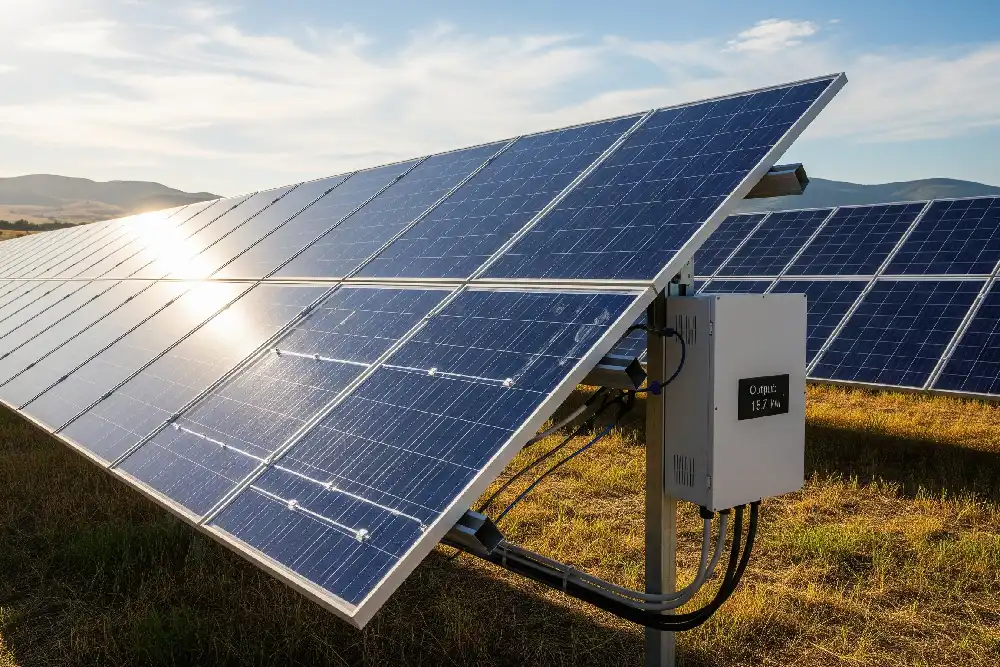
To work their best each day, solar panels need direct sunlight. They also need cool weather, the right angle, and to face the right way. The panels must be clean and not have any shade on them. Most panels used today work at 15–20% efficiency. Newer panels can reach 24–26%. In labs, scientists have made panels that work at over 47% efficiency.
Important things are how strong the sunlight is, how fast the wind blows, and if the air is dry. Dust can make panels work up to 60% less, so cleaning them often is important.
Key Takeaways
- Solar panels need direct sunlight to work well. Try to get as much sunlight as you can for more energy.
- Keep your solar panels clean. Clean them often to stop dust and dirt from lowering how well they work by up to 76%.
- Change the tilt and direction of your panels for where you live. This can help make 10% to 25% more energy.
- Watch the temperature. Solar panels work best at about 77°F (25°C). Use ways to keep them cool at this temperature.
- Look for shade often. Even small shadows can lower energy a lot, so cut back trees and things nearby.
Solar Panels: Sunlight
Direct Sunlight
Direct sunlight is the most important thing for solar panels. When sunlight shines straight on the panels, they make the most energy. Strong sunlight helps make more electricity. If the sunlight is stronger, the current goes up fast. The voltage also rises, but not as quickly. Bright, direct sunlight helps your system work its best.
| Condition | Energy Output (Approx.) | Notes |
|---|---|---|
| Full direct sunlight | 100% (rated capacity) | Maximum efficiency, ideal conditions. |
| Light partial shading | 70–80% | Small shaded portion reduces output disproportionately. |
| Heavy partial shading | 40–60% | Cascading effect significantly lowers performance. |
| Full panel shading | 10–30% | Output drops drastically; may only generate residual power. |
| Diffuse light (cloudy day) | 40–70% | Panels still work but at reduced efficiency. |
Tip: Even a little shade on one part of a panel can lower the total energy much more than you might think.
Time of Day
The time of day changes how much sunlight panels get. You get the most energy when the sun is high in the sky. This usually happens around noon. At this time, sunlight hits the panels straight on. This lets them take in the most light.
The sun’s angle changes during the day. This changes how sunlight hits the panels. When sunlight hits the panels straight, they take in the most sunlight. If the angle is not straight, less light gets in. This means the panels make less energy.
In the morning and late afternoon, the sun is lower. The light hits the panels at a slant. The panels do not work as well as they do at noon. For the best results, try to get as much midday sun as you can.
Seasonal Changes
Seasons change how well solar panels work. In summer, days are longer and the sun is higher. This means more strong sunlight and more energy. In winter, days are shorter and the sun is lower. The panels make less electricity.
| Season | Advantages/Challenges | Impact on Solar Production |
|---|---|---|
| Summer | Longer daylight hours, higher sun angle, clearer skies | Increased solar energy production |
| Winter | Shorter days, lower sun angle, increased cloud cover | Reduced efficiency, potential drop of 30% to 50% in output |
- Places near the equator get more strong sunlight all year.
- Where you live changes the best tilt for your panels. This changes how much energy you get.
- In midsummer, you might get over 16 hours of daylight. In winter, you might get just over 7 hours.
- Solar energy can drop by up to 80% in winter compared to summer. This is because of shorter days, more clouds, and the sun being lower.
Note: You cannot change the seasons, but you can set up your solar panels to get the most sunlight all year.
Temperature
Ideal Range
Temperature affects how well solar panels work. Hotter days do not always mean more electricity. Solar panels work best when it is not too hot or cold. Most panels work best at about 77°F (25°C). If it gets hotter than this, panels lose efficiency. When the temperature goes up, semiconductors inside get more energy. This makes electrons move faster. More movement causes higher resistance. Higher resistance lowers voltage. The panels then make less electricity. For each degree above 25°C, panels lose about 0.4% to 0.5% efficiency. If it is 25°C hotter than normal, you could lose 10–12.5% power.
Note: The temperature coefficient shows how much power a panel loses for each degree above the best temperature. You can find this number on the panel’s label or in the manual.
Here is a table that shows how different panels lose power when it gets hotter:
| Module Type | Temperature Coefficient (%/°C) | Power Loss at 40°C Temperature Rise |
|---|---|---|
| PERC | –0.34 | –13.6% |
| TOPCon | –0.32 | –12.8% |
| IBC | –0.29 | –11.6% |
| HJT | –0.24 | –9.6% |
Heat Management
You can help your panels stay cool. This helps them work better, especially in hot places. New technology helps manage heat and keep efficiency high.
| Cooling Technology | Advantages |
|---|---|
| Radiative Cooling Coatings | Good value, low cost, and can boost efficiency by 4-6%. Needs little care. |
| Phase Change Materials (PCM) | Works well in humid places, absorbs moisture to help control heat. |
| Water-Based Cooling | Good for places with lots of water. |
- A 1°C rise in temperature causes a 0.45% drop in efficiency.
- Every 10°C hotter, solar panels wear out twice as fast.
In hot, dry places, you can use air from air conditioners to cool panels. This can make panels produce up to 10% more power. It also helps them last longer. Radiative cooling coatings are easy to use. They lower panel temperature and boost efficiency by 4–6%. In humid places, phase change materials absorb moisture and help keep panels cool. If you have lots of water, water-based cooling can help too.
Tip: To help your solar panels last longer and work better, keep them close to 77°F (25°C).
Angle & Direction
Tilt
The tilt of your solar panels decides how much sunlight they catch. The best tilt depends on where you live. If you set the right tilt, you help your panels get the most energy all year. You can use your latitude to find the best angle. Here is a table to guide you:
| Latitude Range | Recommended Tilt Angle |
|---|---|
| 0-15° latitude | 15° tilt |
| 15-25° latitude | Equal to latitude |
| 25-35° latitude | Equal to latitude |
| 35-45° latitude | Equal to latitude + 5° |
| Above 45° latitude | Equal to latitude + 10-15° |
Tip: If you adjust the tilt of your panels for each season, you can boost your energy output by 10% to 25%. This works well if you rely on solar energy for most of your power. Seasonal tilt changes help your panels catch more sunlight in both summer and winter.
Orientation
The direction your panels face is just as important as the tilt. The right orientation lets your panels soak up the most sunlight during the day. Here is what you need to know:
- In the northern hemisphere, face your panels south.
- In the southern hemisphere, face your panels north.
If you follow these tips, you help your system work at its best. The right angle and direction mean more power and better results from your solar panels.
Solar Panels: Maintenance
Cleaning
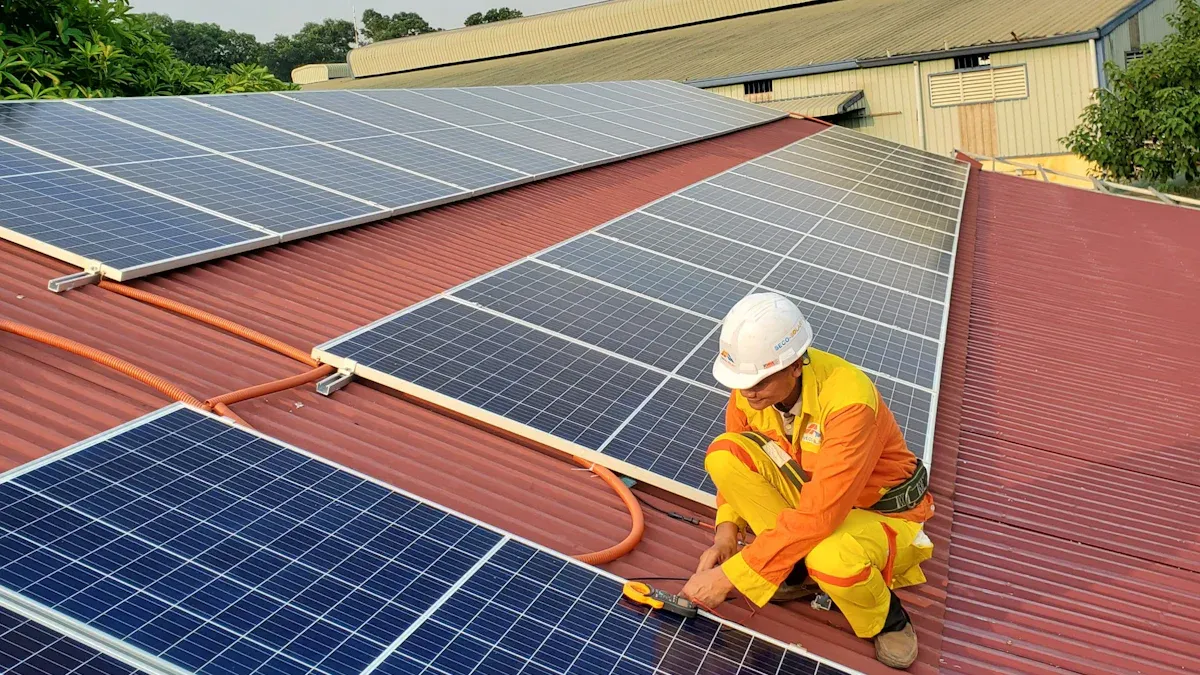
Keeping your solar panels clean is one of the best ways to make sure they work well. Dust, dirt, and debris can build up quickly. When this happens, your panels cannot take in as much sunlight. This can lower how much energy you get. In some places, dust can cut efficiency by up to 76%. Even after just two months without cleaning, you might lose 6.5% of your energy. Heavy dust can drop your power by 10% to 20%. After a dust storm, you could see a 20% decrease in output. Over time, long-term dirt can cut your energy in half.
You have many ways to clean your panels:
- Use deionized water systems to avoid spots and residue.
- Try low-pressure washers with adjustable nozzles for tough dirt.
- Wipe with microfiber cloths for a streak-free finish.
- Choose biodegradable cleaning solutions made for solar panels.
- Spray with a ground-level water hose using clean, deionized water.
- Remove stubborn grime with an isopropyl alcohol solution and a soft brush or sponge.
- Hire professional cleaning services for large or hard-to-reach panels.
Tip: Clean your panels more often if you live in a dusty area or after a storm.
Regular Checks
You should check your solar panels often to keep them working their best. Routine inspections help you spot problems early. Here are some common issues you might find:
- Dirt and debris buildup
- Shade from trees or buildings
- Corrosion or loose connections
- Weather or water damage
- Wiring problems
- Panel cracks or low efficiency
Set a schedule for inspections:
| Inspection Frequency | Description |
|---|---|
| At least once a year | Look for dirt, shade, and visible damage. |
| Every five years | Get a full check, including electrical parts. |
| After extreme weather | Check for cracks, water, or other damage right away. |
Use a monitoring system to track your panel’s performance. If you see a sudden drop, inspect your system as soon as possible.
Shading
Shading is one of the biggest threats to solar panel efficiency. Even a small shadow can cause a big drop in power. When something blocks sunlight from reaching your panels, the system cannot work as well. You might think that only large shadows matter, but even a little shade can have a huge effect.
Common Sources
You can find many sources of shading around your home. Some of the most common include:
- Trees that grow tall or have wide branches
- Nearby buildings or roof structures
- Chimneys, antennas, or satellite dishes
- Utility poles or wires
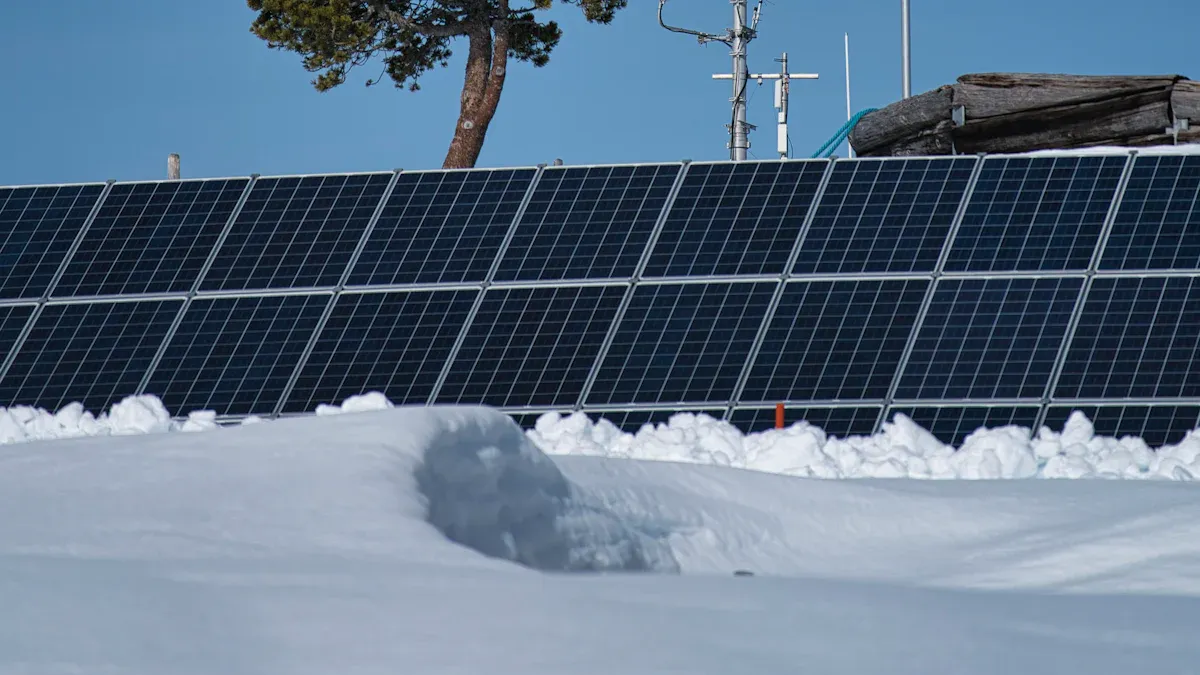
- Temporary objects like leaves, snow, or even birds
Shading happens when these objects block sunlight from hitting the surface of your panels. The impact is often much greater than the size of the shadow. For example, if just one cell in a panel gets shaded, the whole system can lose up to 75% of its power. This happens because solar cells work together in a series, like links in a chain. If one link is weak, the whole chain suffers.
Even a small shaded area can cause a loss of up to 80% in total output. The shaded cell acts as the weakest link and drags down the performance of all the connected cells.
Prevention
You can take steps to prevent shading and keep your solar panels working at their best. Here are some effective strategies:
- Trim trees and bushes regularly to keep branches away from your panels.
- Place panels in areas with the least chance of shade throughout the day.
- Use microinverters or power optimizers. These devices let each panel work on its own, so one shaded panel does not lower the output of the others.
- Arrange your panels in strings that reduce the impact of shade on the whole system.
- Ask a solar expert to do a shading assessment before you install your system. They can use special tools to find the best spot for your panels.
Microinverters and power optimizers help each panel work independently. If one panel gets shaded, the rest still produce as much power as possible. These tools also help you track performance and spot problems early.
Tip: Check your panels often for new sources of shade, especially as trees grow or new buildings go up nearby.
To help solar panels work their best, follow some simple steps: Put panels where they get lots of sun and almost no shade. Change the angle and direction to fit where you live. Clean the panels and look at them often. Use smart tools to find problems early. Pick good equipment and think about new things like bifacial or tracking systems.
Taking care of your system helps it work at over 80% efficiency for a long time. Learn about new solar panel designs and features to keep making lots of energy.
FAQ
What happens if you do not clean your solar panels?
If you do not clean your solar panels, dust and dirt will block sunlight. You will see less energy from your system. In some places, dirty panels can lose up to 76% of their power.
What is the best way to check for shading problems?
You can watch your panels during the day and look for shadows. You can also use a solar monitoring app. These tools show you when and where shading lowers your energy.
What should you do if your solar panels get too hot?
You can help your panels stay cool by making sure air flows under them. You can use special coatings or cooling systems. These steps keep your panels working well, even on hot days.
What tools help you track solar panel performance?
You can use a solar monitoring system. This tool shows you how much energy your panels make each day. It helps you find problems fast and keep your system running strong.
See also
What is string solar inverter and how does it work
How to calculate the power generation of a 400 watt solar panel
How to Safely Connect 12V Solar Panels in Series or Parallel
How much electricity a 1000 watt solar panel can generate in a day
What is a waterproof outdoor distribution box