

A dual power switch helps you manage two power sources for one system. You can use it to keep your equipment working if the main power stops. This device quickly changes from the main supply to a backup source. > Knowing how this switch works helps you make good choices for safety and reliability in your electrical setup.
Key Takeaways
- A dual power switch changes between two power sources by itself. This keeps your equipment working when the power goes out.
- Pick the right dual power switch for your needs. Use Automatic Transfer Switches (ATS) if you want a quick switch. Use Manual Transfer Switches if you want more control.
- Test and take care of your dual power switch often. This stops problems and keeps it working well.
- Safety parts like interlocking mechanisms stop both power sources from joining at once. This keeps your equipment safe.
- Knowing the parts and how a dual power switch works helps you choose the best setup for your electricity.
What Is a Dual Power Switch?

Definition and Purpose
You might ask what a dual power switch does. This device lets you change between two power sources fast. It can switch from the main grid to a backup generator. You do not have to wait for the switch to work. Here is a table that shows what it means:
| Term | Definition |
|---|---|
| Dual Power Transfer Switch | A switch that moves the load between two power supplies. It keeps things working when the power goes out. |
A dual power switch can change power sources by itself. It does this when there is a problem, like a blackout or low voltage. Your equipment will not stop working. The switch helps everything keep running. You can use these switches in homes, offices, and factories. They keep your devices safe from short circuits and too much power. They also let you know if something is wrong.
Tip: A dual power switch can fix overvoltage, undervoltage, and phase loss. It helps keep your power steady and gives you peace of mind.
The main job of this switch is to help with power changes. It keeps your lights, computers, and machines working if the main power fails. You can trust it to protect important equipment and help you work every day.
Key Components
A dual power switch has many important parts inside. These parts work together to keep your power safe.
- Double-pole switches: These control two circuits at once. You see them in big devices like ovens and air conditioners.
- Circuit breakers: These keep your system safe from short circuits and too much power.
- Relays and contactors: These help the switch find problems and change power sources fast.
- Intelligent alarms: These tell you if something is wrong or not normal.
Each part helps keep your power steady. When you use a dual power switch, you get automatic help and strong safety for your electrical system.
Dual Power Switch Working Principle
Switching Mechanism
A dual power switch works like a smart traffic cop for electricity. It uses different parts to control how power moves and keeps your devices on. The main parts are circuit breakers, contactors, and relays. Each part does something special. The table below shows how these parts work together:
| Component | Function | Mechanism |
|---|---|---|
| Circuit Breaker | Stops electricity if there is a problem or too much power | Uses a metal piece that bends when hot to stop the flow. |
| Contactor | Turns devices on or off during normal times | Uses a magnetic field from a coil to move contact points up or down. |
Relays help start or stop things when they get signals. Circuit breakers turn off power if there is too much or a short. All these parts work together to keep your stuff safe and running well. This teamwork makes things work better and lowers the chance of damage.
Note: The National Electrical Code (NEC) has rules for wiring and switches. Article 404 tells how switches should work in homes and buildings. These rules help keep you safe and make sure you follow the law.
Automatic Transfer Operation
A dual power switch checks the voltage all the time. If the main power drops below a set level, like 80% of normal, the switch changes to the backup. You do not need to do anything. The switch works fast to keep your lights and machines on.
- The switch uses the first power source until the voltage gets too low.
- When the voltage is low, it switches to the second source.
- You can set the voltage level to what you need.
The switch also checks voltage and frequency before moving the load. This step helps stop damage and keeps your system working well. If the power goes out, the switch moves the load from the main supply to the backup generator. It keeps the generator and the main grid apart, so power does not flow backward and everyone stays safe.
Tip: New dual power switches use smart technology. They can watch power in real time and even guess problems before they happen. Some switches use AI to learn how you use power and make better choices.
Interlocking and Safety
Safety is very important when using a dual power switch. Interlocking makes sure only one power source connects at a time. This stops dangerous problems and keeps your system safe. You can see different types of interlocking in the table below:
| Type of Mechanism | Description |
|---|---|
| Mechanical Actuators | Uses a rail, plate, or cam to work. Examples are roller lever, roller plunger, and hinge switches. |
| Key-operated Mechanisms | Uses a key to lock or unlock the switch. Easy to use and often used for guard locking. |
| Non-contact Magnetic Switches | Works when the actuator is close to the switch. Safer than mechanical types. |
Electromechanical linkages, like contactors and circuit breakers, help switch safely. These parts make sure the two power sources never connect at the same time. This gives you a safer system and lowers the chance of electrical trouble.
- Electromechanical linkages keep the main and backup sources apart.
- Interlocking stops both sources from connecting together.
- This design protects your equipment and keeps your power steady.
Callout: New dual power switches let you check your system from far away, do maintenance before things break, and run safety checks by themselves. You can control your power system anywhere and get alerts if something is wrong.
You can trust a dual power switch to keep your power steady and your equipment safe. The smart design and safety features help you avoid blackouts and protect your home or business.
Dual Power Switch Types
You can choose from several types of switches when you want to control two power sources. Each type has its own features and best uses. Let’s look at the main types you might find.
Automatic Transfer Switch (ATS)

An Automatic Transfer Switch, or ATS, does the work for you. This switch watches your main power all the time. If the power fails or drops too low, the ATS moves your system to the backup source in seconds. You do not need to do anything. Hospitals, data centers, and new buildings often use ATS because they need power all the time. Over 48% of hospitals and more than 41% of large commercial buildings use these switches. You can see how different sectors use transfer switches in the chart below:
Tip: If you need fast and automatic backup, an ATS gives you the best protection.
Manual Transfer Switch
A Manual Transfer Switch needs you to flip the switch yourself. You decide when to change from the main power to the backup. This type costs less and has a simple design. Many homes and small businesses use manual switches, especially with portable generators. You get more control, but you must act fast during a power outage.
Here is a table to help you compare the two main types:
| Feature | Manual Transfer Switch | Automatic Transfer Switch |
|---|---|---|
| Operation | You flip the switch | Switches by itself |
| User Involvement | High | None |
| Response Time | Minutes (depends on you) | Seconds |
| Cost | Lower | Higher |
| Complexity | Simple design | More complex, more parts |
| Best For | Homes, small businesses | Hospitals, data centers, homes needing fast backup |
Hybrid and Specialized Types
Some systems use hybrid or special switches. A hybrid switch can work both ways—automatic and manual. You can pick the mode you want. Specialized types may have smart features, like remote control or extra safety checks. These switches fit special needs, such as solar power setups or places with strict safety rules.
You can find the right dual power switch for your home, business, or special project by knowing these types. Each type helps you keep your power steady and your equipment safe.
Application Scenarios
Residential、
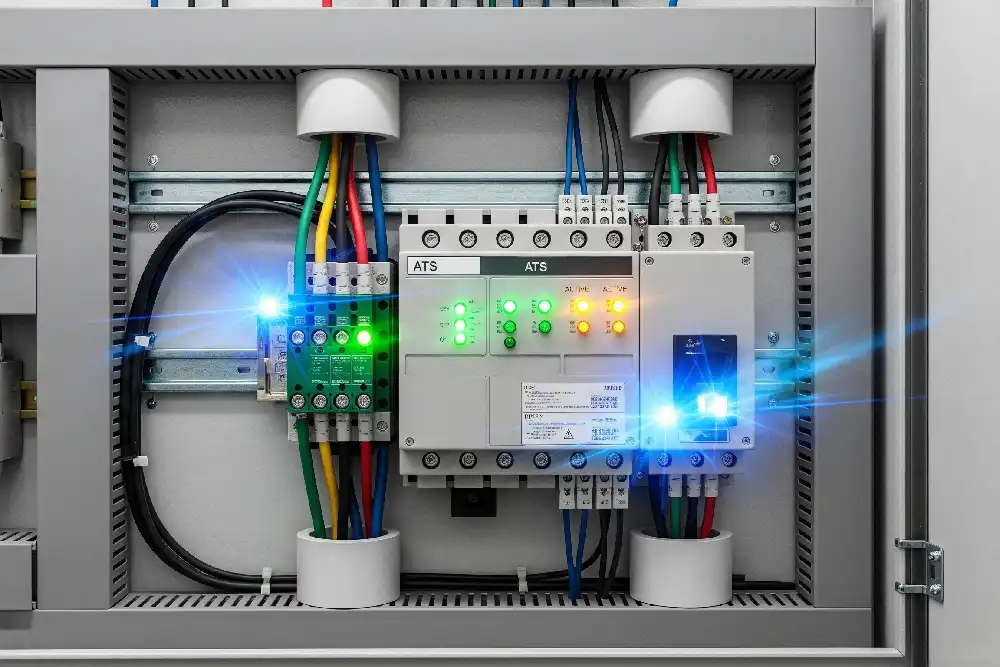
You can use a dual power switch at home. It keeps your lights and appliances working during outages. When you install one, you must follow safety steps. First, turn off the power before starting. Next, take out the old switch and check the wires. Connect the incoming power wire to the first switch’s common terminal. Use a jumper wire to link the first switch’s output to the second switch’s common terminal. Connect the travelers between the switches. Attach the load wires to each switch. Make sure every light has its own neutral wire back to the panel. Secure the switch and finish the job. A dual power switch helps you avoid downtime. It also protects your home from electrical faults.
Commercial and Industrial
Factories, offices, and big buildings use dual power switches. These places need steady power for machines and computers. You may have problems when installing the switch. > Early dual power supply products used contactors that overlapped. This caused short circuits and contact sticking. Other faults could happen too. You fix these problems by checking the wiring and looking at the fuses. You also check the main circuit and secondary circuit wiring. You set the controller’s settings right. Dual power switches help balance loads and save energy. You manage power better and make your equipment last longer.
Data Centers and Critical Loads
Data centers use dual power switches to keep servers running. These switches help balance loads and watch power in real time. You can track energy use and find problems. Automatic transfer switching cuts downtime and keeps systems stable. You protect important data and keep everything working.
Healthcare and Emergency
Hospitals and emergency centers use dual power switches. They make sure life-saving equipment always has power. These systems are much more reliable:
| Metric | Single Power Systems | Dual Power Systems |
|---|---|---|
| Mean Time Between Failures (MTBF) | 8,760 hours | 175,200 hours |
| System Availability | 99.95% | 99.9997% |
| Annual Downtime | Over 4 hours | Less than 2 minutes |
You must follow strict rules like NFPA 110 for emergency power. You follow rules for transfer times, testing, and maintenance. Dual power switches help balance loads and lower stress on equipment. You keep patient care areas safe and ready for emergencies.
Selection and Installation
Choosing the Right Switch
You need to pick the right dual power switch for your needs. Start by understanding how an automatic transfer switch (ATS) works. This helps you match the switch to your power needs. Calculate your total power use and find out which devices are most important. Make sure the switch matches the voltage and frequency of your system. You can choose between open, closed, or static transfer modes. Think about whether you want a manual or automatic switch. Check if you will install the switch indoors or outdoors. Always make sure the switch meets safety standards. Look for extra features like remote monitoring or alarms if you want more control.
Here are some things to consider:
- Know how the ATS works.
- Figure out your total power use.
- Match voltage and frequency.
- Pick the right transfer mode.
- Decide on manual or automatic.
- Check the installation environment.
- Make sure it meets safety standards.
- Look for advanced features.
You should also think about how important your equipment is, what kind of devices you have, and your budget.
Installation Tips
You can follow some best practices to install your switch safely. Always read the manufacturer’s instructions. Use the right torque for cable terminals and keep the right clearances. Ground the switch and your system as local rules say. Choose cables that fit the current and the setup. Only trained people should install or operate the switch. Open all circuit breakers before switching to avoid sparks. Never bypass the interlock. Check the switch often for damage and keep all parts tight.
Safety and Compliance
You must follow safety rules when you install a dual power switch. The table below shows some key regulations:
| Regulation | Description |
|---|---|
| National Electric Code (NEC) | Sets safety rules for electrical work. |
| Underwriters Laboratories (UL) | Checks products to make sure they are safe. |
| Local Inspector | Makes sure your setup follows all rules and is safe to use. |
You should also check for special rules in places like swimming pools or hospitals. Use the right protective devices and label all switches. Always follow building codes and keep your wiring safe from fire and other dangers.
You now know that a dual power switch helps keep power safe and steady in many places. The table below lists the main good things you get:
| Benefit | Description |
|---|---|
| Enhanced Reliability | Keeps power on during outages and stops one source from failing everything. |
| Flexibility and Load Balancing | Lets you choose the best power source and share the load. |
| Seamless Transfer | Changes power fast and helps stop mistakes. |
| Scalability | Can grow with your needs and add more power sources. |
| Power Quality | Keeps your devices safe from voltage changes. |
| Cost Savings | Saves money by stopping downtime and using energy better. |
If you pick and set up the right switch, you get these results: You keep your equipment working without stops. You lower the chance of problems and save money. You can watch your power live and fix issues early.
Think about what you need and talk to an expert for help. This makes your system safer and more dependable.
FAQ
What happens if both power sources fail?
If both sources fail, your dual power switch cannot supply power. You need to check your backup source and fix any problems. Some systems use alarms to warn you when both sources stop working.
Can I install a dual power switch by myself?
You should not install a dual power switch by yourself. Only trained electricians should do this job. This keeps you safe and makes sure your system works right.
How often should I test my dual power switch?
You should test your switch every month. Regular tests help you find problems early. Many experts suggest making a checklist for each test.
Does a dual power switch use power when idle?
Yes, a dual power switch uses a small amount of power even when idle. Most modern switches use very little energy. You can check the product manual for exact numbers.
See also
New dual power automatic transfer switch
How a Solar ATS Improves Solar Power Reliability
How to use ATS in conjunction with a generator