

Spring energy storage of circuit breakers safely stores mechanical energy. This stored energy helps the circuit breaker operate quickly when needed. It acts like a backup, ready to engage during electrical problems. This allows the circuit breaker to stop harmful currents rapidly. It keeps people safe and protects electrical systems from damage.
Key Takeaways
-
Spring energy storage helps circuit breakers work fast during faults. It keeps people and equipment safe from harm.
-
Taking care of springs is important for good performance. Check for damage and replace bad parts to stay safe.
-
The system uses manual and motor charging, which may not work well in remote places. Think about backup power options.
-
Strong materials in spring design make them last longer. This also makes circuit breakers work better.
-
Knowing your system’s needs helps pick the best energy storage. This ensures it works well.
How spring energy storage of circuit breaker works

Role of springs in circuit breaker mechanisms
Springs are very important in a circuit breaker. They store energy to help the breaker work during electrical problems. The stored energy is used to open or close the circuit. This makes sure the breaker can act fast when needed. Even with high currents, the springs help the breaker respond quickly.
There are two main springs in a circuit breaker: the closing spring and the opening spring. The closing spring stores energy to close the breaker. The opening spring helps disconnect the circuit when needed. Together, these springs keep the breaker working properly and reliably.
Energy storage and release process
The energy storage and release process follows a specific order. Here’s how it works:
-
A motor charges the closing spring by compressing it to store energy.
-
When the breaker needs to close, the stored energy in the closing spring is released. This also compresses the opening spring for later use.
-
If the breaker needs to open, the opening spring releases its energy to disconnect the circuit. This stops electricity flow during faults.
The system has two states: charged and discharged. In the charged state, the closing spring holds energy, ready to close the breaker. In the discharged state, the spring needs recharging before the breaker can work again. This cycle keeps the breaker ready to act.
|
State |
Description |
|---|---|
|
Charged |
Energy is stored in the closing springs, ready to close the breaker. |
|
Discharged |
No energy is stored; the springs need charging to close the breaker. |
Circuit breaker closing spring and its function
The closing spring is a key part of the circuit breaker. It stores energy to close the breaker quickly and efficiently. A motor compresses the spring to prepare it for action. When a signal is sent, the spring releases its energy to close the breaker fast.
This quick action helps keep electrical systems safe and stable. The closing spring also compresses the opening spring during this process. This ensures the breaker is always ready to handle electrical problems. Taking care of the closing spring is important for the breaker’s long-term performance.
|
Figure Number |
Description |
|---|---|
|
Figure 1 |
Diagram showing the energy storage unit |
|
Figure 5 |
How the cam-linkage mechanism works |
Tip: Check and maintain the closing spring often. This helps it last longer and keeps the breaker reliable.
Components of spring energy storage in circuit breakers
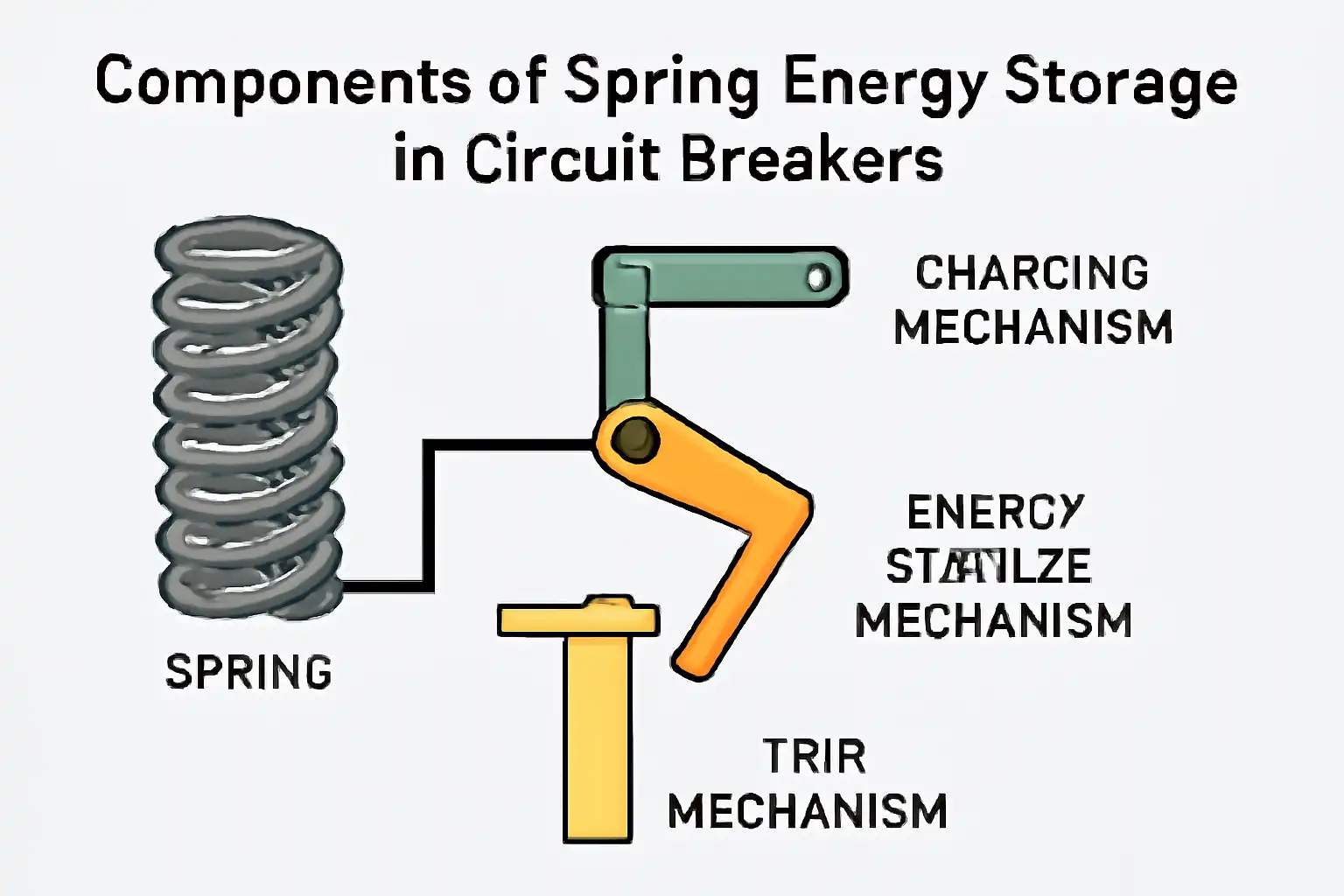
Mechanical springs and their design
Mechanical springs are very important in circuit breakers. They store energy and release it quickly when needed. Engineers choose strong materials to make these springs last longer. Special metals and coatings help them resist wear and tear. Careful shaping and heating improve their strength and flexibility.
Tests like fatigue and load-deflection tests check spring performance. These tests ensure springs can handle repeated use without breaking. New designs make springs better for modern electrical systems. This helps them work more efficiently and reliably.
-
Important facts about mechanical springs:
-
Better materials make springs last longer.
-
Careful manufacturing improves spring durability.
Energy storage motor and locking system
The energy storage motor charges the springs in a circuit breaker. It changes electrical energy into mechanical energy to compress the springs. A gearbox attached to the motor slows it down and increases its power. This makes spring compression easier and more effective.
After charging, a locking system keeps the springs in place. This prevents accidental energy release and ensures safety. Parts like ratchets and cams work together to release energy only when needed.
|
Description |
|
|---|---|
|
Motor |
Changes electrical energy into mechanical energy |
|
Reduction gearbox |
Slows motor speed and increases power |
|
Ratchet |
Holds energy during storage |
|
Cam |
Releases stored energy when needed |
Actuation systems for energy release
Actuation systems control how stored energy is used in circuit breakers. These systems make sure the springs open or close the breaker contacts properly. Springs are the main part of this process, but other tools like air, heat, or magnets can help in some cases.
For bigger circuit breakers, solenoids and motors are very useful. Solenoids start the release process, and motors recharge the springs after use. These systems work together to stop electricity safely during problems.
|
Mechanism |
Function |
|---|---|
|
Springs |
Store energy to quickly open and close contacts. |
|
Compressed Air |
Helps separate contacts during problems. |
|
Magnetic Field |
Uses fault current to move contacts apart. |
|
Solenoid |
Starts the release process in large breakers. |
|
Electric Motor |
Recharges springs after they are used. |
Note: Check actuation systems often to keep them working well and avoid problems.
Importance of spring energy storage in circuit breakers
Quick action during electrical problems
Spring energy storage helps circuit breakers act fast during faults. When a problem happens, the spring releases stored energy right away. This quick action lets the breaker open or close its contacts immediately. Acting fast stops damage to devices and lowers fire risks.
Why is speed so important? Electrical faults create strong currents that harm equipment. The faster the breaker works, the less damage occurs. The spring stores energy ahead of time, ready to act instantly. This makes the system very good at protecting electrical setups.
Did you know? Circuit breakers with spring energy storage work in milliseconds, much faster than manual ones.
Better reliability and performance
Spring energy storage makes circuit breakers more reliable and efficient. Unlike manual systems, it works the same way every time. You don’t need to worry about mistakes or delays. The stored energy is always ready, making the breaker dependable in emergencies.
It also saves time. The motor charges the springs automatically, so no manual work is needed. This keeps the breaker ready to act at all times. By being reliable and efficient, the system helps your electrical network run smoothly.
-
Main benefits of spring energy storage:
-
Works well in all conditions.
-
Less need for manual work.
-
Always ready to handle problems.
-
Safety improvements in stopping electricity
Safety is very important in electrical systems, and spring energy storage helps a lot. The spring mechanism lets the breaker stop electricity safely, even with high fault currents. This protects people and equipment from harm.
The locking system adds extra safety by holding the energy securely. It stops accidental energy release. When the breaker works, the energy is released carefully, ensuring safe and precise operation.
This system can handle tough electrical problems safely. Its design focuses on safety, making it a key part of modern electrical systems.
Tip: Check the spring mechanism often to improve safety and make your breaker last longer.
Limitations of spring energy storage in circuit breakers
Need for manual or motorized charging
Spring energy systems need manual or motorized charging to work. This can cause problems in some cases. If the motor breaks or there’s no power, you must charge the spring by hand. Manual charging takes time and effort, which can slow down the breaker’s readiness.
Motorized charging is easier but needs a steady power supply. In remote places or during blackouts, this can make the system less useful. Having a backup power source or another way to charge can solve these problems.
Wear and damage to mechanical parts
Mechanical parts in spring systems wear out over time. Springs, gears, and locks weaken with use, which can hurt the breaker’s performance. Regular checks are needed to keep these parts working well.
Maintenance logs track how parts wear down. Checks find damaged parts, and timing tests measure how well the breaker works. Looking for visible damage, like broken springs or worn gears, helps monitor the system. Without care, the system may fail when it’s needed most.
-
Common maintenance tasks include:
-
Checking for visible damage.
-
Running timing tests to check performance.
-
Replacing worn parts quickly.
-
Best use for certain systems
Spring energy systems don’t work well for all uses. They are best for medium- and high-voltage breakers where fast action is needed. For low-voltage systems or ones needing little upkeep, other systems might be better.
Think about your system’s needs before picking a spring system. Voltage, how often it’s used, and the environment matter a lot. For example, in very hot or cold places, springs might not work as well.
Tip: Study your system’s needs to pick the right energy storage method.
Spring energy storage helps circuit breakers work fast during faults. It stores energy ahead of time to act quickly. This protects people and equipment from danger. It also makes electrical systems safer and more efficient. This feature is very important for modern systems.
But, spring energy systems have some problems. They need regular checks to avoid damage. They also depend on manual or motor charging, which can be hard in remote places. Using better materials and new charging ideas could make them stronger and more useful.
Key Takeaway: Spring energy storage keeps systems safe but needs care and upgrades to fix its issues.
FAQ
What is spring energy storage in a circuit breaker?
Spring energy storage uses springs to save mechanical energy. This energy helps the breaker act fast during electrical problems. It keeps systems safe and protects equipment from harm.
What happens if the spring energy system fails?
If it fails, the breaker might not work fast enough. Regular checks and fixes can stop failures and keep it reliable.
What types of springs are used in circuit breakers?
Circuit breakers have closing and opening springs. Closing springs store energy to shut the breaker. Opening springs release energy to cut off electricity during problems.
What are the benefits of spring energy storage?
It helps the breaker act quickly, improves safety, and works reliably. It also saves time by storing energy automatically.
What maintenance does spring energy storage require?
Look for worn-out springs, gears, or locks. Replace broken parts and test the system to keep it working well.
The following information may be of interest to you
How to store circuit breakers correctly
How three-phase solar inverters work in conjunction with batteries
How to test if the circuit breaker is functioning properly