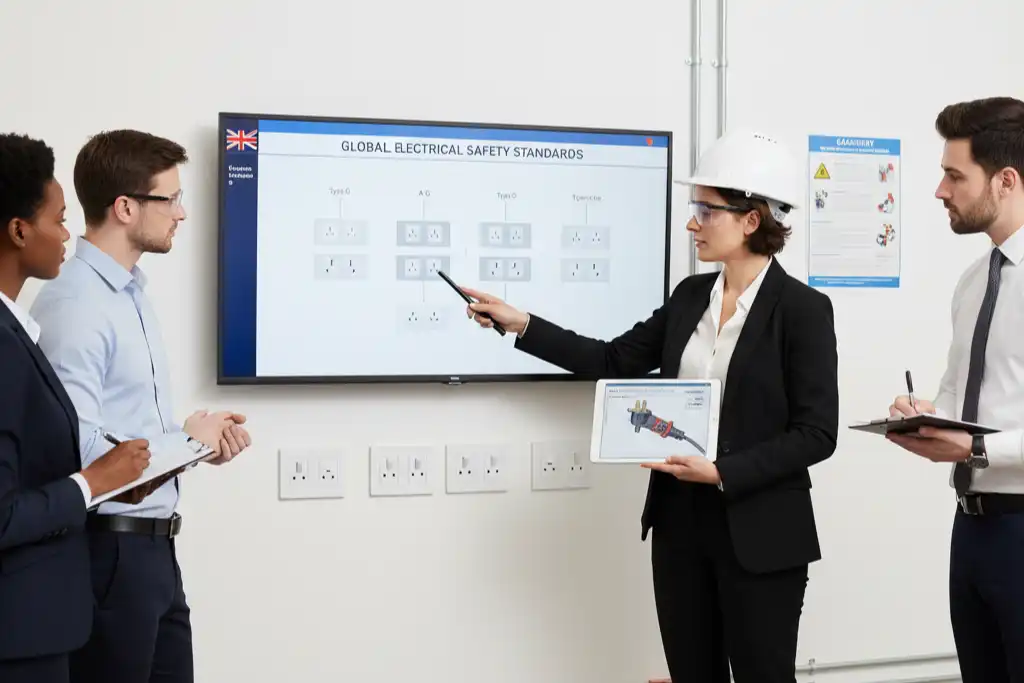
You might see that each country has its own wall socket. International standards for wall sockets help show how electricity connects to devices worldwide. There are 15 different plug types used in many countries. This means you need to look at plug shapes, voltage levels, and grounding features. These things can change your safety and how your electronics work. People who travel often need adapters and converters. Manufacturers must follow many local rules to make safe products.
Key Takeaways
- Many countries have different wall socket types. Always look at the plug shape before you travel. This helps your devices work in other places.
- Grounding is very important for safety. Use three-prong plugs with metal appliances. This can stop electric shocks from happening.
- Voltage is not the same everywhere. Using the wrong voltage can break your devices. Always check the voltage before you plug in.
- Certified adapters and converters keep you safe when you travel. Pick well-known brands to avoid problems like overheating.
- Makers of devices must follow local rules. Safety certifications help people trust the product and keep it safe.
Wall Socket Standards Overview
Plug Types Worldwide
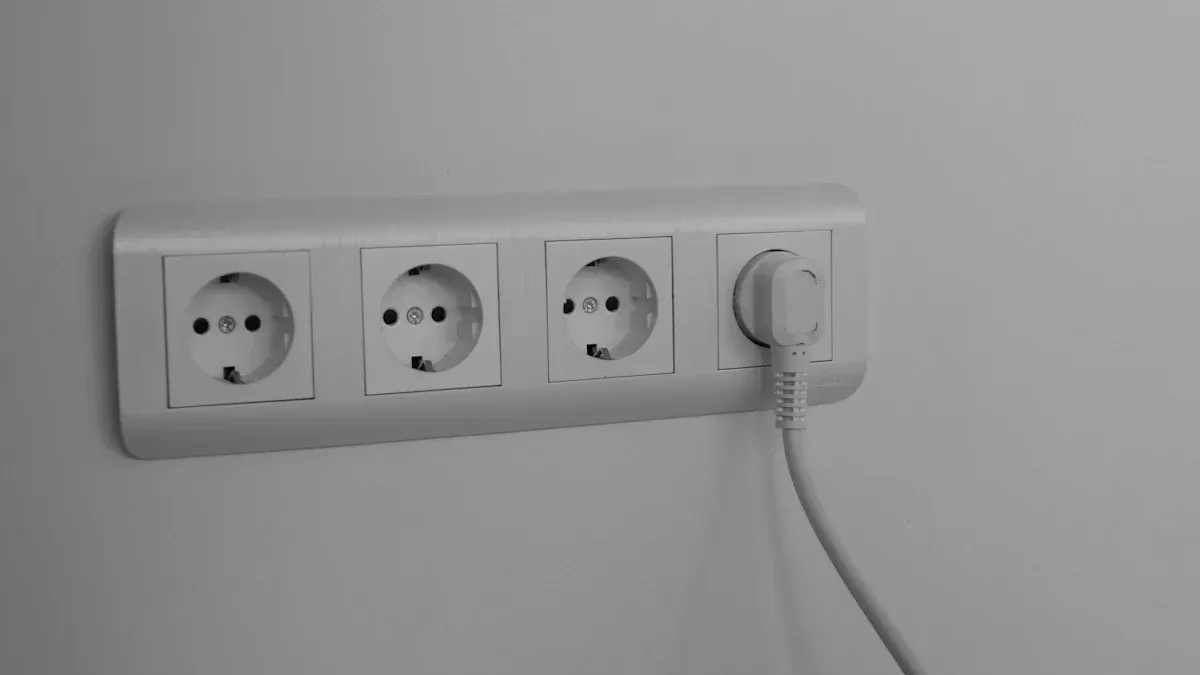
Wall sockets look different in many countries. The US Department of Commerce says there are 15 plug types. Each plug type has its own shape and prong setup. Some countries use just one plug type. Others use more than one. Type A and Type B plugs are used a lot in North America. Type C, E, and F plugs are found in Europe. Type G is used in the United Kingdom.
Here is a table that shows some plug types and where you see them:
| Plug Type | Regions Used | Prong Shape |
|---|---|---|
| Type A | North America, Japan | Two flat prongs |
| Type B | North America, Japan | Two flat + ground |
| Type C | Europe, Asia | Two round prongs |
| Type G | UK, Ireland | Three rectangular |
Check the plug type before you travel. This helps you use your devices in other countries.
Grounding and Prong Configurations
Wall socket safety depends on grounding and prong design. You will see two-pronged and three-pronged plugs in homes and buildings.
- Two-prong outlets have two slots for plugs. They do not have a grounding wire. This means there is no safe path for electricity during problems. Without grounding, there is a bigger risk of shocks and fires, especially in old homes.
- Three-prong outlets have a grounding wire. The third prong goes to the ground. This keeps you safe from electric shock. If a wire inside a metal appliance touches the case, grounding sends extra electricity to the earth. You stay safe even if something breaks inside the device.
Tip: Always use grounded plugs for metal appliances. Grounding stops dangerous shocks.
International standards make wall sockets safer and better. You will see some important standards:
- IEC 60320 gives rules for appliance plugs. This standard helps you know if a plug is safe.
- IEC 60884-1 gives rules for plugs and sockets in homes.
- IEC 60309 covers industrial plugs and sockets.
- IEC 60669 sets rules for switches used with wall sockets.
These standards help companies make safe products. They also help you use electrical devices safely in different countries.
Regional Differences
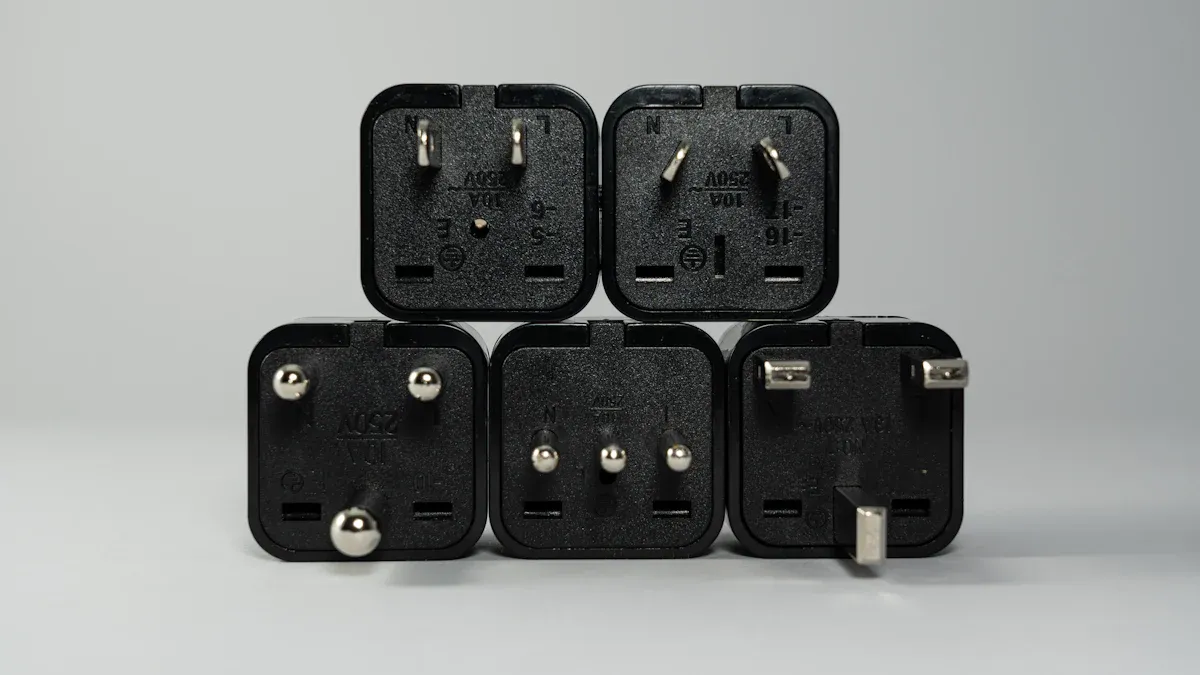
When you travel or buy electronics, you will notice that wall sockets and plugs are not the same everywhere. Each region has its own standards for voltage, frequency, and plug types. These differences can affect how you use your devices safely.
North America
In North America, you will find a standard voltage of 120V and a frequency of 60Hz. This system comes from the early days of electricity in the United States. Most homes and buildings use this standard.
| Region | Voltage | Frequency |
|---|---|---|
| North America | 120V | 60Hz |
You will see two main plug types in North America. The NEMA 1-15 plug, also called Type A, has two flat blades and does not have a ground pin. The NEMA 5-15 plug, or Type B, adds a round ground pin for safety. Both types are rated for 15 amps at 125 volts. The ground pin on Type B plugs connects first, which helps protect you from electric shock.
Note: Always check if your device needs a ground connection before plugging it in.
Most countries in North America use the same wall socket standards. This makes it easy to use your devices across the United States, Canada, and Mexico.
Europe
Europe uses a higher voltage and a different frequency than North America. The standard voltage is 230 volts, and the frequency is 50 Hz.
- Standard voltage: 230 volts
- Standard frequency: 50 Hz
You will find several plug types in Europe. Some countries use only one type, while others use more than one. Here is a table that shows the most common plug types and where you will find them:
| Plug Type | Description | Countries Used |
|---|---|---|
| Type C | Europlug, two-pin | Common across Europe |
| Type E | French plug, two-pin | France and Belgium |
| Type F | Schuko, two-pin with grounding | Germany, Austria, Spain |
| Type G | UK plug, three-pin | United Kingdom |
| Type J | Swiss plug, three-pin | Switzerland |
You will see that Type C plugs fit in many European countries. Type E and Type F are also very common. The United Kingdom uses Type G, which looks very different from the others. Switzerland uses Type J. Some countries allow more than one plug type, so you should always check before you travel.
Asia and Other Regions
Asia has many different wall socket standards. Each country sets its own rules for voltage and plug types. You will see a wide range of voltages, from 100V in Japan to 240V in Malaysia.
Here is a table that shows the main standards in some Asian countries:
| Country | Voltage | Plug Type |
|---|---|---|
| Japan | 100V | A / B |
| China | 220V | A / I |
| India | 230V | C / D / M |
| Thailand | 220V | A / B / C / F / O |
| Singapore | 230V | G |
| Malaysia | 240V | G |
| South Korea | 220V | C / F |
- Japan uses 100V. Older buildings have Type A plugs, while newer ones use Type B.
- China uses 220V. Type I is common, but you may see Type A in older places.
- India uses 230V. You will find Type D and Type M plugs.
- Thailand uses 220V. Type O is standard, but Types A, B, and C are also accepted.
- Singapore uses 230V and Type G plugs.
- Malaysia uses 240V and also uses Type G.
- South Korea uses 220V and mainly Type C plugs.
Tip: Always check the voltage and plug type before you use your device in a new country. Using the wrong plug or voltage can damage your electronics.
You can see that wall socket standards change from country to country. Some countries use only one standard, while others accept many types. Knowing these differences helps you stay safe and keep your devices working.
Standards Organizations
Many groups help make rules for plugs and sockets. These organizations want you to use devices safely at home or when you travel.
IEC
The International Electrotechnical Commission (IEC) creates global standards for electrical products. IEC standards are used in many countries. The IEC has committees that work on different topics. SC 23B is a committee for plugs, socket-outlets, and switches.
| Committee | Title | Standard Example |
|---|---|---|
| SC 23B | Plugs, socket-outlets and switches | IEC 60884-1 ED4 – Plugs and socket-outlets for household and similar purposes – Part 1: General requirements |
There are several IEC standards for wall socket safety and design.
| Standard | Description |
|---|---|
| IEC 60309 | Standards for plugs, socket-outlets, and couplers for industrial purposes. |
| IEC 60320 | Standards for appliance couplers for household and similar general purposes, connecting power cords. |
IEC 60309 is for industrial plugs and sockets. IEC 60320 is for appliance couplers in homes. IEC 60884-1 gives rules for home plugs and sockets. IEC 60669 is for switches used with sockets.
National Bodies
Every country has its own national standards group. These groups write and share standards for their area. They go to international meetings to represent their country. They keep standards in libraries and sell copies to companies. Some groups check if products follow the rules. Here is a table with examples from different countries:
| Country | Plug Types | Voltage (V) | Frequency (Hz) |
|---|---|---|---|
| Guadeloupe | C / E | 230 | 50 |
| Guam | A / B | 110 | 60 |
| India | C / D / M | 230 | 50 |
| Japan | A / B | 100 | 50 / 60 |
| Hong Kong | G | 220 | 50 |
National bodies help you follow local rules and keep devices safe.
Tip: Always check your country’s standards before you buy new electrical products.
Regulatory Groups
Regulatory groups make sure products meet safety standards. They test and certify devices so you know they are safe. Some well-known groups are IEC, Underwriters Laboratories (UL), and TUV.
| Regulatory Body | Function |
|---|---|
| International Electrotechnical Commission (IEC) | Develops international standards for electrical safety, including guidelines like IEC 62368-1. |
| Underwriters Laboratories (UL) | Provides certification and safety testing for products, ensuring compliance with safety criteria. |
| TUV | Certifies products for compliance with EU regulations, facilitating market entry in Europe. |
National standards groups work with regulatory groups. They help set rules and check products. Regulatory authorities use standards to support technical regulations. They may look at official standards registers to make sure products follow the law.
Adapting to Wall Socket Standards
Adapters and Converters
When you go to another country, you may need adapters or converters. Adapters help your plug fit into a different socket shape. Converters change the voltage so your device works safely. Always pick good adapters from trusted brands. Certified adapters keep you safe from shocks and fires. Before using an adapter, check if the voltage matches your device. If you plug a 120V device into a 230V outlet, it can get too hot or catch fire. Do not put too many devices into one adapter. Too many devices can make it overheat and break. Look at cords and adapters for damage before you use them. Unplug adapters when you do not need them. This saves energy and stops overheating. Keep adapters dry and away from water. Make sure air can move around adapters to stop overheating. Use childproof covers if you travel with kids or pets. Never change adapters, because this can remove safety features.
Common adapter types include:
- Types A and B for North America and Japan
- Types C and F for Europe
- Type G for the UK, Singapore, and Hong Kong
- Type I for Australia and China
- Types D and M for India and South Africa
Safety Tips for Travelers
You need to be careful when using devices in other countries. Always check the voltage and plug type before you use your device. Using the wrong plug or voltage can cause shocks, overheating, or fire. Universal sockets may show live pins and may not have grounding. This makes accidents more likely. Check wall sockets and adapters for damage. Keep electrical items dry and away from water. Unplug devices when you are not using them. Use childproof covers if you need them.
Tip: Always buy certified adapters and converters for safe travel.
Manufacturer Considerations
If you make products for many countries, you must follow lots of rules. You need to meet high standards for product quality. Safety certifications help people trust your products and keep them safe. Following rules helps your product sell in new places. Custom options let you meet customer needs in different areas. Good customer support helps users and makes them happy.
| Factor | Description |
|---|---|
| Product Quality | High standards ensure reliability and performance. |
| Safety Certifications | Compliance with international safety standards builds user trust. |
| Regulatory Compliance | Following local and global rules allows market acceptance. |
| Customization Options | Tailored solutions meet specific customer needs. |
| Customer Support | Strong support improves user experience and loyalty. |
Manufacturers also need certifications for each region, like UL Listed for the USA, CE Mark for Europe, and CCC for China.
You should know about international wall socket standards. This helps keep your devices safe when you travel or make products.
- Countries have different plug shapes and voltages. This can make travel hard.
- Safety certifications like CE and UL help you follow local rules.
| Challenge | Description |
|---|---|
| Physical incompatibility of plugs | Plug shapes and sizes are not the same everywhere. |
| Voltage differences | Voltages can be from 110V up to 240V. |
| Frequency differences | Devices may not work with 50 Hz or 60 Hz. |
| Need for adapters and converters | Adapters and converters help protect your devices. |
You can look up official standards at UL Standards. You can also read publications about electrical outlet boxes.
FAQ
What happens if you plug a device into the wrong voltage?
You can damage your device or cause a fire. Always check the voltage before you plug in. Use a converter if your device does not match the local voltage.
Do you need a grounded plug for every device?
You do not need grounding for every device. Devices with metal cases or high power need grounding for safety. Small plastic devices often work with two-prong plugs.
How do you know which adapter to buy for travel?
Check the plug type and voltage for your destination. Use this table to help:
| Country | Plug Type | Voltage |
|---|---|---|
| USA | A, B | 120V |
| UK | G | 230V |
| Japan | A, B | 100V |
Can you use one adapter for all countries?
Universal adapters fit many plug types. You still need to check voltage and frequency. Some devices need a converter, not just an adapter.
Are wall sockets safe for children?
Wall sockets can be dangerous for children. Use childproof covers and keep sockets out of reach.
Tip: Always teach children not to touch sockets.
See also
What should I do if the circuit is overloaded?
Washing machine socket: Can you use a regular socket?
What are the warning signs of surge protector failure
Will the Macan EV Feature NACS or Stick with J1772
Can You Connect Multiple Surge Protectors Together Safely