
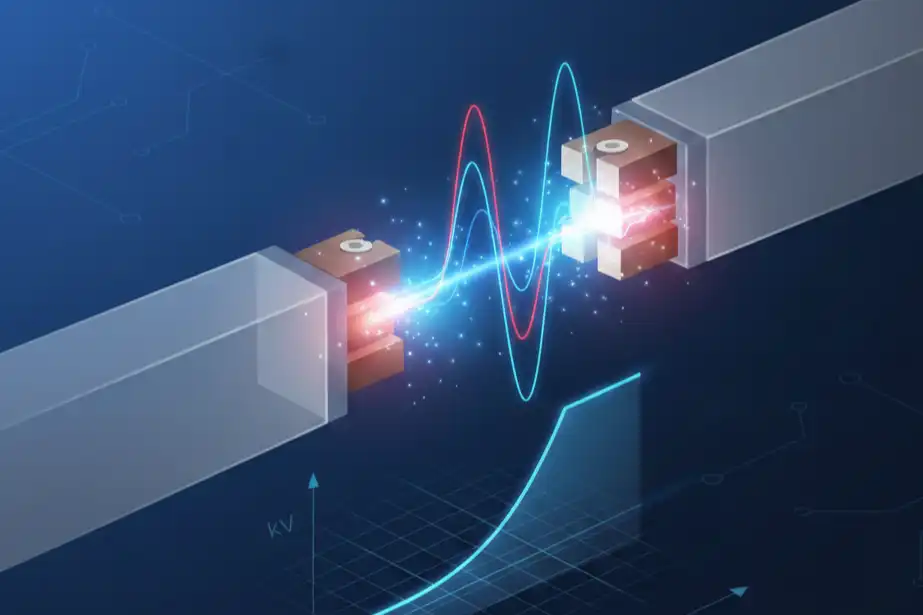
You should watch transient recovery voltage when using a high-voltage circuit breaker. When the breaker stops a fault, the voltage across its contacts can go up quickly. Sometimes, it can be twice as high as normal. This fast jump can be too much for the insulation. It can make the arc start again. If you match TRV ratings to your system, you lower this risk. This helps your breaker work well.
Key Takeaways
- Transient Recovery Voltage (TRV) can go up fast after a circuit breaker opens. This can make arcs start again. Always check if your breaker can handle the TRV you expect.
- It is very important to match the TRV rating of your circuit breaker to what your system needs. This keeps your system steady and stops damage to equipment.
- Checking and taking care of circuit breakers often can help you find TRV problems early. Use computer models to guess how TRV will act during faults.
- Add protective devices like surge arresters and grading capacitors to control TRV well. These tools help keep your equipment safe from voltage spikes.
- Think about TRV when you plan a project. Use models to pick the right breakers and design insulation that can take the TRV you expect.
Understanding Transient Recovery Voltage
TRV Definition and Features
When you open a high-voltage circuit breaker, the voltage across its contacts changes fast. It does not go back to normal right away. This quick change is called transient recovery voltage, or TRV. TRV is the voltage that shows up across the breaker contacts after the arc stops. TRV depends on many things in your power system.
Here is a table that lists the main electrical features that describe TRV:
| Characteristic Type | Description |
|---|---|
| Type of Neutral | Effectively grounded, ungrounded, solidly grounded, etc. |
| Type of Load | Capacitive, inductive, resistive |
| Type of Connection | Cable connected, line connected, etc. |
| Fault Type | Single, double, or three-phase faults, grounded or ungrounded |
You should think about these things too:
- System voltage and setup
- Fault current size
- Circuit inductance and capacitance
- Load features
TRV values can be very different in each network. For example, in offshore industrial power systems, TRV might be 13.8 kV or 4.16 kV. The generator’s sub-transient reactance and the transformer’s short-circuit impedance can make TRV go up or down. You should always check these things when you design or run a power system.
Why TRV Is Critical in Power Systems
You need to watch TRV because it affects how well your high-voltage circuit breaker works. If TRV goes up too fast or gets too high, the breaker may not stop the arc. This can hurt equipment or cause a power outage.
Tip: Always match the TRV rating of your breaker to your system’s needs. This keeps your power system safe and steady.
TRV matters for many reasons:
- It affects if the breaker can stop fault currents.
- It helps keep your power system steady.
- System voltage, short-circuit current, and source impedance all change how TRV acts.
When you know about TRV, you can pick better equipment and design your system well. This makes your power system work better and lowers the chance of problems.
TRV Impact on High-Voltage Circuit Breaker Performance
Arc Extinction and Dielectric Strength
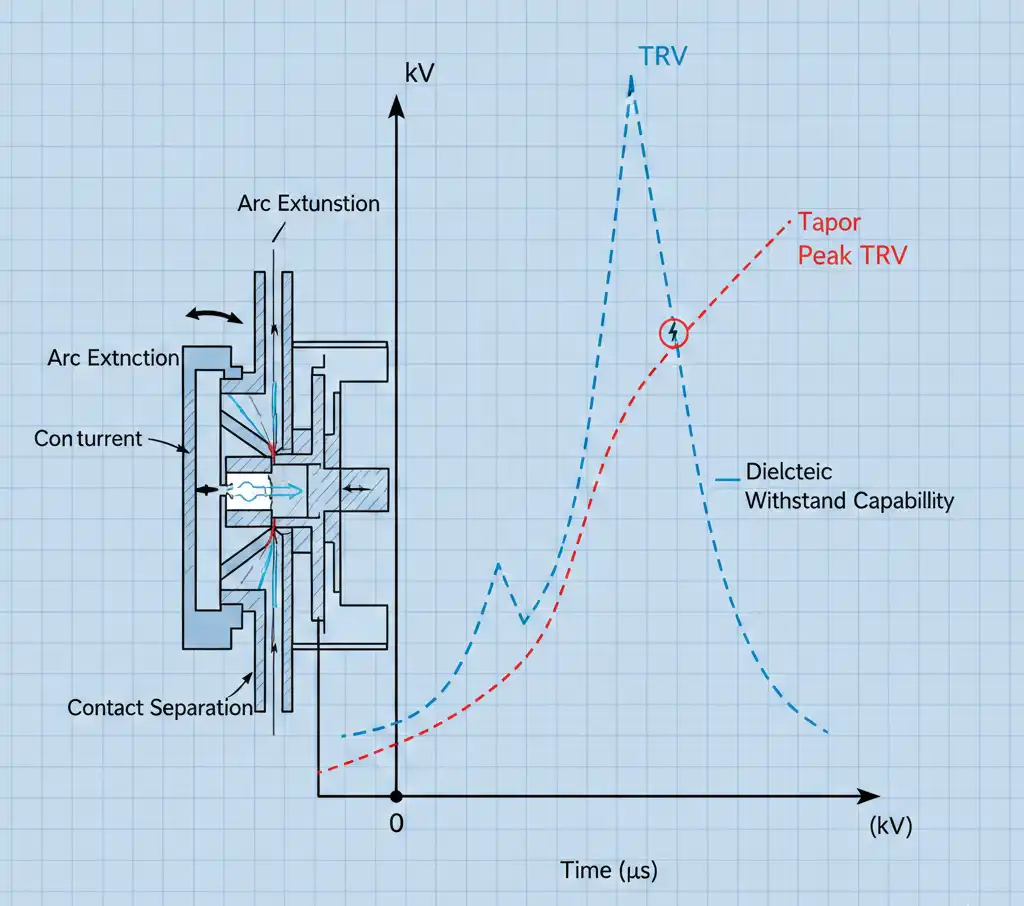
When you open a high-voltage circuit breaker, the arc between the contacts must go out. The breaker needs to build up enough dielectric strength to keep the arc from coming back. Transient recovery voltage, or TRV, rises quickly after the arc stops. If the TRV goes up faster than the breaker’s insulation can handle, the arc may re-ignite. This makes it hard for the breaker to do its job.
You want the dielectric strength to grow faster than the TRV. If it does not, the arc can jump across the contacts again. This can damage the breaker and other equipment. You must always check that your high-voltage circuit breaker can handle the TRV in your system. If you do not, you risk losing control over the arc.
Note: The speed and size of TRV decide if the breaker can stop the fault safely. A mismatch can lead to dangerous situations.
Reliability Risks and Failure Modes
If you use a high-voltage circuit breaker with the wrong TRV rating, you face many risks. The breaker may not interrupt the current at the right time. This can cause current chopping, where the breaker stops the current too soon. When this happens, you may see high-frequency overvoltages in your system. These overvoltages can harm your equipment and make your power system unstable.
You may also see arc reignitions. When the arc comes back, it can cause high-frequency oscillations. These fast changes in voltage and current can spread through your network. They may even affect other breakers or devices nearby.
Here are some problems you might face if the TRV rating does not match your system:
- Current chopping can cause abnormal interruptions and overvoltages.
- High-frequency reignitions can make voltage levels rise quickly.
- The arc may become unstable near current zero, creating high-frequency transient currents in nearby parts of the network.
- Oscillations in other phases can lead to virtual chopping, which affects the stability of your breaker.
If the TRV goes above the dielectric strength of the breaker, you may see arc re-ignition. This can lead to breaker failure. Your system may lose power, and you may need costly repairs. You must always match the TRV rating to your system to avoid these problems.
Real-World TRV Challenges
Utility Network Scenarios
In big utility networks, you see many TRV profiles. These profiles change with the system’s design and the type of fault. In the early 1980s, experts looked at TRV from transformer and series reactor-limited faults. They gathered data about transformer frequencies and ratings. Large networks, like 245 kV systems, showed thousands of TRV wave shapes. IEC rules used these studies to set TRV values for systems up to 765 kV. The rate of rise of TRV for ungrounded three-phase faults can reach 2 kV per microsecond. This fast rise puts a lot of stress on your equipment.
- CIGRE studies found about 2000 TRV wave shapes in 245 kV networks.
- IEC standards use these studies to set TRV values.
- The rate of rise for ungrounded faults can be very high and stress your system.
Case Study: Breaker Failure Due to TRV
You can have real problems if TRV goes over your breaker’s limit. In one case, a 345 kV system had a fault where the TRV wave shape rose too fast for the breaker. During short-line faults, the recovery voltage went up faster than the breaker could handle. This made the breaker fail. TRV can break equipment if you do not match ratings to your system.
Lessons from Field Experience
Field experience gives you important lessons about TRV. Superconducting fault current limiters can raise system inductance and change TRV. Key TRV factors are peak voltage, frequency, rate of rise, and damping constant. These limiters help protect your breakers from fast TRV increases.
| Aspect | Description |
|---|---|
| Clause | Looks at TRV features and how it works during switching. |
| Harmonization | Brings IEC and IEEE TRV rules together. |
| ITRV | Talks about Initial Transient Recovery Voltage and what it does. |
| SLF Conditions | Lists what you need for Short Line Fault testing. |
| Surge Impedance | Shows how surge impedance and capacitors change TRV shape and size. |
You see that higher fault currents in today’s grids need careful TRV control. The TRV at your breaker depends on system inductance, resistance, and capacitance. Using superconducting fault current limiters helps lower TRV effects and keeps your equipment safe.
Mitigating TRV in High-Voltage Circuit Breakers
Equipment and Specification
You can stop many transient recovery voltage problems by picking the right equipment. Always check the voltage rating when you choose a high-voltage circuit breaker. Some breakers are made to handle tough TRV situations. You can add special devices to the breaker terminals to help control TRV. Here are some ways to make your setup better:
- Pick a circuit breaker with a higher voltage rating or a special design.
- Add capacitance at the breaker terminals to slow down how fast TRV rises.
- Put a zinc oxide surge arrester across the breaker terminals.
- Use surge capacitors to ground or grading capacitors across the contacts.
- Add smooth reactors to change the TRV waveform.
- Always talk to the manufacturer about what you need.
System Design Strategies
Good system design helps you handle TRV stress. You can use different ways to protect your equipment. The table below shows some common methods:
| Strategy | Description |
|---|---|
| Surge Arresters | Stop voltage spikes and help manage TRV. |
| Pre-insertion Resistors | Slow down how fast TRV rises when the breaker works. |
| Grading Capacitors | Help control transient voltages by balancing voltage across contacts. |
| Higher-rated Circuit Breakers | Handle bigger transient voltages, but may cost more. |
| Phase-to-ground Surge Arresters | Lower voltage on the side making TRV, giving extra safety. |
Protective Devices and TRV Modifiers
You can use special devices to change how TRV acts in your system. These devices help keep voltages safe and protect your equipment:
- Diodes quickly limit voltage in low-voltage systems.
- Varistors handle more energy and stop voltage spikes.
- Thyristors act like crowbars to take in energy.
- Gas discharge devices work well for high voltages and big surges.
- Current-limiting devices, like fuses, react to high current.
- Transition-time limiting devices, such as capacitors, slow down voltage changes.
Maintenance and Monitoring
Regular checks help keep your system safe from TRV problems. You should look at your high-voltage circuit breaker and other devices often. Use tools like computer modeling and simulation to guess how TRV will act. Controlled switching helps you time breaker moves to lower TRV stress. Keeping your equipment in good shape lowers the chance of failure and keeps your power system working well.
Tip: Keep learning about new technologies, like better breaker designs and surge arresters, to make your TRV protection stronger.
Recommendations for Engineers
TRV Management Steps
You need a good plan to handle transient recovery voltage in your power system. First, look at the TRV ratings for each high-voltage circuit breaker in your network. Make sure the breaker fits your system’s voltage and fault current. Use computer tools to make models of TRV waveforms. These models show how TRV acts during faults or switching.
Here are steps to keep your system safe:
- Check breaker ratings and see if they match your system.
- Use computer models to guess how TRV will behave.
- Look at your equipment for damage or wear.
- Add surge arresters or grading capacitors if TRV is high.
- Teach your team to find TRV risks and act fast.
Tip: Training and regular checks help you find TRV problems before they hurt your system.
Project Planning Integration
Think about TRV early when you plan your project. Make models of TRV for each switching event, especially with vacuum circuit breakers. This helps you pick the right breakers and plan for insulation. If you forget about TRV, your equipment might fail and safety can be at risk.
Capacitance in your equipment can change how TRV works. When you plan a new setup, add these details to your computer models. Look at every source of transient voltage. Change your design to lower how fast and how high TRV goes.
Here is a table to help you remember what to check when you plan your project:
| Step | What to Do |
|---|---|
| Model TRV | Use software to make switching event models |
| Size Breakers | Pick breakers that fit your TRV needs |
| Insulation Coordination | Match insulation to the TRV you expect |
| Review Capacitance | See how equipment capacitance changes TRV |
| Update Design | Change your setup to lower TRV risks |
When you add TRV studies to your planning, your system is safer. You protect your equipment and keep your power working.
You should pay close attention to TRV when picking circuit breakers. TRV shows up right after a fault and can make voltage jump fast. If you ignore TRV, your breaker might not work. This can make your power system unsafe. New breaker designs help keep TRV under control.
| Key Consideration | Description |
|---|---|
| TRV Importance | Make sure TRV follows IEC rules. |
| Insulation Levels | Check insulation so voltage does not get too high. |
| Overvoltage Protection | Use surge arresters and capacitors if TRV is strong. |
Always study TRV when you plan your system. This helps keep your equipment safe and working well.
FAQ
What is transient recovery voltage (TRV)?
TRV is the voltage across breaker contacts after the arc stops. This voltage goes up fast. It can be hard for the breaker’s insulation. TRV can make safe operation harder.
How does TRV affect circuit breaker performance?
TRV can make the arc start again if it rises too fast. The breaker’s insulation must be strong enough. You need to match the TRV rating to your system. This keeps your equipment safe.
What can you do to reduce TRV problems?
- Pick breakers with the right TRV rating
- Add surge arresters or grading capacitors
- Use computer models to guess TRV
- Check your equipment often
Tip: You make things safer by changing your system design and using protective devices.
Why do engineers study TRV before installing breakers?
Engineers study TRV to pick the best breaker. This helps stop equipment from failing. TRV studies help plan insulation and protection. Knowing about TRV keeps your power system working well.