When you choose a sub-panel for your garage or shed, you need to think about what power you use now and later. Many people add a sub-panel to get more circuits, run new tools, or make their work area safer and easier to use. You want to choose the right one so you do not overload circuits. This also helps you get ready for upgrades. These are the main reasons people choose a sub-panel:
| Reason for Installing a Sub-Panel |
|---|
| More energy needed because of new technology |
| Need more circuits |
| Easier to have power in a different spot |
| Adding on or fixing up your home means more power needed |
You should always think about safety and follow electrical rules. If you are not sure what to do, ask a licensed electrician for help.
Key Takeaways
- Think about how much power you need now and later. This stops circuits from getting too full. It also gets you ready for upgrades.
- Pick a sub-panel with the right amperage rating. Most garages and sheds need 60 to 100 amps. This is enough for tools and lights.
- Always look at local electrical codes before you start. These rules keep you safe and follow the law.
- Choose a sub-panel with enough circuit spaces for the future. This lets you add more outlets or tools later.
- If you do not know how to install it, hire a licensed electrician. This keeps your project safe and follows the rules.
What Is a Sub-panel and Why Use One
Sub-panel Basics
Sometimes your garage or shed needs more power than your main panel gives. A sub-panel can help with this problem. It is a smaller electrical panel that gets power from your main service panel. The sub-panel sends electricity to places like your garage or shed. This means you do not need to run lots of long wires from the main panel.
Here is a simple table to help you know what a sub-panel is:
| Term | Definition |
|---|---|
| Subpanel | A smaller electrical panel that extends power from the main service panel to other areas of a home. |
| Subpanel | An extension of your main panel, providing power to distant areas without running multiple long wires. |
| Subpanel | Divides existing power supplies so that circuits for separate areas can be controlled individually. |
A sub-panel lets you control circuits in your garage or shed. You can turn off power for repairs or upgrades more easily. Your main panel will not get too full.
Tip: Always check local electrical codes before you pick a sub-panel. Some codes, like NEC 210.11(C)(4) and 230.70(A)(1), have rules for branch circuits and disconnects in detached buildings.
Benefits for Garages and Sheds
A sub-panel has many good points for your garage or shed. You do not have to upgrade your main panel. You can add new circuits later if you need them. You can keep things like solar panels or HVAC in one place.
Here are some key benefits:
- You stop your main panel from getting overloaded.
- You can put in more outlets or lights later.
- You make your home look better to buyers.
- You lower the chance of electrical fires by stopping over-current.
- You can fix or upgrade things more easily since it is all together.
- You follow safety codes, which helps with insurance and inspections.
When you pick a sub-panel for your garage or shed, you make your space safer and ready for new things.
Choose a Sub-panel: Size and Capacity
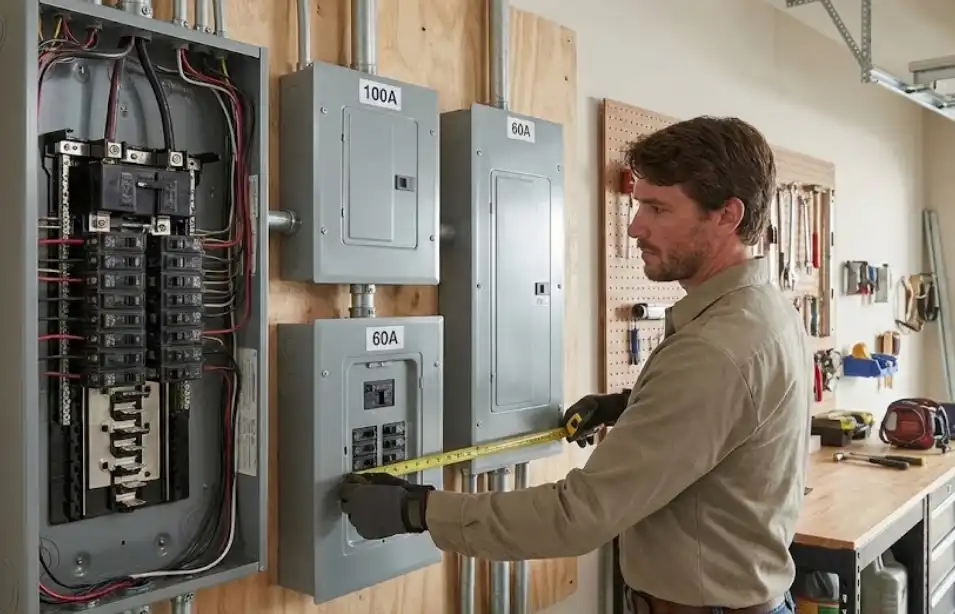
When you choose a sub-panel for your garage or shed, you need to think about how much power you will use now and in the future. Picking the right size and capacity helps you avoid overloads and keeps your electrical system safe.
Calculating Electrical Load
Start by figuring out how much electricity you will use at the same time. Do not just add up the numbers on each breaker. You need to look at the biggest load you might use all at once. This gives you a better idea of what your sub-panel needs to handle.
To do this, make a list of all the tools, lights, and machines you want to run. Write down the wattage for each one. Add up the wattages for the items you might use together. Divide the total watts by 240 (for a 240-volt system) or 120 (for a 120-volt system) to get the amperes.
Tip: The National Electrical Code says you should use a safety factor of 125%. Multiply your total amperes by 1.25. This helps your sub-panel handle extra loads and keeps your system safe.
For example, if your total load is 40 amps, multiply by 1.25. You get 50 amps. This means you should choose a sub-panel that can handle at least 50 amps.
Amperage Ratings (60-100 Amps)
You will see different amperage ratings when you choose a sub-panel. The right size depends on your needs.
| Amperage Rating | Description |
|---|---|
| 50 Amps | Good for small sheds or basic tools and lighting. |
| 100 Amps | Works for most garages and sheds with several tools or machines. |
| 200 Amps | Best for large setups with high-demand equipment and future upgrades. |
- The National Electrical Code does not set a minimum amperage for sub-panels in detached garages.
- Detached garages count as sub-panels connected to the main service.
- You should size your sub-panel based on what you plan to use, not a fixed number.
Most people choose a sub-panel between 60 and 100 amps for a garage or shed. This gives you enough power for tools, lights, and maybe a heater or air compressor.
Planning for Future Expansion
Think about what you might add later. You may want more outlets, bigger tools, or even an electric vehicle charger. Planning ahead saves you time and money.
Professionals start with a load calculation. They determine whether the central panel can support the new subpanel and everything tied to it. If not, the smart move is upgrading the main service at the same time. It avoids overloads and makes the entire system future-ready.
When you choose a sub-panel, look for one with enough circuit spaces. Many experts recommend at least a 40-space main breaker panel for a garage or shed. This lets you add more circuits later.
- Use 12/2 wire for 20-amp circuits. This works for outlets and most tools.
- Use 14/2 wire for 15-amp circuits. This is good for lights and small loads.
Choosing the right sub-panel size and capacity helps you stay safe and ready for anything you want to add in the future. Always check your main panel to make sure it can handle the extra load before you install a new sub-panel.
Sub-panel Selection Factors
Location and Environment
When you choose a sub-panel for your garage or shed, think about where you will put it. Place the sub-panel in a spot that is easy to reach. Most experts recommend installing the sub-panel inside the garage, not in the shed. This makes it safer and easier to work on if you need repairs. Keep the panel away from water, heat, and anything that could damage it. If your garage or shed has heavy tools or many circuits, a sub-panel becomes necessary for safety and code compliance.
Here are some best practices for sub-panel placement:
| Best Practice | Description |
|---|---|
| Use one sub-panel | One sub-panel is usually enough if it meets your needs and local codes. |
| Location | Place the sub-panel in the garage for better access and safety. |
- Choose a 60–100 amp sub-panel for most garages.
- Make sure the sub-panel has its own grounding rod.
- Always keep neutral and ground wires separate.
Main Panel Compatibility
Check your main panel before you install a sub-panel. Make sure it can handle the extra load. The main breaker size should match the service size and the wire capacity. If your sub-panel has more than six circuits, you need a disconnect switch. Overcurrent protection must come from the main panel. Leave room for future upgrades by choosing a panel with extra spaces.
- Match the main breaker to your service and wires.
- The sub-panel’s main breaker acts as a disconnect, not as overcurrent protection.
- Pick a larger breaker if you plan to add more circuits, but never go over the wire’s limit.
Neutral and Ground Bus Setup
You must keep the neutral and ground buses separate in your sub-panel. This is a key safety rule. The neutral bar should not connect to the panel or the ground bar. The ground bar bonds to the panel and connects to a ground rod outside. This setup prevents shock risks and keeps your system safe.
If you connect neutral and ground together, you can create dangerous current paths. This may cause overheating, shock hazards, and even make your safety devices fail. Always remove the green bonding screw in the sub-panel. Install a separate ground bar and connect it to a ground rod.
| Issue | Technical Explanation | Practical Impact |
|---|---|---|
| Parallel Current Paths | Multiple return paths for neutral current | Overheating and unbalanced loads |
| Elevated Ground Potential | Ground wires carry normal current | Shock risk from equipment and surfaces |
| Nuisance Tripping | Fault sensors detect normal current as faults | Unwanted shutdowns |
| Code Violation | Breaks NEC 250.142(B) | Fails inspection and insurance checks |
When you choose a sub-panel, always follow these wiring rules. This keeps your garage or shed safe and up to code.
Installation Overview and Safety

Basic Installation Steps
You can put in a sub-panel in your garage or shed by following some easy steps. These steps help you stay safe and keep things simple. Here is a basic order to follow:
- Put the sub-panel box on the wall in your garage or shed.
- Run the feeder cable from the main panel to the sub-panel.
- Pull the feeder cable into the sub-panel box.
- Connect the feeder cable wires to the sub-panel terminals.
- Turn off the main power and check if there is space for a new double-pole feeder breaker.
- Pull the feeder cable into the main electrical panel.
- Attach the feeder cable wires to the new breaker in the main panel.
- Put the breaker into the main panel.
- Add new circuits to the sub-panel if you need them.
You will need some simple tools and materials for this job:
- Screwdriver
- Hammer
- Voltage tester
- Flashlight
- Wire strippers
- Lineman’s pliers
- Long-nose pliers
- Sub-panel and mounting screws
- Approved feeder cable and breaker
- Cable clamps or staples
- Circuit breakers for new circuits
Tip: Always make sure the power is off before you touch any wires.
Safety and Code Compliance
You must follow safety rules and electrical codes when you put in a sub-panel. The National Electrical Code (NEC) has some important rules:
| Requirement | Description |
|---|---|
| Permits | Get a permit for new feeders or detached buildings. |
| Inspections | Inspect grounding, wire size, breaker ratings, and labeling. |
| Neutral and Ground Separation | Keep neutral and ground bars separate in the sub-panel. |
| Grounding Electrodes | Use extra grounding rods for detached structures. |
You should always label your circuits and keep your work area clean. Good grounding and keeping neutral and ground bars apart stop shock hazards.
When to Hire an Electrician
Some jobs need a licensed electrician. You should call a pro if you are not sure what to do or if your local code says you must for detached buildings. A certified electrician will make sure your project is safe and follows the rules.
- Hiring a pro keeps your sub-panel safe and up to code.
- You keep your home and family safe from electrical dangers.
Note: Many places want a licensed electrician for sub-panel work in detached garages or sheds. Always check your local rules before you start.
You can pick the right sub-panel by knowing your power needs. Choose the right size for what you use now and later. Make sure your main panel can handle the extra power. Always think about what you might add in the future. Put the sub-panel where you can reach it easily. Leave enough space around it for safety. Make sure air can move around it and it is safe from harm. If you are not sure, ask a licensed electrician for help.
Following NEC code keeps your system safe and working well:
- It stops dangerous electricity from going the wrong way.
- It keeps neutral and ground apart for ground fault safety.
- It helps breakers work right to lower shock and fire risks.
| Resource Title | Link |
|---|---|
| How to Install and Wire a Sub-Panel | Link |
| Troubleshooting Electrical Wiring | Link |
| Home Electrical Safety | Link |
| Home Electrical Codes for Home Wiring | Link |
| Electrical Articles Directory | Link |
| Free Electrical Help | Link |
FAQ
What size sub-panel do you need for a typical garage?
Most garages work well with a 60-amp or 100-amp sub-panel. You should check your tool and appliance needs. Always plan for future upgrades. If you want to add big equipment later, choose a larger panel.
Can you install a sub-panel yourself?
You can install a sub-panel if you have electrical experience. Always turn off the main power first. If you feel unsure or local codes require it, hire a licensed electrician. Safety comes first.
Why keep neutral and ground separate in a sub-panel?
You must keep neutral and ground separate to prevent shock hazards. This setup stops stray current from flowing on ground wires. It also helps your breakers and safety devices work correctly.
What wire size should you use for a sub-panel?
Wire size depends on the amperage and distance. For a 60-amp sub-panel, use #6 AWG copper wire for short runs. For longer runs, use thicker wire. Always check local codes and use a wire size chart.
see also
What Locations in Your Home Need Surge Protection Devices Most
What main factors matter in power capacity planning
How to choose the size of the distribution board
Why Customized RCCB Is the Future of Electrical Safety
Ground Fault Identification and Repair Tips Every Electrician Should Know
Laser cleaning machine manufacturer