
You should turn off solar panels before cleaning them. Cleaning by hand can put you near electrical parts. This can be dangerous. Rain cleans the panels safely. But using water or touching panels can be risky.
Tip: Doing safety steps keeps you and your equipment safe.
Key Takeaways
- Always turn off solar panels before cleaning them. This helps you avoid getting shocked or hurt.
- Use soft brushes and mild soap to clean the panels. Do not use strong chemicals or rough things. This keeps the panels from getting damaged.
- Look at your owner’s manual for steps to turn off your solar system safely.
- If you are not sure how to clean, ask a professional or your solar installer for help.
- Cleaning your panels often helps them work better and last longer.
Turning Off Solar Panels
When It’s Needed
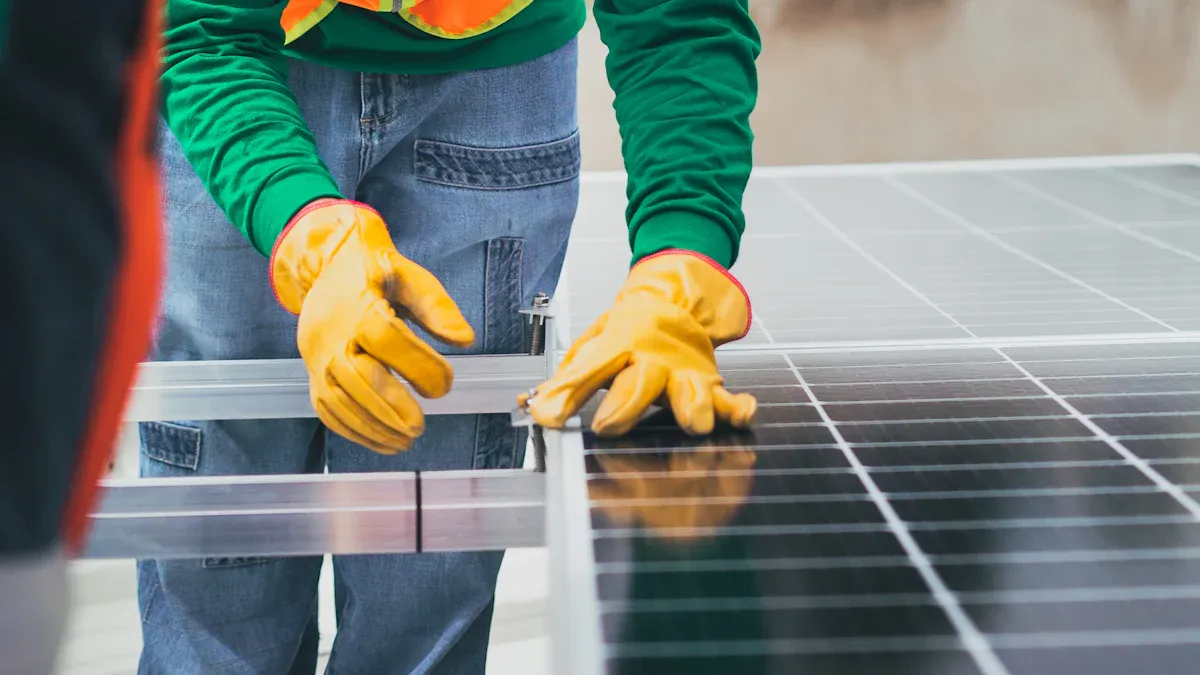
You might wonder if you always need to turn off solar panels before cleaning. Most experts say you should turn them off for safety. Water can cause electrical problems if it touches the wrong parts. You could get shocked if you clean panels while they are on. Even if you use a hose or a wet cloth, you risk electrocution if the connections get wet.
Here are the main reasons you should turn off your solar panels before cleaning:
- You lower the chance of electrical issues from water exposure.
- You protect yourself from electrical shock while cleaning.
- You avoid the risk of electrocution if you do not follow the right steps.
Note: Rain cleans solar panels without risk because you do not touch the panels or wires. Manual cleaning is different. You get close to the equipment, so safety matters more.
Some people think turning off the big switches near the inverter makes cleaning safe. That is not always true. Solar panels keep working when sunlight hits them. Disconnecting them from the grid does not remove all risks. You must remember that solar panels can still produce electricity during cleaning.
Manufacturer Advice
Manufacturers want you to stay safe. They usually tell you to shut down your system before you start cleaning. If you leave your solar panels on, you could face performance problems or danger.
Here is what most manufacturers recommend:
- Shut down the system before cleaning.
- Check the manufacturer’s guide for your specific model.
- Contact your local solar installer if you are unsure about the steps.
Tip: Always read your owner’s manual. Every solar panel system is a little different. The manual gives you the best advice for your setup.
Solar panels connect to the grid in complex ways. Turning them off is not always simple. You should not assume that flipping a switch makes everything safe. If you do not know how to turn off your system, ask a professional or your installer for help.
Solar Panels Cleaning Risks
Electrical Hazards
When you clean solar panels, you face real electrical dangers. Water and electricity do not mix well. If you touch wet panels or wires, you could get shocked. Even a small amount of current can be deadly. For example, current as low as 75 milliamps can kill a person. Some home solar panels can produce up to 600 volts. That is more than 12 times the lethal limit. Commercial systems can reach 1,000 volts, which is even more dangerous.
Here is a quick look at the main electrical hazards:
| Hazard Type | Description |
|---|---|
| Electrocution Risk | You can get exposed to electrical hazards during cleaning because panels connect directly to power. |
| Shock Risk | Electricity can travel through your body and cause serious harm or death. |
| Voltage Levels | Home systems can reach 600V, and commercial ones can go up to 1,000V. |
⚠️ Even though some people say they have not felt shocks while cleaning, you should always use caution. There have been cases where people did get shocked, especially when cleaning panels that are still on.
Equipment Damage
Cleaning solar panels the wrong way can hurt your system. If you use rough sponges or hard brushes, you might scratch the glass. Scratches can lower how much sunlight the panels collect. Using harsh chemicals or strong cleaning agents can damage the protective coating. This can make your panels less efficient and shorten their life.
Here are some common ways equipment gets damaged:
- Scrubbing too hard can leave permanent marks.
- Using abrasive materials can scratch the surface.
- Harsh cleaners can break down the glass or coating.
If you want your solar panels to last, you need to use gentle cleaning methods. Avoid anything that could scratch or wear down the surface.
Safety Steps for Cleaning
Shutting Down the System
You need to be safe when cleaning solar panels. First, turn off the system. This helps you stay away from electrical danger. Each solar setup is a bit different. But you can follow some simple steps:
- Look at your owner’s manual for how to shut down.
- Turn off the inverter. It changes solar energy to home electricity.
- Use the main disconnect switch to stop power from the panels.
- Wait a few minutes to make sure everything is off.
If you have a commercial system, there may be more switches. Always follow the right steps for your system. Do not hurry. Going slow helps you avoid mistakes.
💡 Tip: If you have battery storage, remember batteries can still give power when panels are off. Make sure you know how to turn off both the panels and the battery system.
Using Breakers and Switches
Breakers and switches help control electricity. You must use them the right way when cleaning. Here is what you should do:
- Find the breaker panel for your solar system.
- Flip the breaker for the solar array to “off.”
- Use any extra disconnect switches near the inverter or battery storage.
This table shows which switches you might need:
| Switch Type | Location | Purpose |
|---|---|---|
| Main Disconnect | Near inverter | Stops power from solar panels |
| Breaker Panel | Utility room or garage | Stops electricity flow |
| Battery Disconnect | Near battery storage | Turns off battery power |
Always check that everything is off before you clean. If you are not sure, ask a professional for help.
If Unsure, What to Do
Sometimes you may not know how to turn off your solar panels. That is okay. You have ways to get help. Here is what you can do:
- Gather all your solar papers, like contracts and warranties.
- Keep your documents organized so you can find them fast.
- Call the manufacturer if you have questions about your system.
- Ask your local solar installer for help, even if your first installer is gone.
Solar-only systems will not work during outages unless you have battery storage. Batteries can keep your lights on and give you more control. Even if your installer is out of business, your solar panels are still useful. With the right help and information, you can keep your system working well.
📝 Note: Always read your owner’s manual before cleaning. If you are not sure, do not guess. Ask a professional or the manufacturer for help.
Best Practices
When You May Not Need to Turn Off
You do not always have to turn off your solar panels for every cleaning. If you only rinse them with a gentle spray of water and do not touch any wires or connections, you may not need to shut down the system. Light cleaning, like removing dust with a soft brush on a cool, cloudy day, can be safe if you avoid electrical parts. Rain also cleans panels without risk because you do not get close to the equipment.
💡 Tip: Always check your owner’s manual. Some systems have special safety features that let you clean without turning off the power. If you see heavy dirt, bird droppings, or mold, you should turn off the system and follow full safety steps.
In some places, like dry or dusty regions, you might need to clean more often. Urban areas with lots of pollution may also need regular checks. If you only see a little dust, a quick rinse may be enough.
Safe Cleaning Tips
You want your solar panels to last and work well. Using the right tools and methods makes a big difference. Here is what works best:
- Pick the Right Tools
- Use a soft-bristle brush or a microfiber cloth. These will not scratch the glass.
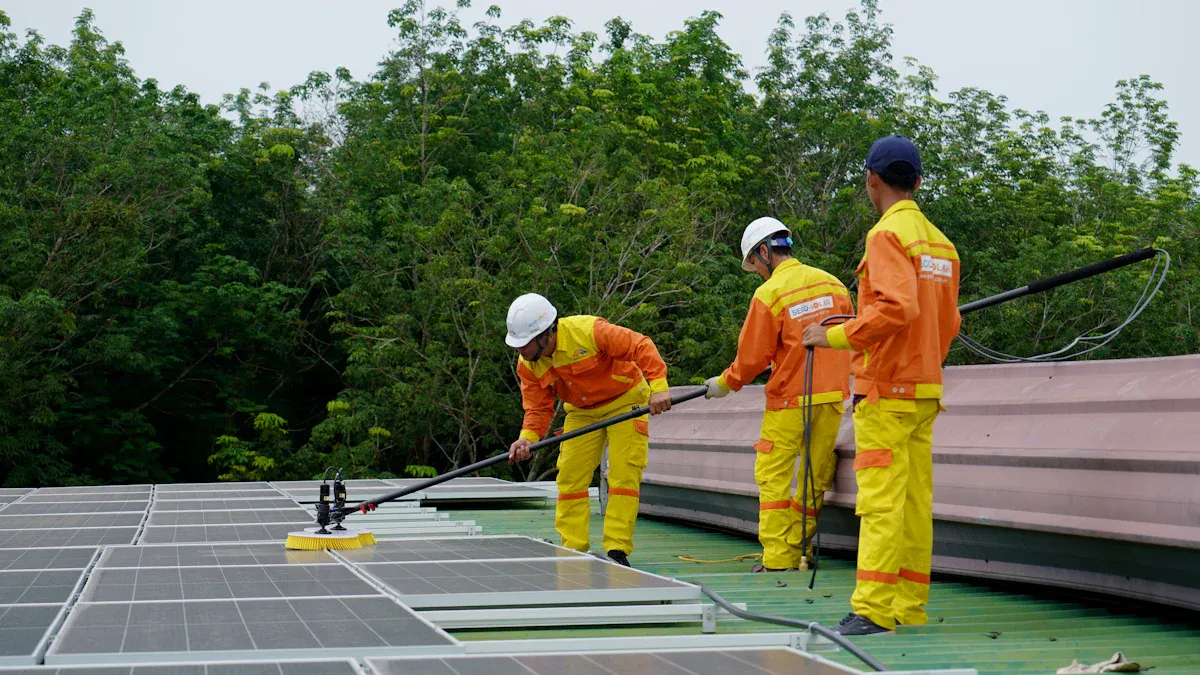
- For big jobs, a water-fed brush system helps you reach every spot.
- Choose Safe Cleaning Solutions
- Pure water works for most jobs. For tough dirt, use a mild soap mixed with water.
- Stay away from harsh chemicals and high-pressure washers. These can damage the panels.
- Follow a Safe Cleaning Process
- Clean when panels are cool, like early morning or late afternoon.
- Rinse off loose dirt first.
- Gently scrub, then rinse again to remove any soap.
- Let the panels air dry or use a lint-free cloth.
🛡️ Note: Poor cleaning can lower your panels’ efficiency by up to 25%. Scratches or harsh cleaners can shorten their life. Cleaning twice a year works for most homes, but you may need to clean more often in dusty or humid places.
Regular cleaning keeps your panels working well, protects your investment, and helps your home look its best.
Turning off your solar panels is the safest way to clean them. But you do not always need to do this for a quick rinse. Always read your manufacturer’s instructions before you start. Wear the right safety gear every time you clean. If you are not sure what to do, ask a professional for help.
| What to Do for Safe Cleaning | Why It Matters |
|---|---|
| Use soft tools and mild soap | Stops your panels from getting hurt |
| Wear non-slip shoes and safety gear | Helps you avoid slips or injuries |
| Turn off panels for deep cleaning | Keeps you safe from electric shock |
| Check your manual or installer | Makes sure you do things the right way |
🛡️ Be careful and follow these easy steps to keep your solar panels safe and working well.
FAQ
What happens if you clean solar panels while they are on?
You risk getting shocked. Water can carry electricity from the panels to you. Always turn off the system before cleaning to stay safe.
What tools should you use for cleaning solar panels?
Pick a soft brush or a microfiber cloth. These tools protect the glass from scratches. Avoid metal brushes and rough sponges.
What cleaning solution works best for solar panels?
Use plain water or a mild soap mixed with water. Strong chemicals can damage the panels. Stick to gentle cleaners for the best results.
What should you do if you are unsure how to turn off your solar panels?
Check your owner’s manual first. If you still feel confused, call your installer or the manufacturer. Never guess with electrical systems.
See also
How to Identify and Fix Air Circuit Breaker Malfunctions
Manual or Automatic? Decide on Your 200 Amp Transfer Switch
What Makes Automatic Transfer Switches Different from Manual Ones
Transfer Switch vs Automatic Transfer Switch: Key Differences
