

When it comes to the selection of circuit breakers for petrochemical plants, you need to be very careful. The presence of flammable gases and chemicals makes the environment risky. These dangers include:
- Flammable and explosive air
- Poor grounding
- Short circuits
- Wet locations
It is essential to use explosion-proof equipment. All devices should prevent sparks from igniting fires. International standards like IEC 60947 establish safety and reliability requirements. The table below outlines some important points:
| Requirement | Description |
|---|---|
| Circuit Breaker Categories | Different types trip quickly or slowly during faults |
| Reliability Requirements | Breaking capacity (Icu, Ics) ensures safety |
| Pollution Degree | Operates effectively in various environments |
| Visible Isolation | Clear evidence of isolation enhances safety |
The selection of circuit breakers for petrochemical plants requires careful steps. You must balance safety with compliance to regulations.
Key Takeaways
- Pick explosion-proof circuit breakers to stop sparks. They help protect against fires in dangerous places.
- Make sure the voltage and current ratings match your system. This keeps things safe and working well.
- Get circuit breakers with a breaking capacity higher than your system’s fault current. This stops damage when there are overloads.
- Check and take care of circuit breakers often. This helps you find problems early and makes sure they work right.
- Learn about new safety rules and standards. This helps you avoid fines and keeps your plant following the rules.
Importance of Circuit Breaker Selection
Safety in Hazardous Environments
If you work in a petrochemical plant, safety comes first. Circuit breakers help protect people and machines from electrical problems. If a circuit breaker does not work, danger can happen fast. Old or broken breakers can make wires get too hot. This can start fires and even cause deaths. You need to know these dangers to make good choices.
Here is a table that shows the main safety risks when circuit breakers do not work as they should:
| Risk Type | Description |
|---|---|
| Overheating | Old circuit breakers might not trip. This can make wires get too hot. |
| Fires | Hot wires can start fires. Fires can hurt people or damage things. |
| Property Damage | Every year, about $40 million in damage happens because circuit breakers fail. |
| Fatalities | Circuit breaker problems cause about 13 deaths each year. |
| Latent Safety Hazard | Old breakers may look fine but can stop working suddenly if overloaded. |
| High Failure Rate | Some old brands break more often than new ones. |
Tip: Check how old your circuit breakers are and see if they work well. New circuit breakers protect better and break less often.
Choosing the right circuit breakers for petrochemical plants lowers the risk of fire and injury. It also keeps your plant safe from expensive damage.
Reliability and Compliance
You need circuit breakers that work well and meet important rules. These rules help you follow laws and keep your plant safe. Using the wrong circuit breaker can lead to fines or your plant closing. The right breaker must fit your system’s voltage and current.
The table below lists important standards for circuit breakers in petrochemical applications:
| Requirement Type | Standards/Regulations |
|---|---|
| Molded-case Circuit Breakers | ANSI/UL 489, IEC 60947-2:2019 |
| AC Systems (≤ 600V) | IEEE C37.13, IEEE C37.27, IEC 60947-2:2019 |
| DC Systems (≤ 3000V) | IEEE C37.14, IEC 60947-2:2019 |
| AC Systems (> 600V) | IEEE C37.04, IEEE C37.010, IEEE C37.12, IEC 62271-100:2017 |
You must pick circuit breakers that follow these standards. This helps your plant meet safety rules and run smoothly. Good circuit breakers also help you avoid hidden dangers and surprise problems.
Note: Always check the newest standards before you buy. Rules can change, so make sure your plant stays current.
Types of Circuit Breakers
Air Circuit Breakers (ACB)

Air circuit breakers are used in big power systems. They use air to stop electrical arcs. These breakers work for low and medium voltage. You can fix them easily. They show clear signs when they are off. Air circuit breakers trip fast if there is a problem. This helps keep your equipment safe.
Molded Case Circuit Breakers (MCCB)
400V-Thermomagnetic-630A-MCCB.webp)
Molded case circuit breakers are found in petrochemical plants. They can handle high currents and voltages. You can use them for AC and DC systems. MCCBs work well where lots of current is needed. They can handle up to 1,200 volts DC. Their breaking power can reach 200,000 A. This makes them good for important protection.
| Specification | Rating |
|---|---|
| Rated Current (In) | Up to 2,000+ A |
| Voltage Rating (Ue) | Up to 1,000 V AC |
| Interrupt Ratings | Starts at 5,000 A |
Tip: Always check the current and voltage ratings. Make sure they fit your system before you choose a circuit breaker.
Vacuum Circuit Breakers (VCB)

Vacuum circuit breakers use a vacuum to stop arcs. This design keeps flammable gases out. It lowers the chance of fire. The sealed chamber stops arcs from coming back. VCBs disconnect circuits quickly if there is a fault. This is important in places with lots of flammable gases.
- The vacuum puts out arcs and stops them from coming back.
- No air in the chamber means less fire risk.
SF6 Circuit Breakers
SF6 circuit breakers use a special gas called sulfur hexafluoride. This gas puts out electrical arcs. It works well for high voltage. SF6 has a high Global Warming Potential. You must be careful to stop leaks. Use closed systems and get proper training. Recover and reuse the gas to help the environment. Safe handling is very important in petrochemical plants.
Explosion-Proof Features
In dangerous petrochemical places, you need explosion-proof circuit breakers. These breakers, like EIB and EXB types, stop sparks from starting fires. Their strong build helps them last in tough conditions. You can count on them to protect against electrical problems. This lowers the chance of fires and explosions.
Selection of Circuit Breakers for Petrochemical Plants
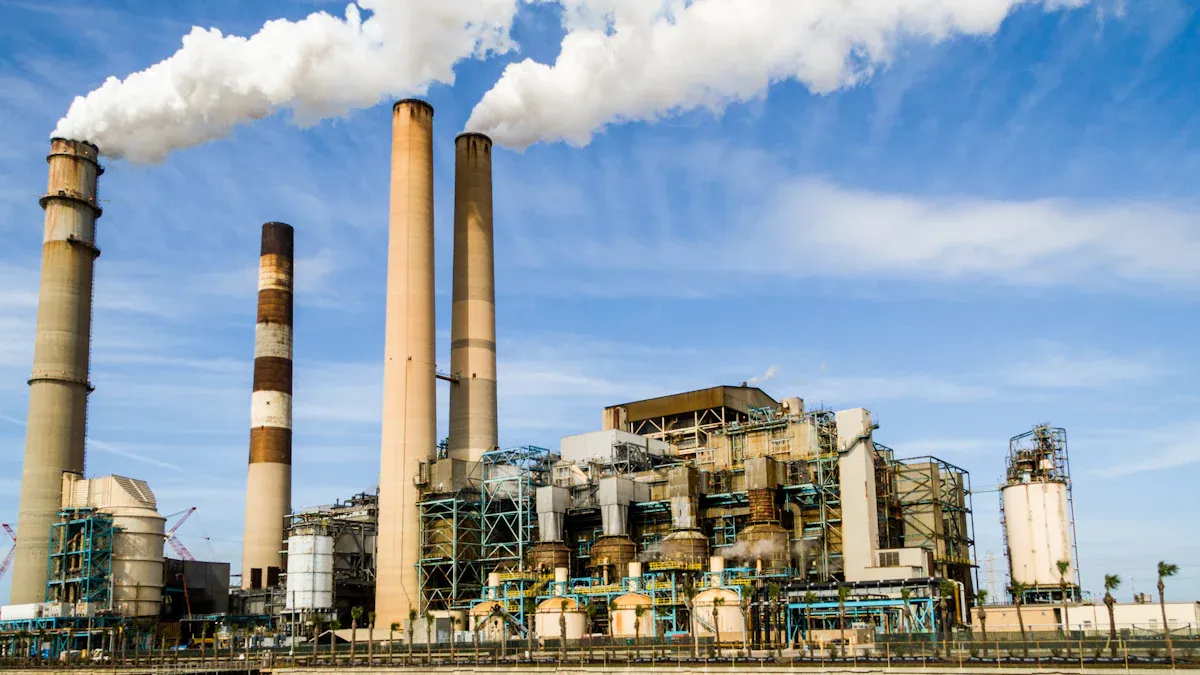
Picking the right circuit breaker keeps your plant safe. You need to think about many things before you choose. Look at voltage, current, breaking capacity, and what your plant needs. Use this guide to help you make a smart choice.
Voltage and Current Ratings
Match the voltage and current ratings to your system. If you pick the wrong rating, things can break or get dangerous. Always check your system’s voltage. Make sure your breaker fits. Look at how much power your devices use. The total power should not be more than 80% of the circuit’s rating. This rule helps stop overheating and keeps things safe.
- Be careful with voltage and current when you test.
- Check grounding to stop electric shock.
- Use certified voltage detectors to see if circuits are off.
- Pick tools that match your system’s voltage and current.
- Know your circuit’s load and how it works.
Tip: Do not forget the continuous load rule. If your devices use too much power, your circuit breaker might not work.
| Factor | Description |
|---|---|
| Voltage Rating | Make sure your breaker matches your system voltage. |
| Type of Circuit Breaker | Pick the right type for your load and conditions. |
| Application Requirements | Look at fault current, environment, and space limits. |
Breaking Capacity
Breaking capacity shows how much fault current a breaker can stop. Pick a breaker with a breaking capacity higher than your system’s fault current. This keeps your plant safe if there is a short circuit or overload. Always check this value when you choose a breaker.
| Breaker Type | Breaking Capacity Range (Icu) | Typical Use |
|---|---|---|
| MCBs | 6kA–25kA | Homes, small offices |
| MCCBs | 25kA–100kA | Commercial, light industry |
| ACBs | 50kA–150kA | Heavy industry |
Note: Pick a breaker with a breaking capacity above your system’s fault current. This stops damage and keeps your plant working.
Environmental Conditions
Petrochemical plants have tough environments. Moisture, temperature changes, and gases can hurt circuit breakers. Pick breakers that can handle these problems. Moisture causes rust and makes breakers less safe. Temperature changes can break parts. Gases from chemicals can damage electronics and cause failures.
- Moisture causes rust and reliability problems.
- Temperature changes break parts and cause damage.
- Gases make failures more likely, especially in high voltage systems.
Alert: Pick circuit breakers made for tough places. Look for sealed or coated models that stop rust.
Standards and Regulations
Follow international and local standards when you pick circuit breakers. Standards like IEC and UL set safety and performance rules. These rules help keep your plant safe and help you avoid fines. IEC standards cover global needs. UL checks safety for electrical devices. Both matter for air circuit breakers in petrochemical plants.
- IEC standards make sure things are safe everywhere.
- UL checks safety for electrical devices.
- Always look at the newest standards before you buy.
Tip: Following standards keeps your plant safe and helps you avoid legal trouble.
Coordination with Protection Devices
Coordinate circuit breakers with other protection devices. This makes sure only the closest device to a problem trips. The rest of your system keeps working. Selectivity means your plant stays on even if one part has trouble. Check time-current characteristics and short circuit current values. Use datasheets and short circuit studies to set things right.
| Aspect | Description |
|---|---|
| Selectivity | Closest device to fault trips first, others stay on. |
| Time-Current Characteristics | Upstream breaker trips slower than downstream device. |
| Short Circuit Current | Only consider current at the device nearest the fault. |
| Verification Parameters | Use short circuit studies and datasheets for correct settings. |
Note: Good coordination stops shutdowns and keeps your plant working.
Scalability
Plan for future growth when you pick circuit breakers. Your plant may get bigger or change. Pick breakers that let you upgrade easily. Air circuit breakers and vacuum circuit breakers give you options for expansion. Choose equipment that can handle more load without big changes.
| Consideration | Description |
|---|---|
| Future Expansion | Pick breakers that support future upgrades and growth. |
- Think about future changes in your system.
- Pick ratings that let you grow and change.
- Avoid equipment that needs quick replacement when your plant gets bigger.
Tip: Planning for growth saves money and time when your plant expands.
Checklist for Selection of Circuit Breakers for Petrochemical Plants:
- Check voltage and current ratings.
- Make sure breaking capacity is higher than fault current.
- Look at environmental conditions.
- Check IEC and UL standards.
- Coordinate with protection devices for selectivity.
- Plan for future growth.
Remember: Picking circuit breakers carefully keeps your plant safe, protects your staff, and helps your plant grow.
Selection Procedure
Picking the right circuit breaker needs good planning. You should follow steps to find the best one for your plant.
Assess Requirements
First, learn what your electrical system needs. Check voltage and current. Look at safety standards too. Know which circuit breaker type fits your job.
| Circuit Breaker Type | Voltage Range | Insulating Medium | Key Applications |
|---|---|---|---|
| Low-voltage | Below 1,000V | Various | Homes, commercial buildings |
| Medium-voltage | 1,000V to 35,000V | Vacuum | Industrial plants, utility systems |
| High-voltage | Above 35,000V | SF6 gas | Power grids, substations |
Tip: Always check your plant’s voltage and current before you choose.
Evaluate Loads
Find out how much power your machines use. Look at the biggest load. Think about large machines or transformers. If you have a 30kVA transformer, you may need a 90A breaker. Transformers can use more current when they start. If you miss this, your breaker might trip for no reason.
Determine Fault Levels
Engineers use easy math to find fault current. They look at voltage and resistance. The highest current is called sub-transient. It can cause the most damage. You need to know this number to pick the right breaker.
Match Specifications
Compare different breakers. Make sure each one fits your plant.
| Specification | Importance in Petrochemical Applications |
|---|---|
| Voltage Rating | Must match your system voltage to stay safe. |
| Current Rating | Should fit your load to stop overheating or tripping. |
| Interrupting Capacity | Needs to be as high as your fault current. |
| Environmental Resistance | Protects against heat, rust, and shock. |
Verify Suitability
See if the breaker works well in your plant. Pick models that resist water, heat, and chemicals. Test the breaker if you can. Ask a licensed engineer for help if you are not sure.
Ensure Compliance
Always follow the newest safety rules. Use IEC and local codes. If you skip this, you could get fined or shut down.
Common Mistake: Some people forget to check fault current or ignore the environment. This can make things unsafe. Always check your numbers and ask experts if you need help.
You can use these steps to pick circuit breakers for petrochemical plants. Careful planning helps you avoid mistakes and keeps your plant safe.
Best Practices
Regular Review
You need to check circuit breakers often. Regular checks help keep your plant safe. They also stop failures before they happen. Make a plan for maintenance. Cover all circuit breakers in your plan. Use a Computerized Maintenance Management System (CMMS) to track work. This system helps you remember inspections and repairs.
- Look at circuit breakers on a set schedule.
- Test breakers to see if they work right.
- Fix or replace any breaker that looks worn out.
- Check that each breaker has the right safety certification.
Tip: Test your breakers often. This helps you find problems early.
Documentation
Keeping good records helps you run your facility better. Write down every inspection and what you find. Store these records in a safe place. When you document each check, your team can use the information later.
- Write down every inspection and test result.
- Record any repairs or replacements you make.
- Keep documents where your team can find them.
| Documentation Task | Why It Matters |
|---|---|
| Inspection Records | Shows how breakers change over time |
| Maintenance Logs | Helps you plan future work |
| Certification Records | Proves you follow safety rules |
Note: Good records help keep your plant safe and working well.
Staff Training
Your team needs training to work with circuit breakers safely. Teach staff how to spot problems and follow safety rules. Hold training sessions often to keep everyone updated. Well-trained staff can act fast if something goes wrong.
- Train staff to use breakers safely.
- Show how to read and update records.
- Practice emergency steps for electrical faults.
Remember: Training helps your team keep the plant safe and reliable.
You need to think about safety when picking circuit breakers. Reliability and compliance are also important. Check your system needs often. Make sure you know the latest standards. Use this checklist to help you choose:
| Criteria | Description |
|---|---|
| System Voltage | The breaker voltage must match your system. |
| Current Rating | Pick a breaker that handles normal current. |
| Short-Circuit Rating | Choose a breaker with a rating above fault current. |
| Frequency | Make sure the breaker works with your system frequency. |
| Environmental Conditions | Think about temperature, humidity, and altitude. |
Ask experts for help with hard cases. This keeps your facility safe and working well.
SENTOP provides reliable circuit breaker solutions for petrochemical facilities and explores our product line
Click-to-view.webp)
FAQ
What does “breaking capacity” mean for a circuit breaker?
Breaking capacity shows the highest fault current your breaker can safely stop. You must pick a breaker with a breaking capacity higher than your system’s possible fault current. This keeps your plant safe during short circuits.
Why do you need explosion-proof circuit breakers in petrochemical plants?
Explosion-proof breakers stop sparks from escaping. You need them because flammable gases and chemicals can cause fires or explosions. These breakers protect your equipment and keep your staff safe.
How often should you test circuit breakers in a petrochemical facility?
You should test circuit breakers at least once a year. Some plants test more often. Regular testing helps you find problems early and keeps your system safe.
What standards should you check before buying a circuit breaker?
Always check IEC 60947, UL 489, and local codes. These standards make sure your breaker meets safety and performance rules. Following them helps you avoid fines and keeps your plant running.
Can you use the same circuit breaker for future plant upgrades?
You should choose a breaker with extra capacity for future growth. Look for models that support higher loads or can be upgraded. Planning ahead saves you time and money when your plant expands.
See also
The function of terminal blocks in solar power plants
What Are the Typical Scenarios for Using Air Circuit Breakers
What does PMCC mean in electrical engineering?
How to Select the Best Industrial Circuit Breaker for Your Needs
What Are Typical Breaking Capacity Values for DC Miniature Circuit Breakers
