

Choosing the right industrial circuit breaker keeps your equipment safe. It also helps keep people safe. You should do these steps:
- Find out your load type. It can be resistive, inductive, or capacitive.
- Pick tripping characteristics for your load and protection needs.
- Make sure you have good short-circuit protection and interrupting capacity.
- Choose a mounting type that works for your installation.
- Think about things like temperature, humidity, and altitude.
- Make sure it follows all standards and rules.
- Look at extra features like arc fault or ground fault protection.
A Selection Guide for Industrial Circuit Breakers helps you match each need to your own environment and load.
Key Takeaways
- Pick a circuit breaker that fits your system’s voltage and current. This helps keep your equipment and people safe.
- Choose the right breaker type and trip settings for your load and environment. This stops trips and damage that are not needed.
- Always use safety standards and certifications like UL and IEC. This makes sure you have safe and legal protection.
- Ask experts for help with picking, installing, and testing breakers. This helps you avoid mistakes and dangers that cost money.
- Check and take care of your breakers often. This helps them last longer and keeps your electrical system working well.
Breaker Basics
What Is an Industrial Circuit Breaker
An industrial circuit breaker is very important for safety. It helps protect your equipment and wires from getting hurt by too much electricity. If the current gets too high, the breaker stops the flow right away. This keeps fires, broken equipment, and long stops from happening. Fuses need to be replaced after they work, but you can reset a circuit breaker and use it again.
Every circuit breaker has some main parts:
- Trip unit: This part finds problems and makes the breaker open.
- Operating mechanism: It lets you open or close the breaker.
- Molded frame: This case holds and protects the inside parts.
- Arc chutes: These cool down and trap the arc when the breaker opens.
- Contacts: These let electricity flow or stop it.
There are many kinds of circuit breakers. Miniature circuit breakers (MCBs) are good for small jobs. Molded case circuit breakers (MCCBs) work for bigger currents and can be set in different ways. Some new models use thermal-magnetic trip units or protective relays for better protection. You need to pick the right one for your job so everything works well.
Why Proper Selection Matters
Picking the right industrial circuit breaker is very important for safety and how things work. If you pick the wrong one, it might trip too much or not trip when it should. This can break equipment, cause fires, or even shock someone.
Here are some problems if you choose the wrong breaker:
- Nuisance tripping stops your work and wastes time.
- Wrong voltage or current ratings do not protect your system.
- Breakers that are too big may not trip, and small ones trip too much.
- Wrong trip characteristics do not protect motors or sensitive equipment well.
- Bad care or wrong wiring makes failure more likely.
You need to make sure the breaker’s details fit your system. Checking and testing often helps keep your place safe. Knowing these basics helps you build a safe and good electrical system.
Types of Industrial Circuit Breakers
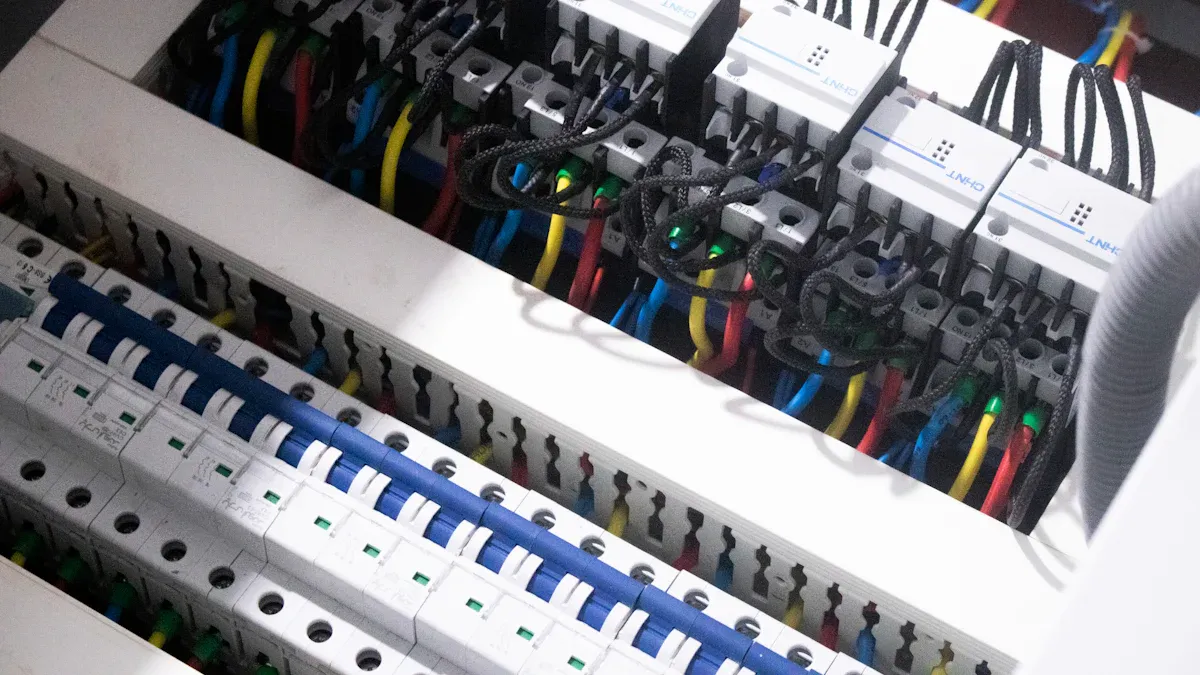
When you pick an industrial circuit breaker, you should know the main types. Each type works best in certain places. Circuit breakers are put into three voltage groups: low voltage, medium voltage, and high voltage. Each group is used for different jobs and equipment.
Low Voltage
Low voltage circuit breakers work with up to 1,000 volts. You see them in factories and big buildings. They also work in light industrial places. These breakers protect circuits with voltages like 220V or 400V. They can handle currents from 10A to 2,500A. People use them for lights, small motors, and control panels.
Tip: Low voltage breakers are small and simple to take care of. You can change or reset them without special tools.
Some low voltage types are:
- Miniature Circuit Breakers (MCBs): These go up to 100A. They have fixed trip settings and are for small circuits.
- Molded Case Circuit Breakers (MCCBs): These go up to 2,500A. They have adjustable trip settings and are for bigger loads.
Medium Voltage
Medium voltage circuit breakers work from 1,000 to 36,000 volts. You find them in factories, hospitals, and data centers. These breakers protect bigger equipment and power systems. They often have special features like remote control and protective relays.
- Air Circuit Breakers (ACBs): These are used for power up to 33kV.
- Vacuum Circuit Breakers (VCBs): These are common in switchgear and work fast.
- Gas Circuit Breakers (SF6): These use gas to stop arcs in medium voltage systems.
Note: Medium voltage breakers need skilled workers to install and fix them.
High Voltage
High voltage circuit breakers start at more than 36,000 volts. You see them in power lines and big substations. These breakers must stop big fault currents and give strong insulation.
| Safety Feature | Why It Matters for High Voltage Breakers |
|---|---|
| Arc Fault Protection | Stops fires from dangerous arcs |
| Remote Monitoring | Lets you control from far away for safety |
| Mechanical Interlocks | Makes sure it works safely and stops accidents |
You must follow strict safety rules and wear safety gear with high voltage breakers.
Common Types (MCCB, ACB, MCB, VCB)
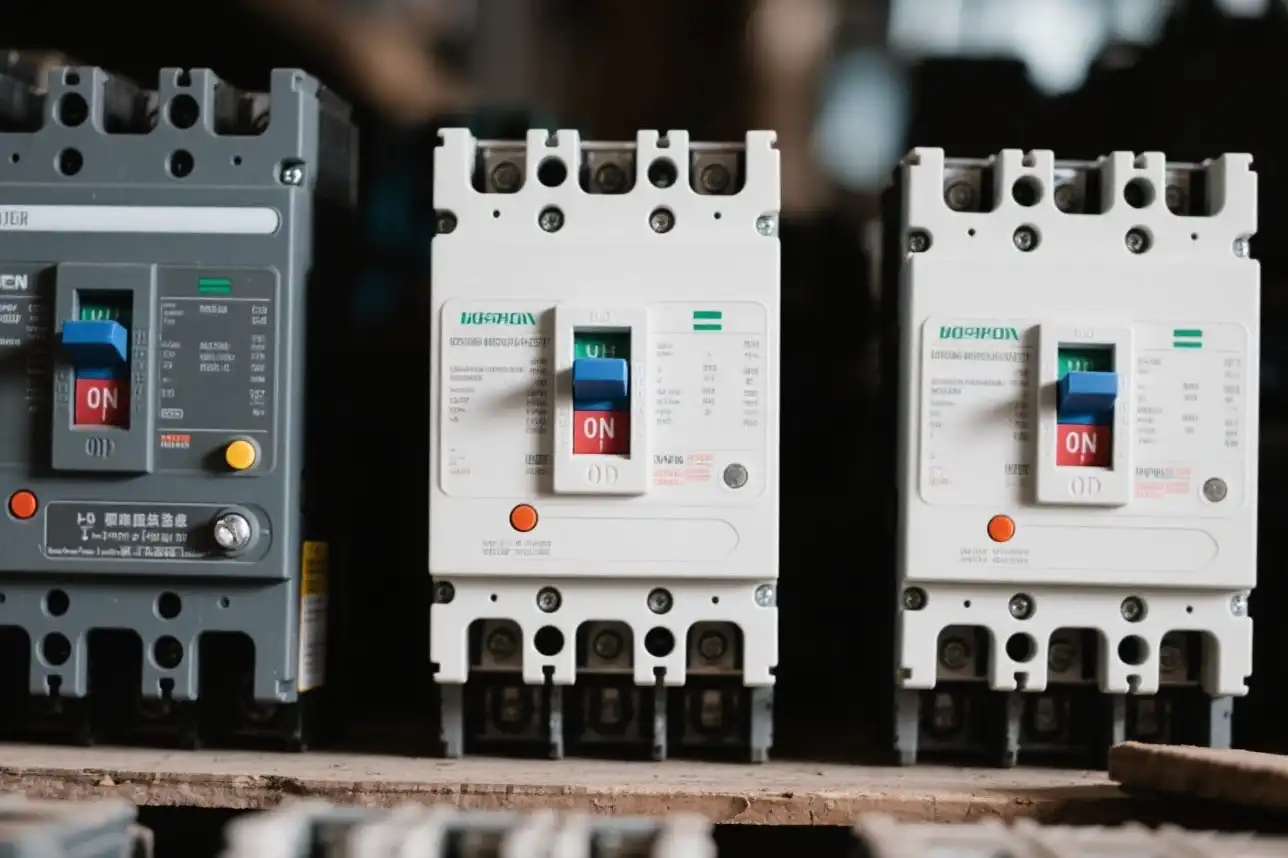
Here is a quick look at the most common breaker types:
| Type | Current Rating | Typical Use | Key Feature |
|---|---|---|---|
| MCB | Up to 125A | Small circuits, lighting | Fixed trip, small size |
| MCCB | Up to 2,500A | Big motors, feeders | Adjustable trip, strong |
| ACB | 800–10,000A | Main panels, big systems | Air arc quenching |
| VCB | Up to 38kV | Substations, switchgear | Vacuum arc quenching |
You should pick the breaker type that fits your voltage, current, and job. This helps keep your place safe and your equipment working well.
Selection Guide for Industrial Circuit Breakers
Picking the right circuit breaker is very important. You need to look at technical details and safety rules. The Selection Guide for Industrial Circuit Breakers helps you choose the best breaker for your needs. This keeps your system safe and working well.
Voltage and Current
First, check the voltage and current your system needs. The Selection Guide for Industrial Circuit Breakers gives these steps:
- Look at your load. Find out the normal current and the highest current. Think about if you might add more equipment later.
- Do a short-circuit study. Learn the biggest fault current your system can make.
- Check the area. Make sure the breaker works in hot or cold places.
- Follow the maker’s rules and industry standards like UL, IEEE, NEMA, and NFPA.
- Think about modularity. Modular breakers are easier to upgrade and fix.
Tip: Pick a breaker with an ampere rating that matches or is a bit higher than your biggest load. Never use a breaker with a lower voltage rating than your system.
You also need to know if your voltage is AC or DC. Check the system frequency too. These things change how the breaker works and keeps you safe.
Interrupting Capacity
Interrupting capacity is the most fault current a breaker can stop safely. If you pick a breaker with too low a capacity, it might break during a short circuit. This can cause a lot of damage.
The Selection Guide for Industrial Circuit Breakers says system voltage affects the interrupting capacity you need. Higher voltage systems need breakers that can stop bigger fault currents. The way the breaker is made, like its contacts and arc-quenching, matters too.
Industry rules like IEC 60947-2 set the lowest interrupting capacities for industrial circuit breakers. For example, MCCBs and ACBs may need 10kA, 20kA, or even 50kA, depending on the job. Always check which rule fits your setup.
Note: You need special software and experts to find the right fault current. Never guess the interrupting capacity.
Trip Settings
Trip settings decide when a breaker will open the circuit. Adjustable trip settings give you more control. You can set the breaker to fit your equipment and load.
- Set the continuous current rating to match your system.
- Change long-time and short-time delays for overload protection.
- Set instantaneous pickup for short-circuit protection.
- Use ground fault pickup to guard against earth faults.
Adjustable trip settings help stop the breaker from tripping when it should not, like when motors start. They make your system more reliable and cut down on downtime. You can use adjustable breakers for many jobs, like welding or renewable energy.
Test and check adjustable trip breakers often. Use test kits to make sure the breaker trips at the right current.
Poles and Phases
The number of poles in a breaker must fit your system’s wiring. This is very important for safety and for things to work right.
- Use 3-pole breakers for three-phase power. These protect motors and transformers.
- Pick 4-pole breakers if you need to protect the neutral line, like in data centers or hospitals.
- Always match the voltage rating to your system voltage.
If you pick the wrong number of poles, you might not disconnect everything. This can cause fires or hurt equipment. The Selection Guide for Industrial Circuit Breakers says picking the right poles keeps people and equipment safe.
4-pole breakers give full isolation, including the neutral. This is needed for systems with big neutral currents.
Application and Environment
You need to think about where and how the breaker will be used. Things like temperature, humidity, and dust can change how it works.
| Environmental Factor | Impact on Breaker Performance | Recommended Action |
|---|---|---|
| Temperature | High heat lowers current capacity; cold can make parts brittle | Pick breakers for your temperature range; use cooling or heating if needed |
| Humidity/Moisture | Causes corrosion and insulation failure | Use breakers with high IP ratings; put them in sealed or climate-controlled boxes |
| Dust/Debris | Can block parts and cause arcing | Use dust-tight boxes; clean and check often |
The Selection Guide for Industrial Circuit Breakers says to use breakers with the right IP rating for your area. Always put them in good boxes to stop water or dust from causing problems.
Compliance and Certifications
You must follow safety rules and get the right certifications. This is needed for legal, insurance, and safety reasons.
- UL certification is needed in North America. Look for UL1077 or UL489A marks.
- CE certification is needed in Europe. It shows you follow EU safety rules.
- CB certification under the IECEE system covers over 50 countries. This helps with global trade.
- IEC standards, like IEC 61009 and IEC 60947-2, are known worldwide for safety and performance.
If you skip compliance checks, you can have big problems:
- Electrical problems and fire risks
- Broken equipment and lost time
- No insurance and legal trouble
“Many times, people try to save money by skipping professional work. This can make things very dangerous. Saving a little money can lead to huge losses, lawsuits, and higher insurance costs. It is not worth the risk.”
Always buy breakers from trusted makers with real certifications. The Selection Guide for Industrial Circuit Breakers helps you avoid mistakes and makes sure your system is safe and follows all rules.
Step-by-Step Selection Process
Assess Requirements
First, you need to know what your electrical system needs. Follow each step so you do not make mistakes. This helps keep your building safe.
- Check if your panel can use new breakers. Look at how much power it can handle. Make sure it follows the national electrical code.
- Pick the right size and type of circuit breaker. Think about how much energy your equipment uses. Decide what you want to protect.
- Get the right tools and safety gear. You will need wire strippers, pliers, screwdrivers, fuses, and safety equipment.
- Talk to an electrical contractor for help. Make sure your breaker choice is safe and fits your setup.
- Make sure the panel’s metal frame is strong enough. It must hold the new breakers and any new machines.
Add up all the power your equipment uses to find the total amperage. Always add a little extra for future needs. Check the voltage ratings to match your system. This helps stop problems like insulation breaking down. Look at the frequency, like 50 Hz or 60 Hz. This changes how the breaker works. Always follow local and national codes for safety. The Selection Guide for Industrial Circuit Breakers can help you with these steps.
Compare Specifications
After you know what you need, look at the details of different breakers. Many companies give you helpful tools and guides:
- Use cross-reference tools to match breakers from other brands.
- Check 3D model catalogs to see if breakers fit your panel.
- Look at selection guides that show ratings from 0.5 to 300 amps.
- Read data sheets for more technical information.
- Study technical briefs to learn about standards like UL 489 and UL 1077.
- Find training materials and product guides from trusted suppliers.
These tools help you compare voltage, current, interrupting capacity, and trip settings. You can also learn about different breaker types and new features. Comparing these things helps you pick the best breaker for your job.
Tip: Always check if the breaker meets the newest safety rules and fits your system.
Consult Professionals
You should always talk to a licensed electrical engineer before you decide. Engineers know how to design systems so only the closest breaker trips first. This is called selective coordination. It keeps your system working and only shuts off one area. Engineers also know about current, voltage, and extra options. Their advice helps you follow all codes and rules. This keeps your workplace safe and working well. They can help you save money and still stay safe.
A professional can help you avoid damage, danger, and costly shutdowns.
Installation and Maintenance
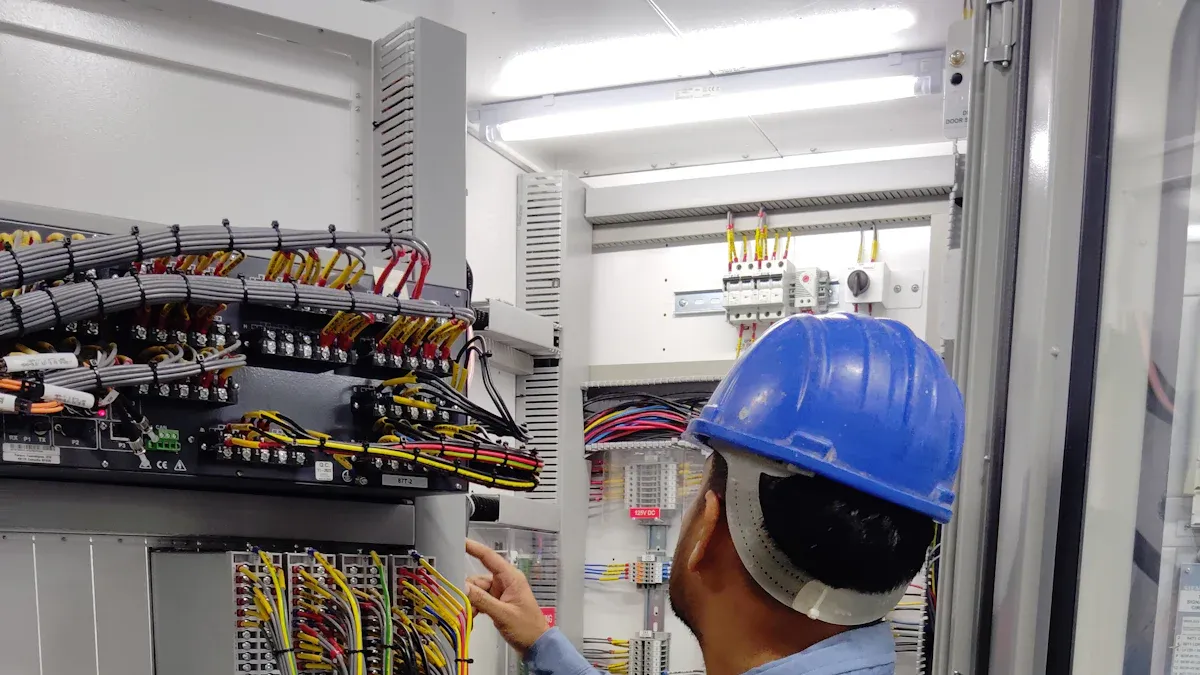
Professional Installation
You must be very careful when you put in industrial circuit breakers. Safe installation keeps people and equipment from harm. Here are the steps you should follow:
- Turn off all power before you start any work.
- Use a voltage tester to check that no electricity is there.
- Disconnect backup power and look for hidden live wires.
- Wear safety gear like insulated gloves, goggles, and safe shoes.
- Pick the right breaker for your system and check for damage.
- Get all your tools and parts ready before you begin.
- Mark dangerous circuits so no one gets hurt.
- Look at the panel and wires for damage or rust.
- Put the breaker in tightly and connect wires as the maker says.
- Check all wires and make sure the breaker faces the right way.
- Test everything before you turn the power back on.
Tip: Always use the maker’s guide and follow local rules. A licensed electrician can help keep your installation safe and legal.
Regular Inspection
You need to check your circuit breakers often to keep things safe. Most experts say to check them once a year. If you have low-voltage breakers, check them every one to three years. Medium-voltage breakers need a check every year. High-voltage breakers should be checked every six months.
| Breaker Type | Inspection Frequency |
|---|---|
| Molded Case | Needs little maintenance |
| Low-Voltage | Every 1 to 3 years |
| Medium-Voltage | Every year |
| High-Voltage | Every 6 months |
If a breaker trips a lot, check it right away. Plan tests during the year to find problems early.
Maintenance Tips
Taking care of your circuit breakers helps them last longer. First, see how often each breaker is used and how much power it handles. Make a plan for yearly checks, cleaning every few months, and testing twice a year. Move breakers by hand once a year to keep them working well. Clean, tighten, and oil all parts when needed.
Write down all the work you do on your breakers. Use these notes to see patterns and plan for the future. Upgrade old breakers with new features if you can. Always follow NFPA 70E and 70B rules for safety.
If you take care of them, most industrial circuit breakers last 30 to 40 years. Good maintenance helps stop problems like worn parts, loose wires, and getting too hot.
When you pick an industrial circuit breaker, you help keep your building safe. You also make sure you follow safety rules.
- Make sure the voltage and amperage ratings match your system.
- Check that it meets UL 489 rules for safety and insurance.
- Pick the right interrupting capacity and trip unit for your equipment.
- Make sure the breaker works for your space and how you want to install it.
- Write down what you do and test breakers often.
You can use the Selection Guide for Industrial Circuit Breakers and trusted sources like Rockwell Automation for the latest tips. Ask experts for help with hard projects. Always put safety first when you pick a breaker.
FAQ
What is the difference between an MCB and an MCCB?
MCBs are used for small circuits with less current. MCCBs are made for bigger currents and can be adjusted. Use MCBs for lights or small machines. MCCBs are better for big motors or heavy tools.
How often should you test industrial circuit breakers?
Test most industrial circuit breakers at least once every year. High-voltage breakers might need checks every six months. Testing often helps you find problems early and keeps things safe.
Can you replace a circuit breaker yourself?
You should always call a licensed electrician to replace breakers. Industrial circuit breakers are part of strong power systems. If you install one wrong, you could get hurt or cause a fire. Only professionals should do this work for safety.
What certifications should you look for in a circuit breaker?
Look for UL, CE, or IEC certifications on the breaker. These marks mean the breaker is safe and works well. Always buy from trusted brands with real certifications.
See also
How to Install an Air Circuit Breaker in Simple Steps
What You Need to Know About How Molded Case Circuit Breakers Work
Key factors to consider when choosing a molded case circuit breaker
MCB and MCCB Compared Which Circuit Breaker Is Right for You
What Situations Call for the Use of a Molded Case Circuit Breaker