

A Type A RCD is a safety device. It helps protect people from electric shock and fire. It can find both sinusoidal AC and pulsating DC currents. It can also sense a smooth DC part up to 6 mA. Lab tests and safety reports show it works well. It is good for most electronic devices in homes and businesses. International rules like IEC 61008-1 support using it. This special skill makes Type A RCDs important. They are needed for modern electrical systems with electronic loads.
Key Takeaways
- Type A RCDs keep people safe by finding both AC and pulsating DC currents, even small smooth DC currents up to 6 mA. They shut off power very fast, in less than a second. This helps stop electric shocks and fires from new electronic devices. Type A RCDs are better than old Type AC RCDs. They can find more electrical problems that happen in homes and businesses now. These devices are needed for safety in places with electronics like washing machines, LED lights, and electric car chargers. Always pick and put in Type A RCDs by following local rules. Buy them from trusted sellers to make sure you are safe and follow the rules.
Type A RCD Features
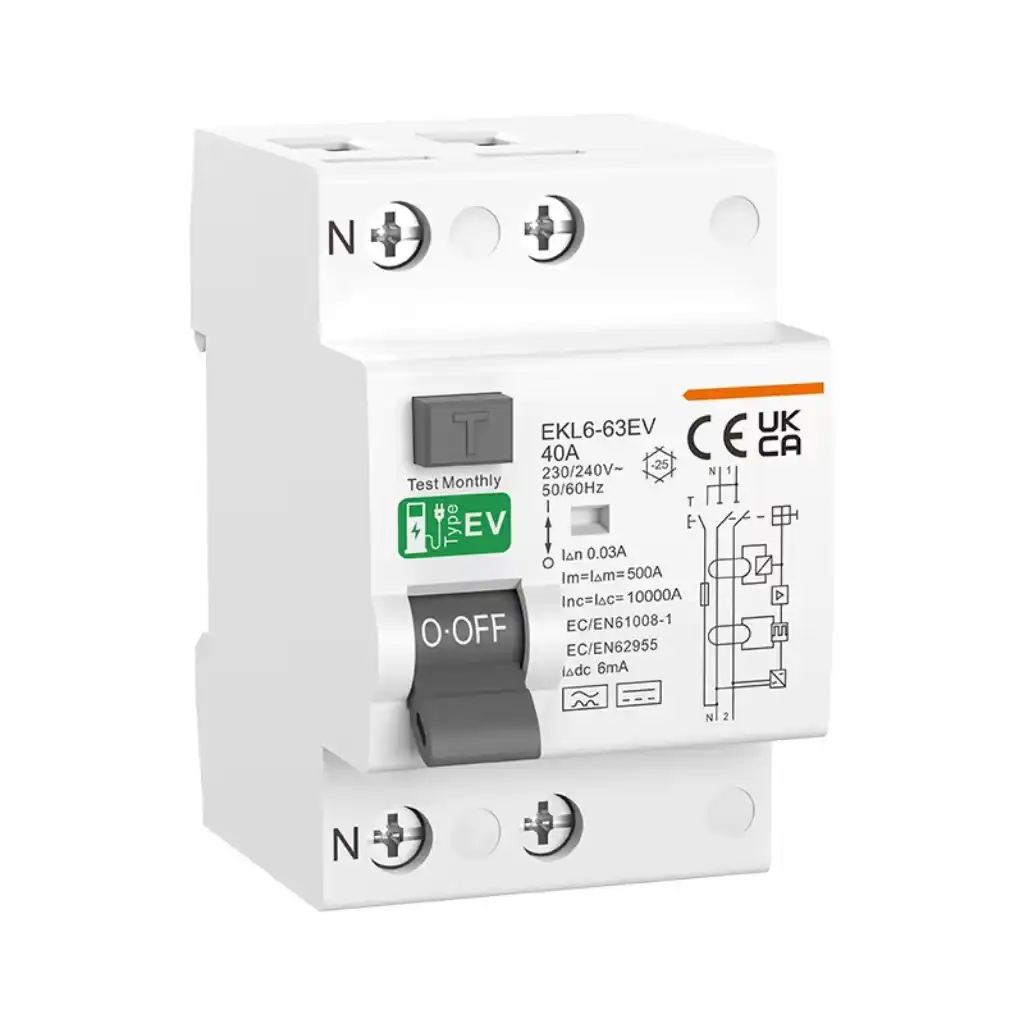
Detection Capabilities
Type A RCDs can find sinusoidal AC and pulsating DC currents. This means they can spot problems from many new electronic devices. These devices often make currents that change or pulse, not just move in one way. Type A RCDs also sense a smooth DC part up to 6 mA. This helps keep people and things safe from hidden electrical risks.
The table below shows what Type A RCDs can detect and how they work:
| Parameter | Type A RCD Detection Capability and Empirical Data |
|---|---|
| Detection Type | Finds special forms of pulsating DC currents that are not smoothed |
| Sensitivity | Detects sinusoidal AC and unsmoothed pulsating DC currents |
| Tripping Times (Max) | At 1.4 x IDn: 0.3 s; 2 x IDn: 0.15 s; 2.8 x IDn: 0.04 s |
| Surge Current Withstand | Handles surge currents up to 250 A |
| Operational Characteristics | Works under different temperatures and current conditions |
Type A RCDs act fast when there is a problem. They turn off power in less than a second, even with small leaks. This quick action helps stop electric shock and fire. Many new appliances, like washing machines and computers, make pulsating DC currents. Type A RCDs can find these, but older types may not.
Note: Type A RCDs can find more problems than Type AC RCDs. Type AC models only spot normal AC faults. They cannot find pulsating DC or smooth DC currents. This makes Type A RCDs better for homes and businesses with electronics.
Protection Scope
Type A RCDs give strong protection in electrical systems. They help stop electric shock and fire from many kinds of current problems. Their design lets them work with both old and new wiring.
The table below shows how Type A RCDs and ELCBs compare:
| Feature | Type A RCD (RCCB) | ELCB |
|---|---|---|
| Detection Capability | Detects AC and pulsating DC residual currents, including small imbalances | Detects only earth leakage via voltage |
| Protection Scope | Protects against all types of residual currents, including pulsating DC | Limited to earth leakage faults |
| Response Time | Fast response to current leakage | Slower response |
| Adaptability | Fits modern electrical systems | Best for older systems |
| Sensitivity | Adjustable and highly sensitive | Fixed or less sensitive |
| Installation | Connects to live and neutral wires, no earth needed | Needs solid earth connection |
Type A RCDs help stop electric shock by cutting power fast when they sense a problem. They also lower the risk of fire by stopping bad currents before they do harm. In places like hospitals, Type A RCDs can protect important equipment and keep people safe. Their quick action and wide range make them a great choice for safety in today’s electrical systems.
How They Work
Operating Principle
Type A RCDs have a special coil inside. This coil checks the current in both wires. It looks at the live and neutral wires. If the current going out is not the same as coming back, there is a problem. This means some current has leaked out. The leak could be through a person or a broken device.
The device can find two types of current. It finds normal AC currents that move in waves. It also finds pulsating DC currents from new devices. This helps keep people and equipment safer from more problems.
- Type A RCDs work with things like LED lights and solar inverters. They also work with electric vehicle chargers.
- Australian rules now say new places must use these devices. This shows they are important for safety.
- The device does not need a separate earth wire. It checks the balance of current by itself.
Tip: Always put in RCDs the way local rules say. This gives the best safety for people and property.

Response to Residual Currents
When the device finds a current difference, it acts quickly. The inside part trips and turns off the power. This happens in less than one second. Fast action helps stop electric shock and fire.
The device can find very small leaks. Older devices might not find these leaks. It works in many places and at different power levels. This makes it good for homes, offices, and places with special equipment.
A table below shows how the device acts with different faults:
| Fault Current Level | Maximum Trip Time |
|---|---|
| 1.4 x rated value | 0.3 seconds |
| 2 x rated value | 0.15 seconds |
| 2.8 x rated value | 0.04 seconds |
The device’s quick action and wide range make it very important for electrical safety today.
Comparison
Type A RCD vs. Type AC
Type A RCDs and Type AC RCDs both help keep people safe from electric shock. But they do not work the same way. Type AC RCDs only find normal AC currents. They cannot find any DC currents. This means they might not catch some problems from new devices.
Type A RCDs can find both AC and pulsating DC currents. This makes them better for places with lots of electronics. Industry reports say Type A RCDs have more safety features. These include better sensitivity, smart checks, and arc fault detection. Big companies like Schneider Electric, Siemens, and ABB add these features to their products. New rules in Europe now ask for higher sensitivity in RCDs. Because of this, more people use Type A RCDs.
- Type A RCDs protect against both AC and pulsating DC faults.
- Type AC RCDs only work with AC faults.
- Type A RCDs have better sensitivity and extra safety features.
- Type AC RCDs can miss DC faults and may not trip.
Note: Many experts now say to use Type A RCDs for new buildings. They work better with today’s electronics.
Other RCD Types
There are other RCD types for special jobs. Type F and Type B RCDs give even more protection. The table below shows how each type works and where to use them:
| RCD Type | Operational Characteristics | Suitable Equipment Examples | DC Residual Fault Current Handling |
|---|---|---|---|
| Type AC | Finds only AC sinusoidal | Electric showers, ovens, hobs, immersion heaters, tungsten lighting | Not good for DC; can miss faults |
| Type A | Finds AC and pulsating DC up to 6 mA | Inverters, IT equipment, LED drivers, induction hobs, EV charging (smooth DC < 6 mA) | Handles small DC faults |
| Type F | Finds AC, pulsating DC up to 10 mA, mixed currents | Variable speed drives, power tools, washing machines, dryers | Good for frequency-controlled gear |
| Type B | Finds AC up to 1 kHz, pulsating and smooth DC | Inverters, UPS, solar systems, lifts, welding equipment, EV charging (smooth DC > 6 mA) | Handles all DC faults |
Type F RCDs work well with appliances that change speed. Type B RCDs give the most protection, even for smooth DC currents. These types cost more than Type A or Type AC RCDs. Picking the right type depends on what equipment you have and the risks in the building.
Many places now use Type A RCDs instead of Type AC. This is because of new rules and the need for better safety with new electronics. Type A RCDs help stop problems that old RCDs might miss. This makes them a smart pick for new homes and businesses.
Applications

Electronic Devices
People use many electronic devices at home and work. Things like computers, TVs, and LED lights have parts that make special currents. These currents are not always like normal AC power. Some machines, like washing machines and induction cooktops, can send pulsating DC currents into wires. Type A RCDs help keep people and things safe from these hidden dangers. They find problems that old safety switches might not see. This is why they are a good pick for places with lots of new electronics.
Tip: If you add new electronics at home, check if your safety switch can handle DC currents.
EV Chargers
Electric vehicle chargers need extra safety. When you charge an electric car, the charger can make smooth DC currents. Old safety switches may not find these currents. Type A RCDs can sense these currents up to 6 mA. This helps stop electric shock and keeps charging stations safe. Many building rules now say you must use this kind of safety for new EV chargers.
A simple table shows why Type A RCDs are good for EV chargers:
| Feature | Benefit for EV Charging |
|---|---|
| Detects DC up to 6 mA | Stops hidden shock risks |
| Fast response | Cuts power quickly |
| Meets new standards | Follows safety rules |
Residential and Commercial Use
Type A RCDs work in homes and businesses. In houses, they protect families from shock and fire. In offices, they keep workers and equipment safe. Many countries now want these devices in new buildings. Builders pick them because they work with old and new wiring. They also fit many kinds of electrical panels. People can trust these devices to keep their spaces safe as technology changes.
Selection
Identification
To pick the right RCD, you must first identify it. Real products have clear markings and codes. Makers put lot or date codes on the device or box. These codes help track where the product came from. Companies keep records for at least two years. This makes it easy to check if there are any questions.
Buyers usually get test reports and certificates with each order. These papers show the device meets safety rules. Some parts use a Year/Week code, like “0719.” This means the 19th week of 2007. Lot numbers can be on the box or on the device.
Most good RCDs have ISO9001 certification. Some sellers also meet tough rules for groups like the U.S. Defense Department, NATO, and NASA. To avoid fake products, buy only from trusted sellers.
Checklist for identifying authentic RCDs:
- Find lot or date codes on the device or box.
- Look for test reports and certificates.
- Make sure it has ISO9001 certification.
- Buy from trusted distributors only.
Tip: Always keep the product’s papers and box for later or for warranty.
Compliance
Following safety rules keeps people safe. Rules say how to install and test RCDs. The table below shows the main points for following the rules:
| Aspect | Description |
|---|---|
| RCD Type Usage | Rule 531.3.3 says AC-only RCDs are for loads without DC. If there is DC, use the right type. |
| RCD Testing Requirements | All RCDs must pass a test with alternating current at the rated value. |
| Certification and Reporting | New forms have extra spaces for surge and arc fault protection. |
| Identification and Notices | New rules say how to label and tell users about RCDs, with some home exceptions. |
| Legal and Standards Context | BS 7671:2018+A2:2022 covers design, setup, and checks. Following it does not remove legal duties. |
Installers must follow these rules for safety and the law. They should use new forms and keep all test records. Good labels help users know what protection they have. Following the rules keeps people and property safe from electrical dangers.
Type A RCDs help stop electric shock and fire. They can find AC and pulsating DC currents. This makes them good for new homes and businesses. Picking the right device helps follow safety rules. It also keeps people safe. Local rules can change, so check the newest ones. If you have special needs, ask an electrician for help.
For more details, always check local electrical rules or talk to a professional.
FAQ
What does a Type A RCD detect?
A Type A RCD finds AC and pulsating DC currents. It can also sense smooth DC currents up to 6 mA. This helps it work with new electronic devices. These devices can cause different electrical problems.
What makes Type A RCDs different from Type AC RCDs?
Type A RCDs find both AC and pulsating DC currents. Type AC RCDs only find AC faults. Type A RCDs give better safety for places with electronics.
What devices need a Type A RCD?
Washing machines, computers, LED lights, and EV chargers need Type A RCDs. These devices can make pulsating DC currents. Only Type A RCDs can find these problems.
What standards cover Type A RCDs?
International standards like IEC 61008-1 cover Type A RCDs. These rules set how safe and strong the device must be.
What should someone check before installing a Type A RCD?
People should check local electrical codes and device markings. They should also look at certification papers. Buying from trusted sellers makes sure the RCD is safe.
The following information may be of interest to you
Comparison between residual current device and GFCI
How to Identify and Fix RCD Tripping Issues
What Makes Type B RCD Essential for EV Chargers?
The difference between type A and AC RCD
Why is Type A AC RCD not suitable for electric vehicle charging equipment?