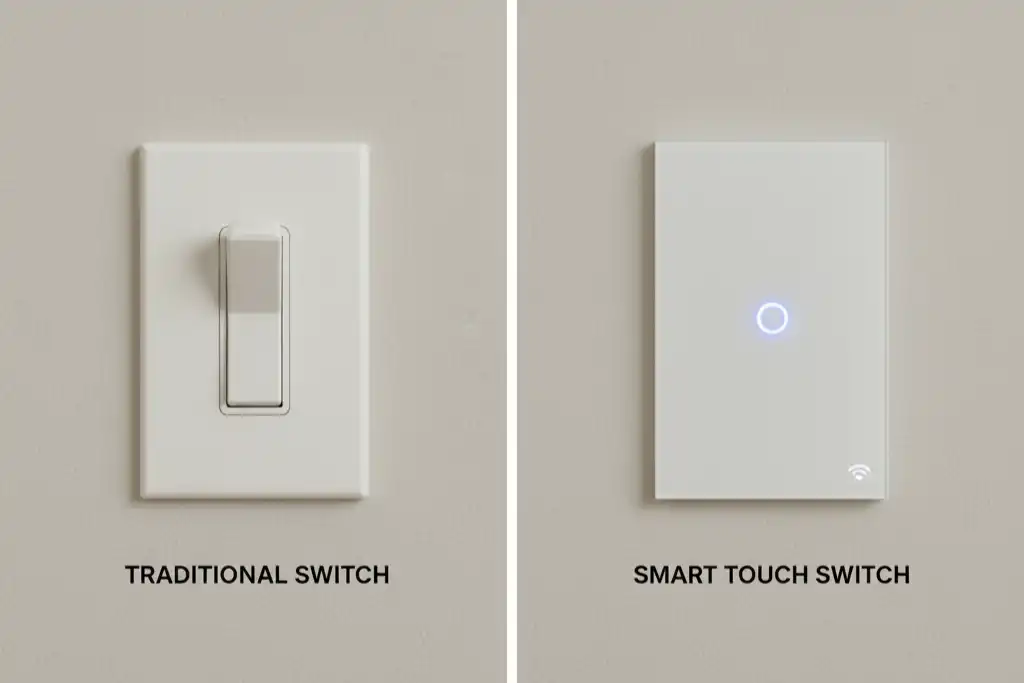
If you compare an intelligent switch and traditional switch, you will see big differences in how you control your lights. Smart switches let you use your phone, voice, or even set schedules. You can save energy, too.
- Smart switches cut energy use by up to 30% with features like dimming and sensors.
- They adjust lights based on people in the room and the amount of sunlight.
- Traditional switches often waste energy because people forget to turn off the lights.
Choosing the right switch can make your home more comfortable and efficient.
Key Takeaways
- Smart switches let you control lights from anywhere. You can use your phone or voice to turn lights on or off. You do not need to be at home to do this.
- Smart switches help save energy. They can lower energy use by up to 30%. They do this with timers and sensors.
- Installing smart switches can be harder than regular switches. Sometimes you need a neutral wire. Always check your wires before you buy.
- Smart switches make your home safer. You can set routines to turn lights on and off. This can make it look like someone is home when you are away.
- Buying smart switches can save you money over time. They can lower your energy bills. They can also make your home worth more. Smart switches are a good choice for modern homes.
Intelligent switch and traditional switch: Key Differences
Functionality
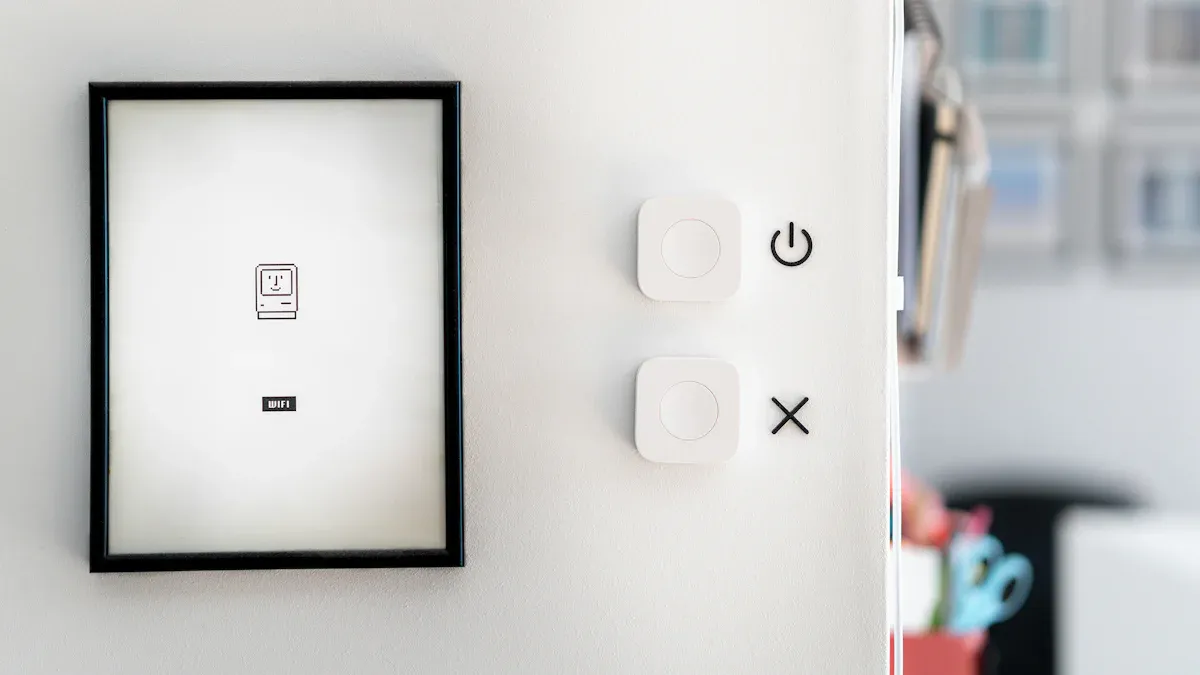
When you compare the intelligent switch and traditional switch, you see they work differently. A traditional switch lets you turn lights on or off by flipping it. You have to do this by hand every time.
An intelligent switch gives you more ways to control lights. You can use your phone to change lights from anywhere. You can set times for lights to turn on or off. Some intelligent switches connect to other smart devices in your house, like thermostats or cameras. This lets you make routines, such as turning on lights when you unlock your smart door.
Here is a table that shows how the intelligent switch and traditional switch are different:
| Feature | Smart Switches | Traditional Switches |
|---|---|---|
| Basic Functionality | Remote operation, scheduling, integration with smart devices | Manual operation with physical switch |
| Connectivity | Connects to Wi-Fi and other smart devices | No connectivity |
| Automation | Automates lighting and routines | No automation |
| Energy Efficiency | Optimizes energy use with schedules and sensors | Depends on manual use |
| Usage Scenarios | Remote monitoring, safety for elderly | Basic manual control |
Some people think installing an intelligent switch is hard. Most smart switches fit into your current setup. You can put them in with simple tools and some patience. Many homeowners do it themselves.
Tip: If you want to save energy and make your home smarter, an intelligent switch helps you automate lights and appliances.
Control Options
You control a traditional switch by walking over and flipping it. That is the only way to use it. The intelligent switch and traditional switch give you very different experiences.
With an intelligent switch, you have more choices:
- Use your phone app to turn lights on or off from anywhere.
- Give voice commands with Alexa or Google Assistant.
- Set times so lights work by themselves.
- Connect with Wi-Fi, Zigbee, Z-Wave, or Bluetooth for easy control.
You can make your home look like someone is there when you are away. Just set your intelligent switch to turn lights on and off at certain times. This helps keep your home safe.
Some people worry smart switches use more energy or break faster. Smart switches go through strong quality checks. They last a long time if you pick a good brand. You need a steady internet connection for remote features, but the switch works like a normal one if the internet stops.
Note: Intelligent switch and traditional switch both let you control your lights, but only smart switches give you remote, app, and voice control. You get more convenience and security.
Installation
Wiring
When you look at wiring, you’ll notice some big differences between an intelligent switch and traditional switch. A regular switch only needs a live wire and a ground wire. You flip the switch, and the light turns on or off. Most homes already have this setup.
Smart switches often need a neutral wire to work right. This wire helps the switch stay powered even when the light is off. If your home doesn’t have a neutral wire, you might need to rewire or pick a smart switch that works without one. Here’s a quick table to show what each type needs:
| Switch Type | Wiring Requirements |
|---|---|
| Traditional Switch | Live (hot) wire, Ground wire |
| Smart Switch | Live (hot) wire, Neutral wire, Ground wire |
| Alternative Smart Switch | Live (hot) wire, Ground wire (no neutral) |
Tip: Before you buy a smart switch, check your wall box for a neutral wire. If you don’t see one, look for “no-neutral” smart switches.
Setup Complexity
Installing a traditional switch is pretty simple. You turn off the power, connect two wires, and screw the switch into the wall. Most people can do this with basic tools.
Smart switches take a bit more work. You need to match the wires in your wall to the switch. Some smart switches use wireless control, power line carrier, or bus control. You might see terms like single-pole or three-way. These describe how many switches control one light.
Here are some things to keep in mind:
- Smart switches are usually harder to install than regular ones.
- You need to know if your switch is single-pole or three-way.
- Always turn off the power before you start.
- Use electrical tape to mark wires so you don’t get confused.
- If you feel unsure, call an electrician for help.
Smart switches give you more features, but they need careful setup. Take your time, and don’t rush. Once you finish, you’ll enjoy remote control and automation.
Integration
Smart Home Compatibility
You want your home to feel smart and connected. Smart switches make this possible. They work with many smart home systems like Alexa, Google Home, and Apple HomeKit. You can control your lights with your voice or through an app on your phone. This means you do not have to get up to flip a switch. You can even control your lights when you are not at home.
Smart switches connect to your home’s Wi-Fi. This lets you manage them from anywhere. You can check if you left the lights on after you leave the house. You can turn them off with a tap on your phone. Some smart switches also work with other smart devices. For example, you can set your lights to turn on when your smart door unlocks. This makes your home feel safer and more welcoming.
Tip: Before you buy, check if the smart switch works with your current smart home system. Not all switches support every platform.
Automation
Smart switches take your home to the next level with automation. You can set schedules for your lights. For example, you can have your porch light turn on at sunset and off at sunrise. You do not have to remember to do it yourself.
Here are some ways smart switches help with automation:
- Connect to Wi-Fi for remote control and easy setup.
- Use apps or voice commands for hands-free control.
- Work with other smart devices, like thermostats and cameras.
- Turn on lights when you unlock the door.
- Adjust lighting based on the time of day or who is home.
With these features, you can save energy and make life easier. Intelligent switch and traditional switch offer different levels of automation. Only smart switches let you create routines and connect with other devices. Traditional switches do not have these options.
Note: Automation can help you save money and make your home safer. You can set lights to turn on when you are away, so it looks like someone is home.
Energy Efficiency
Monitoring
Smart switches give you a whole new way to keep track of your energy use. You can see how much electricity your lights use right from your phone. This helps you spot which rooms use the most power. You can make changes to save money.
Here’s what you get with smart switches:
- Remote control lets you turn off lights from anywhere.
- Automation means lights only stay on when you need them.
- Scheduling and timers help you avoid leaving lights on by accident.
Traditional switches don’t offer these features. You have to remember to turn off the lights yourself. If you forget, you waste energy. Smart switches make it easy to monitor and control your lighting. You get more control and less waste.
Tip: If you want to see real numbers, some smart switches show you daily or monthly energy reports. This helps you set goals and track your progress.
Savings
You might wonder how much money you can save with smart switches. The answer depends on your habits, but smart switches help you cut costs in several ways. When you use automation and scheduling, you stop wasting electricity. Lights turn off when you leave the room or go to bed. You don’t have to worry about forgetting.
Switching to smart switches and LED bulbs can make a big difference. Studies show that if a city with 200,000 people switched all their lights to LED, they could prevent about 18,000 tons of CO2 emissions every year. That’s a huge impact on the environment. Smart switches help you use less energy, which means lower bills and a greener planet.
Here’s a quick look at how smart switches compare to traditional switches:
| Feature | Smart Switches | Traditional Switches |
|---|---|---|
| Energy Monitoring | Yes, with reports and tracking | No |
| Automation | Yes, with schedules and timers | No |
| Savings Potential | High | Low |
Smart switches help you save money and protect the environment. You get more control, lower bills, and a smarter home.
Security
Safety
You want your home to feel safe. Both smart switches and traditional switches help you control your lights, but they handle safety in different ways.
Traditional switches are simple. You flip the switch, and the light turns on or off. There are fewer things that can go wrong. If you install them right, they work for years with little trouble. You do not have to worry about software bugs or internet problems.
Smart switches add more features, but you need to pay attention to safety. Some smart switches have built-in surge protection. This helps protect your devices from power spikes. You can also set your lights to turn on automatically when you come home late. This keeps you from walking into a dark house.
Here are some safety tips for smart switches:
- Always follow the instructions when you install a smart switch.
- Make sure the power is off before you start.
- If you feel unsure, call an electrician.
- Choose smart switches from trusted brands.
Tip: Smart switches can send you alerts if something goes wrong, like a power outage or a device overheating. This gives you extra peace of mind.
Privacy
Smart switches connect to your Wi-Fi and sometimes to the cloud. This means they collect data about when you turn your lights on and off. You might wonder who can see this information.
Most smart switches use encryption to keep your data safe. Good brands protect your privacy and do not share your data without your permission. You can check the privacy policy before you buy.
Here’s a quick table to help you compare:
| Feature | Smart Switches | Traditional Switches |
|---|---|---|
| Data Collected | Usage patterns, schedules | None |
| Internet Needed | Yes, for remote features | No |
| Privacy Risks | Possible if not secured | Very low |
You can protect your privacy by:
- Using strong passwords for your smart home apps.
- Keeping your devices updated.
- Only buying from brands you trust.
Note: If you care a lot about privacy, traditional switches do not collect any data. Smart switches give you more features, but you need to stay aware of how your data is used.
User Experience
Physical Use
When you walk into a room, you probably reach for the light switch without thinking. Traditional switches work just like that. You flip the switch, and the light turns on or off. It feels simple and familiar. You always know what to expect.
Smart switches look a lot like regular ones. You can still press them by hand. Some even have touch panels or LED indicators that glow in the dark. This makes it easy to find the switch at night. If you have guests or kids at home, they can use smart switches just like any other switch. No learning curve needed.
You might notice that some smart switches feel a bit different. They can be more sensitive to touch or have extra buttons for special features. You get used to these changes quickly. If you ever lose internet or your phone dies, you can still use the switch on the wall. That means you never lose basic control.
Tip: If you want a switch that everyone can use, smart switches keep things simple while adding more options.
Convenience
Smart switches really shine when it comes to convenience. You get so many ways to control your lights. You can use your phone to turn lights on or off from anywhere. This helps if you forget to switch off the lights before leaving home. You can also use voice assistants like Alexa or Google Assistant. Just say, “Turn off the living room lights,” and it happens.
Here are some ways smart switches make life easier:
- Control lights from your smartphone, even when you’re not home.
- Use voice commands for hands-free control.
- Set schedules so lights turn on or off automatically.
- Monitor your lights remotely, which helps keep elderly family members safe.
Traditional switches do not offer these features. You have to be there to use them. You cannot check if you left the lights on when you are away. Smart switches give you peace of mind and save you time every day.
Smart switches bring a new level of comfort to your home. You get more control, more safety, and less worry.
Cost
Upfront Expense
Smart switches cost more than traditional switches. You pay extra for things like voice control and remote access. These features make smart switches popular, but they raise the price. Many people think the higher cost is a problem.
Here’s what you pay for each type:
| Type of Switch | Installation Cost Range |
|---|---|
| Smart Switch | $85 – $150 |
| Traditional Switch | $50 – $150 |
Smart switches take more time and skill to install. If you hire someone, labor costs go up. The setup can be tricky and add to the price. You also need to check your home wiring. Sometimes, you need extra parts or upgrades.
Tip: Smart switches cost more at first because they have voice activation and remote control. If you want these features, expect to pay more at the start.
Long-Term Value
You may wonder if smart switches are worth the extra money. Over time, they help you save on energy bills. Smart switches let you set schedules and use sensors. You can control lights from your phone. These features help you use less electricity and lower your bills.
- Smart switches make lighting better and cut energy use, so bills go down.
- Scheduling and automation stop wasted electricity.
- Many smart switches last longer and need fewer replacements, so you spend less on repairs.
- WiFi switches work with sensors to turn off lights when no one is there, making things more efficient.
Smart switches can make your home worth more. Buyers like homes with smart features. You could get 3% to 5% more money when you sell your house. Modern switches attract younger buyers who want energy-saving technology.
- Smart home upgrades can raise your property’s value.
- Energy-saving features make your home stand out.
- More buyers want smart technology when picking a home.
Smart switches cost more at first, but they help you save money and make your home worth more over time. If you want convenience, savings, and a higher resale value, smart switches are a good choice.
Choosing Between Intelligent switch and traditional switch
Factors
When you pick between a smart switch and a traditional switch, you need to think about a few key things. Your home, your habits, and your style all play a part. Here’s a quick table to help you compare:
| Factor | What to Consider |
|---|---|
| Power Load | Make sure the switch matches the power needs of your lights or appliances. High-power items need stronger switches. |
| Appearance Design | Choose a switch that fits your home’s look. Some smart switches come in different colors and materials. For kitchens or bathrooms, you might want a waterproof design. |
| Installation Method | Check your wiring. Most smart switches fit standard panels, but older homes may need special solutions. Some smart switches need a neutral wire. |
You should also think about your lifestyle and what you want from your home. If you love using your phone or voice to control things, smart switches fit right in. They let you set schedules, save energy, and connect with other smart devices. If you like things simple and familiar, traditional switches might feel better. They are easy to use and install.
Tip: Your budget, comfort with technology, and daily habits all matter when you choose a switch.
Scenarios
Let’s look at some real-life situations. You might find yourself in one of these:
- You want to control your lights from your phone or with your voice. Smart switches make this easy.
- You care about saving energy and want to track your usage. Smart switches help you monitor and cut down on your bills.
- You want your home to feel safer. Smart switches can turn lights on and off when you’re away, making it look like someone is home.
- You have other smart devices and want everything to work together. Smart switches connect with your smart home system.
Here’s a table to show where each type shines:
| Feature/Benefit | Smart Switches | Traditional Switches |
|---|---|---|
| Remote Control | Yes | No |
| Voice Command | Yes | No |
| Home Automation Integration | Yes | Limited |
| Energy Efficiency | High | Low |
| Security Features | Enhanced | Basic |
If you want something easy to install and use, traditional switches work well. Many people like them because they feel familiar and don’t need any setup. You just flip the switch and go.
Note: Think about what matters most to you. Do you want more control and features, or do you prefer something simple and reliable? Your answer will help you pick the right switch for your home.
Smart switches let you control lights from far away. They help you save energy and set up routines. Traditional switches are easy and simple to use. If you want the best switch, look at a few things. Check your wires and make sure they match the switch. See if your lights work with the switch you pick. Make sure your Wi-Fi is strong for smart switches. Think about how much money you will spend now and later. Pick the features that fit what you need.
| Factor | Advice |
|---|---|
| Neutral Wire | Make sure your home has a neutral wire. |
| Fixture | Check if your lights work with the switch. |
| Wi-Fi | Stable Wi-Fi keeps smart switches running. |
| Cost | Look at both upfront and long-term costs. |
| Features | Choose what fits your needs. |
Smart switches give you quick comfort and safety. You get better energy use and save money over time.
| Immediate Benefits | Long-term Advantages |
|---|---|
| Convenience | Energy efficiency |
| Ambiance control | Home automation |
| Multi-device use | Cost savings |
Think about what is important to you now and later. The switch you choose can make your home smarter. It can also make your life easier.
FAQ
What happens if my Wi-Fi goes out?
You can still use your smart switch like a regular switch. Just press it on the wall. Remote features will not work until your Wi-Fi comes back.
Do smart switches work with LED bulbs?
Most smart switches work with LED bulbs. Always check the switch’s label or manual. Some older models may not support all bulb types.
Can I install a smart switch myself?
You can install a smart switch if you feel comfortable with basic wiring. Always turn off the power first. If you feel unsure, call an electrician.
Are smart switches safe for kids and guests?
Yes! Smart switches look and work like regular switches. Kids and guests can use them without learning anything new. Some models even have child lock features.
See also
Distribution Box Industry Comparison of Types and Uses
8 Best Air Circuit Breaker Manufacturers for Reliable Protection
Top 10 Smart Home Distribution Boxes for Modern Homes
Leading Manufacturers of Miniature Circuit Breakers in 2025
Top Distribution Box Manufacturers Compared for 2025