

When you install molded case circuit breaker equipment, you help keep your building and people safe from electrical problems. Safety is the most important thing at every step. Always turn off the power first and use the right tools, like screwdrivers and voltage testers. There are strict rules, such as the National Electrical Code, that guide you on how to properly install molded case circuit breaker systems. These codes exist because doing the job right and thoroughly checking your work lowers the chance of fire and electrical accidents. Always follow the manufacturer’s instructions and local safety regulations when you install molded case circuit breaker equipment.
Key Takeaways
- Always turn off the power before you start any work. Use a voltage tester to make sure it is safe. This helps keep you safe. – Wear the right safety gear like insulated gloves and safety glasses. This helps stop injuries. – Pick the correct breaker size and wire gauge. This helps prevent electrical problems and damage to the system. – Mount the breaker so it is secure. Tighten all wire connections with a calibrated torque wrench. – Set the trip unit the right way. Test the breaker before you use it. Follow all local electrical codes.
Preparation & Safety
Power Isolation
You need to make sure the power is off before you start to install molded case circuit breaker equipment. Always use lockout/tagout (LOTO) steps. These steps keep you and others safe from electrical dangers. Here is an easy process to follow:
- Find all energy sources that connect to the equipment.
- Turn off the equipment using normal stop buttons.
- Block each energy source with the right device, like a circuit breaker or valve.
- Put your own lock on each device and add a warning tag.
- Try to use the controls to check if the equipment stays off.
- Use a voltage tester to make sure no energy is left.
- Write down what you did and check your notes often.
Tip: Only the person who put on a lock or tag should take it off. This rule keeps everyone safe.
PPE & Tools
You must wear the right personal protective equipment (PPE) and use the correct tools for this job. Put on insulated gloves, safety glasses, and flame-resistant clothes. These items protect you from electric shock and arc flash. Use tools like screwdrivers, torque wrenches, and voltage testers that are made for electrical work. Using the right PPE and tools helps stop injuries and makes sure you follow safety rules. For very risky jobs, you might need extra gear, like an arc flash suit.
Wearing the right PPE and using the right tools keeps you safe and helps you install molded case circuit breaker equipment the right way.
Planning & Verification
Plan your work before you start. Check the type, rating, and fit of the circuit breaker with your system. Make sure you have the right model and that it matches the electrical load. Read the manufacturer’s instructions and local codes. Double-check your tools and PPE. Good planning and checking help you avoid mistakes and keep the installation safe.
Install Molded Case Circuit Breaker

Inspect & Accessorize
Check the molded case circuit breaker equipment before you install it. Look for cracks, dirt, or missing pieces. Read the label to see if the model and amp rating are right for your job. This step helps you avoid trouble later.
Get all the accessories you need before you start. Some breakers need extra parts like shunt trips or auxiliary contacts. Lay out these parts and read their instructions. Make sure you have everything ready for the job.
Note: Pick the right breaker size for your circuit. This stops the breaker from tripping too much or missing overloads. Using the wrong size can hurt your system or even cause a fire.
Mounting
Now you can put the breaker in place. Open the panel and find the right spot for the new breaker. The spot should be easy to reach and have a clear label. This makes fixing things later much easier.
Follow these steps to put in the breaker:
- Hold the breaker by its insulated body.
- Line it up with the rails or busbars inside the panel.
- Push or snap the breaker in, following the instructions.
- Check that the breaker is tight and does not move.
Use the right wire size for the breaker’s amp rating. This helps stop wires from getting too hot or loose. If you do not know the wire size, use this chart:
| Breaker Amp Rating | Minimum Copper Wire Size (AWG) |
|---|---|
| 15 | 14 |
| 20 | 12 |
| 30 | 10 |
| 40 | 8 |
| 50 | 6 |
Tip: Always follow the manufacturer’s rules. This helps the breaker work right and keeps your system safe.
Accessory Installation
Some molded case circuit breakers need extra parts for special jobs. You might need to add shunt trips or auxiliary contacts. These parts help you control and watch the breaker.
To add accessories:
- Read the instructions for each part first.
- Turn off the breaker before adding anything.
- Put each accessory in the right slot or terminal.
- Use only the screws or clips that come with the part.
- Make sure each part fits tight and does not block anything.
A licensed electrician should check and care for your breaker often. Always label the breaker and its parts clearly. This makes future checks and repairs easier.
When you install molded case circuit breaker equipment, you help keep your building and people safe. Careful checking, correct mounting, and adding the right parts help you follow the rules and keep your electrical system safe.
Wiring & Connections
Line & Load Conductors
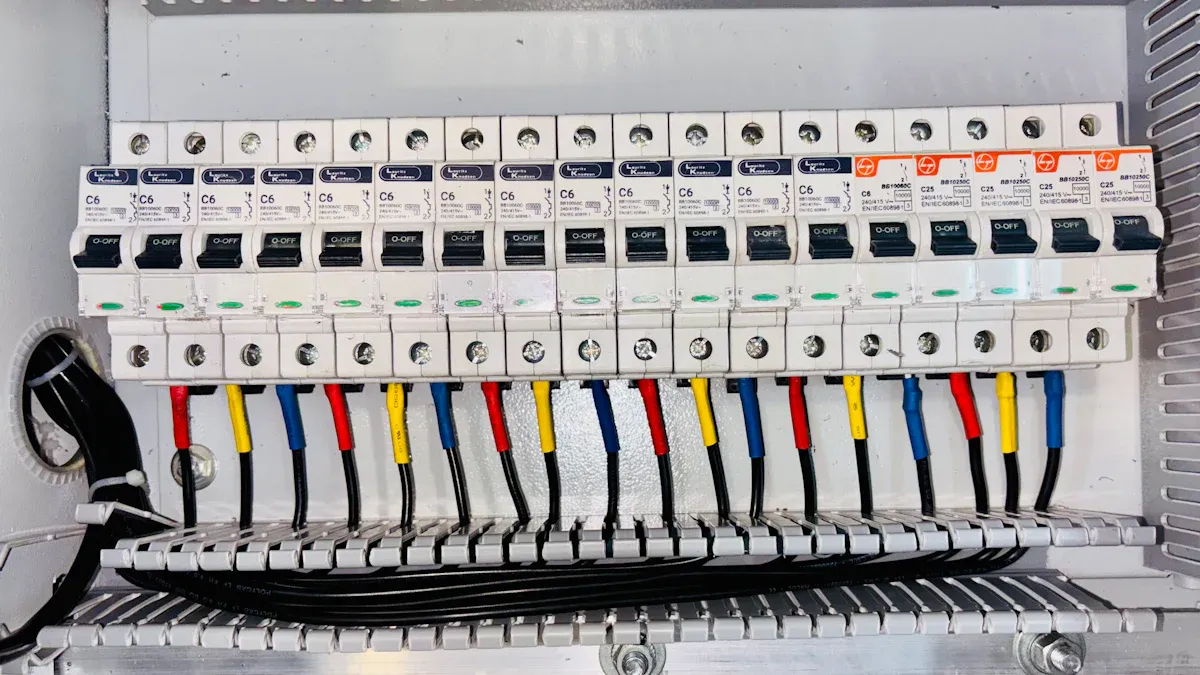
You must connect the line and load conductors carefully to the molded case circuit breaker. The line side brings power in from the source. The load side sends power out to your equipment. Look at the labels on the breaker to find the right terminals. Pick the correct wire size for your breaker’s amp rating. This helps stop wires from getting too hot and keeps things safe.
Here are the steps to connect the wires:
- Take off the insulation from the ends of the wires. Be careful not to cut or hurt the metal strands.
- Put the line conductors into the line terminals. Put the load conductors into the load terminals.
- Make sure each wire is all the way inside the terminal. No copper should stick out.
- First, tighten the terminal screws by hand. This holds the wires before you use a torque tool.
Tip: Check every connection again before you go on. A loose wire can get hot and might start a fire.
Torque Requirements
You need to tighten each connection to the torque value the maker says. Using the right torque keeps wires tight and stops dangerous problems. If you do not tighten enough, the connection can get hot and cause a fire. If you tighten too much, you could break the wire or damage the breaker.
A real fire happened because aluminum service wires were not tight enough. The wires were only tightened to 12 ft-lbs, but they needed 20 ft-lbs. This mistake caused a fire and big losses. The 2017 National Electrical Code says to use a calibrated torque tool when the equipment lists a torque value.
A big test with over 400 people showed most could not tighten connections right without a torque wrench. Both electricians and others had the same results. Only a few people got the right torque by hand. Not tightening enough can make wires too hot. Tightening too much can break wires.
| Aspect | Finding |
|---|---|
| Experience | Electricians and beginners did about the same without torque tools. |
| Tool Usage | Most people did not get the right torque without a torque wrench. |
| Torque Accuracy | Only a few got the correct torque by hand. |
| Consequences | Not tight enough can cause fire; too tight can break wires. |
| Usage Frequency | Few always used torque tools; most used them only sometimes. |
Always use a calibrated torque wrench when you work on molded case circuit breaker connections. This keeps your system safe and follows the rules.
Calibration & Testing
Set Trip Unit
You need to set the trip unit before you finish the job. The trip unit controls when the breaker will trip if there is too much current. Always follow the manufacturer’s instructions for your model. Use a small screwdriver to adjust the dials or switches. Set the long-time, short-time, and instantaneous trip values to match your system needs.
Correct trip unit settings help your system work safely. When you set the trip unit right, only the breaker closest to a problem will trip. This keeps the rest of your system running. For example, in a hospital or data center, this means only one area loses power, not the whole building. If you set the trip unit wrong, you risk tripping the wrong breaker or missing a fault. This can cause damage or even a fire.
Tip: Write down your settings in a logbook. This helps you check or change them later.
Field Testing
After you set the trip unit, you must test the breaker in the field. Testing makes sure the breaker works as planned before you turn the power back on. Follow these steps:
- Use a test kit or secondary injection tester if your breaker supports it.
- Simulate an overload or short circuit to see if the breaker trips at the right setting.
- Check that the breaker resets and works again after tripping.
- Inspect all connections for tightness and signs of overheating.
If you do not have a test kit, check the mechanical operation by switching the breaker on and off several times. Make sure the handle moves smoothly and the indicator shows the correct position.
Testing before service helps you catch problems early and keeps your system safe.
Code Compliance
You must follow all local and national codes when you install molded case circuit breaker equipment. These codes protect people and property from electrical hazards. Some important rules include:
- IEC 60947-2: Sets the quality and performance standards for breakers.
- NEC Article 240: Requires correct sizing, labeling, and safe installation in the US.
- OSHA 1910 – Subpart S: Covers safety steps like lockout/tagout and PPE.
- Local Codes: May require permits, inspections, and licensed electricians.
MCCBs protect against overloads and short circuits. Following the codes ensures your breaker will work as designed. If you skip these steps, you risk fires, injuries, fines, or legal problems.
Always check the latest codes before you start. If you are not sure, ask a licensed electrician or inspector.
Maintenance Tips
Routine Checks
You should check your molded case circuit breaker often. This helps keep it safe and working well. Checking it on a schedule helps you find problems early. This can stop big repairs or failures. Most experts say to check your breaker every 1 to 3 years. How often you check depends on where it is and how much you use it.
Here are some easy steps for your checks:
- Look for cracks, dirt, or hot spots on the breaker.
- Wipe off dust so the breaker stays cool.
- Make sure all connections are tight to the right torque.
- Flip the breaker on and off to see if it moves well.
- Test insulation and contact resistance to find hidden problems.
- Adjust the trip settings so the breaker protects your wires.
- Write down each check and test you do.
Good records help you plan checks and show you took care of your breaker.
Doing regular checks does more than stop emergencies. It helps your breaker last longer and keeps people safe. It also saves money by stopping long breaks. Studies show that cleaning and testing often can make your breaker last over 13 years. This also lowers the chance of it failing.
Troubleshooting
If your breaker trips a lot or acts strange, you need to find out why. Start by looking for easy-to-see problems like loose wires or dirt. Check for damage too. Use a simple list to help you:
- Look for cracks or burn marks you can see.
- Feel if the breaker is hot or smells burnt.
- Turn the breaker on and off to test it.
- Use a meter to check insulation and contact resistance.
- Look at your records to see if this happened before.
If you find a problem, fix it right away. Change broken parts or adjust the trip unit if you need to. If it still does not work, call a licensed electrician.
Checking problems and fixing them fast keeps your system safe and working well.
You can install molded case circuit breaker equipment safely by following each step with care. Always remember these key actions:
- Turn off the power and check with a voltage tester.
- Wear the right PPE, like insulated gloves and safety glasses.
- Plan your work and pick the correct breaker.
- Mount the breaker as the manufacturer says.
- Connect wires and tighten screws to the right torque.
- Calibrate the breaker for your system.
- Test the breaker and check all connections.
- Follow all electrical codes.
- Keep up with regular maintenance.
Stay safe by following these steps and always check your system before turning the power back on. If you are unsure, ask a professional for help.
FAQ
What is a molded case circuit breaker (MCCB)?
A molded case circuit breaker protects your electrical system from too much current. It stops power if there is a problem. You use it to keep your building and equipment safe.
Can you install an MCCB without an electrician?
You should not install an MCCB unless you have training. Mistakes can cause fires or shocks. Always ask a licensed electrician if you are not sure.
How do you know which size breaker to use?
Check the equipment label for the right amp rating. Match the breaker size to the wire size and load. If you pick the wrong size, you risk damage or fire.
Tip: Always follow the manufacturer’s chart for breaker and wire sizes.
What should you do if the breaker keeps tripping?
- Turn off the power.
- Check for loose wires or overloads.
- Look for signs of damage.
- If you cannot find the problem, call a licensed electrician.
Frequent tripping means something is wrong. Do not ignore it.
The following information may be of interest to you
Intelligent MCCB circuit breaker
Why Your Solar Panel System Needs the Right Circuit Breaker
Molded case circuit breaker 125 ampere 4P