
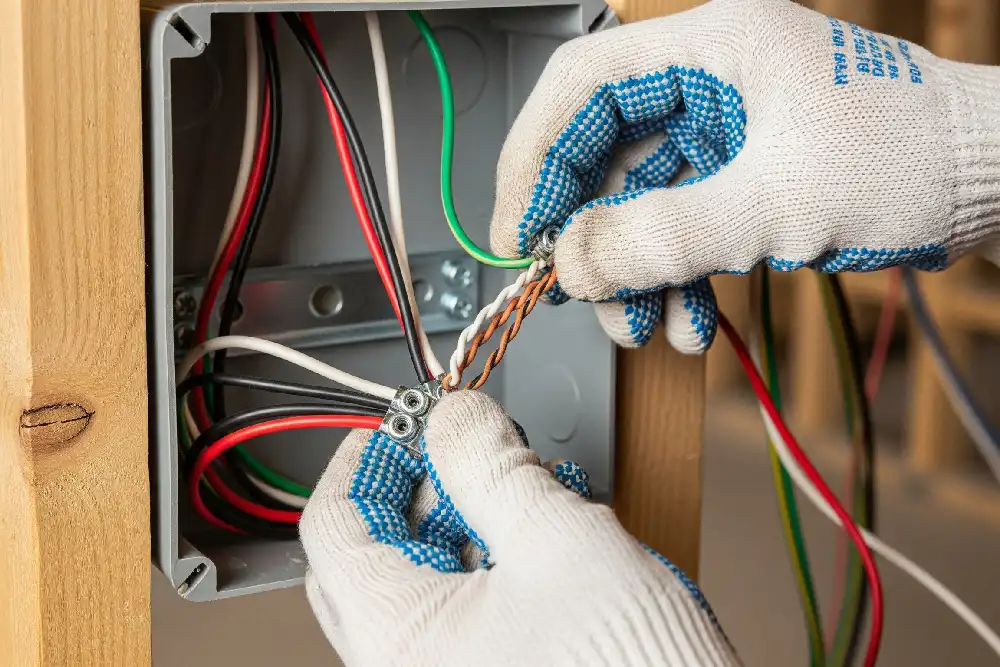
Wires in the junction box depend on the box size, wire gauge, and code rules. For example, a 4×4 inch box often holds up to 10 wires if you use 14-gauge conductors. You must count each conductor, device, and clamp inside the box to follow code requirements. If you put too many wires in, you risk overheating and unsafe conditions. Always check the box volume and compare it to your total wire fill for safe installations.
Key Takeaways
- Pick the right junction box size for your project. Big boxes can hold more wires safely. Small boxes are good for simple jobs.
- Count every wire, device, and clamp in the box. This helps you follow safety rules and stops wires from getting too hot.
- Use the right wire gauge for the box size. Thick wires need more room in the box. Use a bigger box for thick wires so they fit well.
- Follow the National Electrical Code (NEC) rules for box fill. Not following these rules can be dangerous and cause you to fail inspections.
- Check your work before you close the junction box. Make sure all connections are tight. Do not put too many wires in the box.
Wires in the Junction Box
Box Size
When you choose a junction box, you need to look at its size first. The box size tells you how many wires in the junction box can fit safely. Larger boxes hold more wires and devices. Smaller boxes work for simple connections. You often see these box types in homes and businesses:
| Box Type | Approximate Dimensions (W x H x D) | Common Uses |
|---|---|---|
| 4×4 Square | 4″ x 4″ x 1.5″ to 2.125″ | Multiple wire connections, single devices |
| Single Gang (4×2) | 2″ x 4″ x 1.5″ to 3.5″ | Single switches or outlets |
| 4-11/16 Square (5S) | 4.6875″ x 4.6875″ x 2.125″ to 2.5″ | Higher wire counts, larger wires, commercial |
| Round/Octagonal | 4″ Diameter x 1.5″ to 3″ | Ceiling/wall light fixtures, junction points |
| 2-Gang | 3″ to 4″ x 4″ x 1.5″ to 3.5″ | Two switches or outlets |
| 3-Gang | 4.5″ to 6.5″ x 4″ x 1.5″ to 3.5″ | Three switches or outlets |
| Pancake (Round/Octagonal) | 4″ Diameter x 0.5″ to 0.75″ | Shallow ceiling spaces, light fixtures |
The internal volume of the box controls the number of wires in the junction box. If you use a box that is too small, you risk crowding the wires. Crowding can cause heat to build up and damage the insulation. Always check the box’s cubic inch rating before you start wiring.
Wire Gauge
Wire gauge means the thickness of the wire. You find different gauges in homes, like #14, #12, and #10. Thicker wires take up more space inside the box. When you plan your project, you need to match the wire gauge to the box size. Here is a table showing how wire gauge affects the number of wires in the junction box:
| Box Type | Wire Gauge | Number of Wires |
|---|---|---|
| Single-gang | #14 | 9 |
| #12 | 8 | |
| #10 | 7 | |
| Double-gang | #14 | 16 |
| #12 | 15 | |
| #10 | 13 | |
| Custom Size | #14 | 5 per 12 cu in |
| #12 | 4 per 12 cu in | |
| #10 | 4 per 12 cu in | |
| #8 | 3 per 12 cu in |
If you use thicker wires, you must use a larger box. You cannot mix too many thick wires in a small box. Always count each wire and check the box fill chart before you install.
Code Rules
You must follow code rules when you decide how many wires in the junction box can fit. The National Electrical Code (NEC) sets the standards for safety. NEC 314.16 gives you the formula for box fill. You need to count every wire, device, and clamp inside the box. The code also tells you the minimum box volume for a certain number of conductors:
| Number of Conductors | Minimum Volume (Cubic Inches) |
|---|---|
| 3–6 | 18 |
| 7–8 | 20 |
Tip: Overcrowded junction boxes trap heat and can lead to wire insulation damage or even electrical fires. Proper spacing helps prevent short circuits and makes future repairs easier.
You must always check the code before you start. If you ignore the rules, you risk safety problems and may need to redo your work. The code protects you and your home from hazards. When you follow the rules, you keep wires in the junction box safe and organized.
Box Fill Calculation
Fill Units
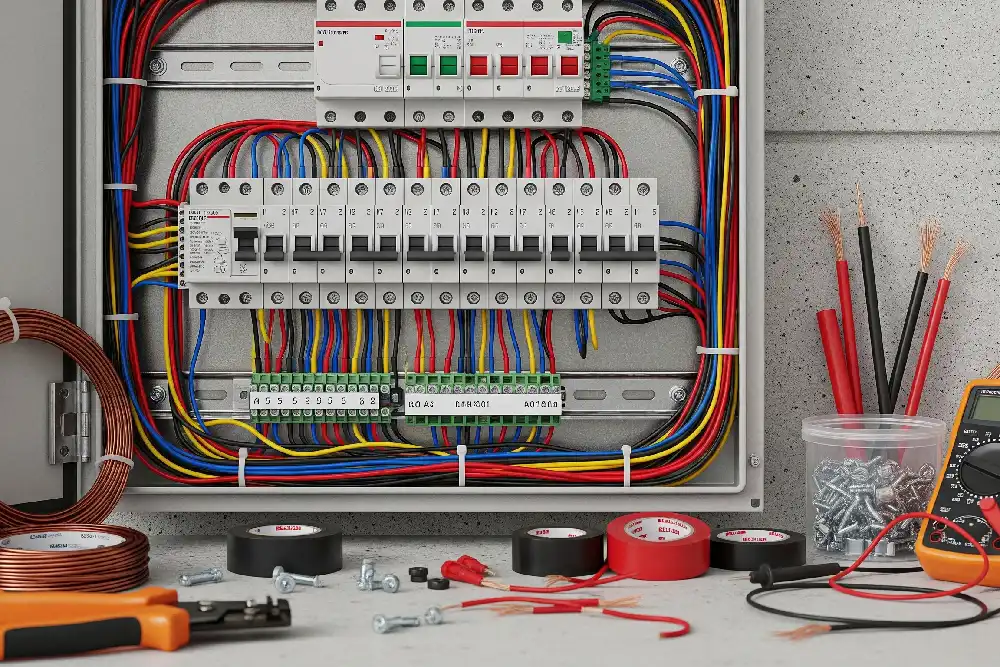
When you calculate how many wires in the junction box can fit, you need to understand fill units. A fill unit is the amount of space each item inside the box takes up. This includes every wire, device, clamp, or fitting. The National Electrical Code (NEC) gives you a specific volume for each type of wire and device. You add up these volumes to see if your box is big enough.
| Item | Volume (cubic inches) |
|---|---|
| 14 AWG Conductor | 2.00 |
| 12 AWG Conductor | 2.25 |
| 10 AWG Conductor | 2.50 |
| 8 AWG Conductor | 3.00 |
| Each wire connector | Volume of largest conductor |
| Each strap or cable clamp | 0.25 |
| Each device | Twice the volume of largest conductor |
| Equipment grounding conductors | One conductor volume (largest size) |
Note: Each conductor entering or leaving the box counts as one fill unit. Devices like switches or outlets count as two fill units each, based on the largest wire connected.
Calculation Steps
You can figure out the right box size by following these steps:
- Count every wire that enters or exits the box. Each wire counts as one fill unit.
- Add fill units for each device, such as switches or outlets. Each device counts as two fill units, using the largest wire size in the box.
- Include all grounding wires together as one fill unit, based on the largest ground wire.
- Add fill units for any clamps or fittings inside the box.
- Multiply the number of fill units for each wire size by the volume allowed for that size.
- Add up all the volumes. This total shows the minimum box volume you need.
- Check the box label or manufacturer’s chart to make sure your box meets or exceeds this volume.
Tip: Jamming too many wires in the junction box can cause overheating. Always make sure your calculation matches or stays below the box’s rated volume.
Example
Let’s look at a real-world example. You want to use a 4×4 inch junction box with 14-gauge wires. Here is how you calculate the box fill:
- You have 5 wires for switches, 4 wires for receptacles, 1 grounding wire, and 1 cable clamp.
- Total fill units: 5 (switch wires) + 4 (receptacle wires) + 1 (ground) + 1 (clamp) = 11 fill units.
- Each 14 AWG wire uses 2 cubic inches.
- Total volume needed: 11 fill units × 2 cubic inches = 22 cubic inches.
- A standard 4×4 inch box with a depth of 2⅛ inches provides about 21 to 22 cubic inches.
| Box Size | Wire Gauge | Cubic Inches Required |
|---|---|---|
| 4×4 inch box | #14 | 22 |
| 4×4 inch box | #12 | 29.25 |
| 4-11/16 inch box | #12 | 42 |
If you use thicker wires or add more devices, you need a bigger box. Always check the box volume before you start. This keeps wires in the junction box safe and helps prevent electrical problems.
Safety and Mistakes
Overcrowding
Overcrowding means putting too many wires in one junction box. This can cause many safety problems:
- The insulation on wires might break, showing live wires.
- Live wires can start electrical fires.
- Too many wires in a box can trap heat. This makes wires get too hot.
- Overcrowding does not follow electrical codes. You might fail an inspection.
⚠️ Always do the box fill calculation before adding wires. If you put in too many wires, it can be dangerous for your home and family.
Ignoring Codes
Not following electrical codes is a common mistake. It can cause big problems. The National Electrical Code (NEC) gives rules for how many wires fit in a box. Some common code mistakes are:
- Putting too many wires in a box without using NEC 314.16.
- Leaving boxes open or making wire splices outside a box.
If you do not follow these codes, you can have problems:
- You might cause electrical fires or electric shock.
- You could get fined or face legal trouble. Insurance might not pay if your wiring is not up to code.
- Your home or business could stop working because of electrical failures.
Note: Insurance often needs all electrical work to follow local codes. If you do not follow the rules, you might lose your coverage and pay for damages yourself.
Best Practices
You can avoid mistakes by using tips from professional electricians:
- Pick a box made for your job, like indoor or outdoor use.
- Do not overcrowd. Always check box fill before you start.
- Make sure all wire connections are tight. Twist stranded wires together.
- Connect all ground wires to the grounding screw with a wire nut.
- Label wires so you can find them later.
- Always put on and tighten the junction box cover.
- Check your work for loose wires or wires that show metal.
- Use good electrical parts and check your system often.
| Inspection Frequency | Importance |
|---|---|
| Annual | Keeps your wiring safe and follows the rules |
| More frequent in older or damp homes | Stops rust and overheating |
| During renovations or updates | Finds problems before you start new work |
🔍 Checking your wiring often helps you find problems early and keeps your electrical system safe.
Reference Chart
Box Sizes
You see many box sizes in homes and businesses. Each box fits different needs. You choose a box based on what you want to connect and how much space you need for wires. Here is a table showing common box sizes and their uses:
| Box Size | Description |
|---|---|
| 4x4x4 | Suitable for small, delicate items such as jewelry or electronics. |
| 8x8x8 | Perfect for small, compact items like handcrafted mugs. |
| 12x12x6 | Popular for larger electronics or multiple clothing items. |
| 12x12x12 | Versatile size for various products, from household goods to electronics. |
| 15x12x10 | Often used for shipping business records or small appliances. |
| 18x12x12 | Ideal for larger or heavier items like power tools. |
| 24x18x24 | Used for bulky but light items like blankets or larger home decor. |
| Flat Boxes | Ideal for shipping flat or slim items like framed art or hardcover books. |
| Multi-Depth Boxes | Flexible for products that don’t conform to standard dimensions. |
You find these sizes in reference charts. Each box gives you a different amount of space for wires and devices.
Wire Capacities
Wire capacity means how many wires you can put in a box. The number depends on the box size and the wire gauge. Thicker wires take up more space. You need to check the chart before you start wiring. Here is a table showing the maximum number of wires for common box sizes:
| Box Size (inches) | Max Capacity (cu in) | Max 14 AWG Wires | Max 12 AWG Wires | Max 10 AWG Wires |
|---|---|---|---|---|
| 4 × 1¼ round/oct | 12.5 | 6 | 5 | 4 |
| 4 × 1½ round/oct | 15.5 | 7 | 6 | 5 |
| 4 × 2⅛ round/oct | 21.5 | 10 | 9 | 8 |
| 4 × 1¼ square | 18 | 9 | 8 | 7 |
| 4 × 1½ square | 21 | 10 | 9 | 8 |
| 4 × 2⅛ square | 30.3 | 15 | 13 | 12 |
| 4-11/16 × 1¼ sq | 25.5 | 12 | 11 | 10 |
| 4-11/16 × 1½ sq | 29.5 | 14 | 13 | 12 |
| 4-11/16 × 2⅛ sq | 42 | 21 | 18 | 16 |
- Wire gauges show wire thickness. Lower numbers mean thicker wires.
- Thicker wires carry more current and help reduce energy loss.
Quick Checklist
You can use this checklist to keep your wiring safe and organized:
- Use quality wires that match your power needs.
- Make sure you ground every box to avoid electrocution.
- Check that the circuit size fits the appliances you connect.
- Hire a certified electrician for complex installations.
- Select the right junction box for your application.
- Place the box where you can reach it easily.
- Verify wire sizing and connections before closing the box.
- Organize cables to prevent damage.
- Use proper covers to protect against moisture.
- Follow local codes and test all connections.
✅ Following this checklist helps you meet code requirements and keeps your electrical system safe.
You need to check box size, wire gauge, and code rules before adding wires in a junction box. Use the reference chart and checklist for every project to keep your work safe and reliable.
Key steps for safe installations:
- Choose the right box for your environment.
- Match box size to wire count and gauge.
- Follow local codes and NEC guidelines.
- Include all devices and clamps in your calculations.
- Inspect your work before closing the box.
If you feel unsure, ask a professional electrician. This helps prevent fire hazards, failed inspections, and keeps your family safe.
If you need to purchase some high-quality distribution boxes, you can check out our product line of distribution boxes
Click-to-view.webp)
FAQ
What happens if you put too many wires in a junction box?
You risk overheating and fire. Wires may get damaged. You could fail inspection. Always check box fill before you add wires.
What does box fill mean?
Box fill shows how much space wires and devices take up inside a junction box. You use box fill to make sure you do not overcrowd the box.
What is the easiest way to check wire capacity?
Look at the box’s cubic inch rating. Use a box fill chart. Count each wire, device, and clamp. Compare your total to the box’s rating.
What should you do if you are unsure about box fill?
Ask a licensed electrician for help. You can also check the National Electrical Code or local rules. Safety comes first! 🛡️
See also
NEC Code of Junction Box Requirements Made Simple
How to interpret the technical markings on terminal blocks
Combiner box and junction box: main differences
How to Calculate the Load Capacity of a 32 Amp MCB
DC 1000V 2 in 1 Out Solar Junction Box