Here are the 10 most common circuit breaker faults you might face at home:
- Overload
- Short circuit
- Circuit breaker failure
- Aging breaker
- Burned out breaker
- Faulty wiring
- GFCI tripping
- Arc fault
- Damaged outlet
- Loose connection
Some brands show high failure rates in residential systems, like Challenger, FPE-Stab-Lok, and Zinsco, each with about a 60% no-trip rate. Always put safety first. When you see sparks, smoke, or repeated issues, call a licensed electrician.
Key Takeaways
- Overloaded circuits make breakers turn off. Unplug big devices and use less power in one place to stop overload.
- Short circuits are very dangerous. Turn off the power right away if you see sparks or smell burning. Call an electrician for help.
- Old or broken circuit breakers might not work. Check often for flickering lights or burning smells. Change old breakers to keep safe.
- Bad wiring can be very risky. Look at your wiring often. Call a professional if you see flickering lights or smell burning.
- GFCI outlets turn off for safety. If they turn off a lot, look for water or damage. Call an electrician if it keeps happening.
Overload
What happens
If you put too many devices on one circuit, the circuit breaker will turn off the power. This helps keep your home safe. You may see some warning signs before this happens.
- The circuit breaker shuts off a lot.
- Lights may flicker or get dim.
- You might smell burning near outlets.
- Outlets or switches can feel hot or look burned.
- You could hear buzzing from outlets or the circuit breaker panel.
- Some appliances may stop working or slow down.
- You might feel a small shock when you touch an outlet.
These signs show that wires or outlets are getting too hot. Hot wires can start fires. Unstable circuits can hurt your electronics. Bad wires can also make electric shocks more likely.
Why it occurs
An overload happens when too many things use power on one circuit. Each circuit can only handle a set amount of electricity. If you use more than it can take, the circuit breaker will trip.
Other reasons include:
- Plugging in lots of strong appliances at once, like space heaters or hair dryers.
- Using power strips or extension cords for extra devices.
- Wires or cords that are broken.
- Short circuits or ground faults let too much electricity flow.
- Arc faults from broken wires can make sparks.
Solution
You can fix an overloaded circuit by doing these things:
- Look for problems like tripped circuit breakers, flickering lights, or burning smells.
- Unplug strong devices from the circuit that has trouble.
- Check for broken cords or outlets. Do not use the circuit if you think the wires are bad.
- Move some devices to other circuits to spread out the power.
- Do not plug many strong devices into one outlet or power strip.
- Have a licensed electrician check your system often.
- If the circuit breaker keeps tripping, ask an electrician to add more circuits or upgrade your wires.
⚠️ Tip: If you smell burning, see burned outlets, or the circuit breaker trips a lot, call an expert right away. Safety is most important.
Short Circuit
What happens
A short circuit makes your electrical system act in a dangerous way. You might see sparks or flashes near outlets or appliances. The circuit breaker trips right away to stop the electricity. This helps keep your house safe from fires. You could smell something burning or see smoke. Sometimes, you hear a loud pop or crack.
- The current gets very high in a short time. This can hurt outlets or appliances fast.
- A lot of heat is made, which can melt or burn metal where wires touch.
- Sparks and flashes can happen and may burn things nearby.
- Circuit breakers trip to stop the flow of electricity. This helps stop more damage and lowers fire danger.
- Electrical parts like outlets, switches, or appliances can get damaged.
- Sparks or fire can start if something nearby can catch fire.
⚡ Note: A short circuit can hurt your home’s wiring and appliances. It can also start a fire if you do not fix it quickly.
Why it occurs
Short circuits happen when electricity finds a shortcut. Wires that should not touch each other end up touching. This lets electricity move in a way that is not safe.
Some common reasons are:
- Loose connections. Wires can touch if they are not tight.
- Old or worn-out wiring. Wires and their covers get weak as they age.
- Bad appliance wiring. Broken plugs or cords can cause shorts.
- Damaged insulation. If the cover on wires breaks, hot and neutral wires can touch.
Old homes with old wiring can have more short circuits. Appliances with broken cords or plugs can also cause problems.
Solution
You need to act fast if you think there is a short circuit.
- Turn off the power right away. Go to your electrical panel and switch off the circuit breaker for that area.
- Find the problem. Look for broken wires, too many things plugged in, or bad appliances.
- Call an expert. If you cannot find or fix the problem, call a licensed electrician to help.
The National Electrical Code (NEC) has rules to keep electrical systems safe. Articles 110 and 220 talk about safety and how much power you can use. These rules help stop short circuits from happening.
🛑 Tip: Do not ignore a short circuit. Acting fast keeps your home safe and stops bigger problems.
Circuit Breaker Failure
Signs of Circuit Breaker Failure
You can find circuit breaker failure by looking for warning signs. These signs help you fix problems early and keep your home safe.
- Lights may flicker in some rooms.
- Appliances might stop working or act weird.
- You could smell burning near the electrical panel.
- The breaker might feel hot if you touch it.
- You may hear buzzing or humming from the panel.
- The breaker trips a lot, even when you use it normally.
- The breaker is very old and has not been changed in years.
If you see any of these, you should act fast. Waiting can make the problem worse.
Causes
Many things can make a circuit breaker fail. Some problems only affect your house. Others can cause trouble for many homes at once. Here is a table that shows common causes and what can happen:
| Cause of Failure | Consequence |
|---|---|
| Unplanned outages | One failed breaker can stop power for many homes and businesses. |
| Equipment damage | Too much power can overheat and break transformers or switchgear. |
| Fire hazards | Problems that are not fixed can make fires more likely. |
| Safety risks | Failed breakers may not stop faults, which can be dangerous for people. |
Old age, too much heat, and factory mistakes can also make a breaker fail. If your breaker is old, you have a bigger risk.
Solution
You can check for circuit breaker failure with a few easy steps.
- Put on insulated gloves to stay safe.
- Turn off the main circuit breaker to stop power.
- Set your multimeter to check resistance.
- Flip the breaker to the “on” spot.
- Put the red probe on the phase side and the black probe on the neutral side.
- If you see 0 resistance, the breaker works. If you see 0.003 ohms or more, the breaker is bad.
Change the breaker if it trips a lot, smells burnt, feels hot, or looks cracked or burned. If your breaker is older than 15-30 years, you should get a new one to stay safe.
🛑 Tip: If you are not sure or see damage, call a licensed electrician. Never ignore circuit breaker failure, because it can cause fire or electric shock.
Aging Breaker
What happens
When your circuit breaker gets old, you might see some warning signs. These problems can make your home unsafe.
- The circuit breaker trips a lot. This means it cannot handle the power.
- You might smell burning or see black marks near the panel.
- The circuit breaker feels hot if you touch it.
- Lights may flicker or get dim. This shows the power is not steady.
- Sometimes, the circuit breaker will not reset. This means it is broken and needs to be changed.
| Symptoms of Aging Circuit Breakers | Impact on Electrical Safety |
|---|---|
| Frequent tripping | Worn out inside, risk of too much power |
| Failure to trip when needed | Fire danger from missed overloads |
| Physical signs of damage | Gets too hot, could start a fire |
| Age-related deterioration | Works less well, can hurt equipment |
🔥 Tip: If you smell burning or see black marks, act fast. These signs mean your circuit breaker could get too hot and cause a fire.
Why it occurs
Many things can make your circuit breaker get old faster.
- Good brands last longer than cheap ones.
- Hot or wet places can hurt circuit breakers.
- If it trips a lot, the inside parts wear out.
- Using lots of strong appliances makes it work harder.
- Not checking your system often can make it wear out sooner.
You might have problems sooner if your house has old wires or you use many big appliances. Checking your system often helps you find problems before they get bad.
Solution
You can keep your home safe by fixing or changing old circuit breakers.
- Wear safety gear before you start.
- Turn off the main circuit breaker to stop power.
- Use a tester to make sure there is no power.
- Take off the panel cover carefully.
- Unhook the wire from the old circuit breaker.
- Look at the wires and bus bars for damage or rust.
- Put in a new circuit breaker with the right size.
- Put the cover back on and make sure it is tight.
- Turn the main circuit breaker back on and check if things work right.
⚡ Note: If you are not sure or see damage, call a licensed electrician. Checking and changing old circuit breakers keeps your home safe.
Burned Out Breaker
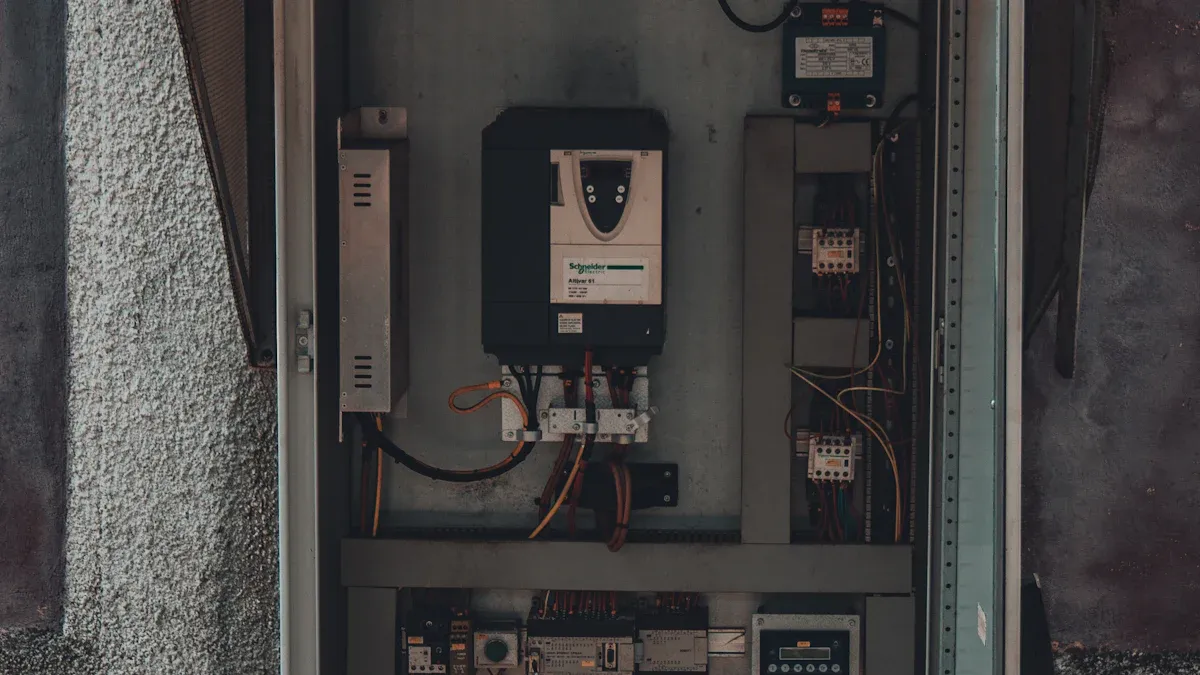
What happens
You may notice several warning signs when a circuit breaker burns out. These signs help you spot trouble before it gets worse.
- The breaker trips often, even when you use normal appliances.
- Lights flicker or dim in rooms connected to the breaker.
- You smell something burning near the electrical panel.
- The breaker feels warm or hot when you touch it.
- You see scorch marks, melted plastic, or discoloration on the breaker.
- Heat comes from the breaker, and the panel may feel warmer than usual.
⚠️ Warning: A burning smell from your electrical panel means you need to act fast. This can lead to a fire if you ignore it.
Why it occurs
Several problems can cause a breaker to burn out. You should know these causes to keep your home safe.
- Overloaded circuits happen when you run too many high-wattage appliances at once.
- Short circuits occur when hot wires touch neutral or ground wires.
- Ground faults let electricity flow through paths it should not take.
- Appliance malfunctions make devices draw too much current.
If you use old or faulty appliances, you increase the risk. Running space heaters, hair dryers, or microwaves on the same circuit can overload it. Damaged wires or loose connections also make problems worse.
Solution
You can replace a burned out breaker by following safe steps.
- Prioritize Safety: Gather the right tools and shut off the main power. This lowers your risk of electric shock.
- Inspect the Breaker Box: Look for signs of damage. Use a non-contact voltage tester to make sure the power is off.
- Remove the Old Breaker: Take off the cover of the breaker box. Detach the old breaker carefully.
- Install the New Breaker: Put the new breaker in the correct slot. Align the load terminal and attach the hot wire securely.
- Perform Post-Replacement Checks: Turn the power back on. Test the new breaker to make sure it works well.
🛡️ Tip: If you feel unsure or see major damage, call a licensed electrician. Your safety matters most.
Faulty Wiring
What happens
Faulty wiring can make many things go wrong at home. You might see lights flicker or hear buzzing from outlets. Sometimes, you smell burning but cannot find where it comes from. Breakers may trip a lot or stop working. These problems are not safe.
If you do not fix faulty wiring, bigger dangers can happen.
- Electrical fires may start from overloaded circuits or short circuits.
- You could get shocked by electricity.
- Electronics can break easily.
- Your electrical system may not work well.
- Appliances might stop working.
- The risk of fire goes up.
- Your safety is in danger.
⚠️ Tip: If you see sparks, smell burning, or your breaker trips a lot, get help fast. These signs mean your wiring needs to be checked.
Why it occurs
Faulty wiring happens for many reasons. Old wires get weak as time passes. Bad installation can leave wires loose or open. Sometimes, animals chew wires and break them. Water leaks can also hurt wiring.
You might see these problems in homes with old electrical systems.
Here is a table that shows common causes, signs, and solutions:
| Problem | Signs | Solution |
|---|---|---|
| Faulty Wiring | Flickering lights, frequent tripped breakers, outlets emitting sparks | Complete electrical overhaul by a licensed electrician, following building codes and regulations. |
| Overloaded Circuits | Breakers trip often, lights dim when using appliances | Upgrade your electrical panel or adjust wiring to spread the load across more circuits. |
🔍 Note: If you see flickering lights or sparks, your wiring may be bad. Do not ignore these signs.
Solution
You can keep your home safe by checking your wiring often.
- Get regular inspections to find problems early.
- Use tools like multimeters to test voltage and circuits.
- Watch for flickering lights, burning smells, and tripped breakers.
- If you think there is a short circuit, turn off power and look for damage. Fix or change broken parts.
- Thermal cameras can help you find hot spots that show trouble.
- For big problems, call a licensed electrician.
| Procedure | Description |
|---|---|
| Regular Inspections | Check your wiring often to find problems before they get worse. |
| Use of Diagnostic Tools | Test voltage and continuity to make sure circuits work properly. |
| Identify Common Indicators | Look for flickering lights, burning smells, and tripped breakers. |
| Addressing Short Circuits | Turn off power, inspect, and fix or replace damaged parts. |
| Thermal Imaging | Use cameras to spot heat that shows hidden wiring problems. |
| Professional Help | Contact an electrician for major repairs or if you feel unsure. |
🛡️ Safety Reminder: Never try to fix wiring if you feel unsafe. Always ask a professional for help with electrical repairs.
GFCI Tripping
What happens
You may notice your GFCI outlet trips and shuts off power to part of your home. This can happen in your kitchen, bathroom, garage, or outside. When the GFCI trips, you lose power to outlets and devices on the same circuit. Sometimes, you see a small light on the outlet change color or turn off. You might try to reset the outlet, but it does not work. You may hear a click when the outlet trips.
Common symptoms of GFCI tripping include:
- Power loss in outlets or appliances connected to the GFCI.
- GFCI outlet will not reset after pressing the button.
- Moisture or water near the outlet, especially outdoors.
- Flickering lights or devices that stop working.
- Burning smell or buzzing sound from the outlet.
💡 Tip: If you see moisture or hear buzzing, do not touch the outlet. Water and electricity are dangerous together.
Why it occurs
GFCI outlets trip for several reasons. You need to know these causes to keep your home safe. The most common reasons include:
- Ground Faults: Electricity finds a path to ground through worn insulation or moisture. This can happen if water gets inside the outlet box or if wires touch metal.
- Leakage Current: Old or damaged insulation lets electricity leak out. Even a small leak can make the GFCI trip.
- Environmental Factors: Moisture, rain, or conductive dust can build up in outdoor outlets. These conditions make ground faults and leakage current more likely.
Other causes include overloaded circuits, faulty wiring, and defective GFCI outlets that do not reset. You may see these problems in older homes or places with lots of humidity.
Solution
You can fix GFCI tripping by following these steps:
- Unplug all devices from the affected outlets. Check if the GFCI resets after you remove everything.
- Dry the area around the outlet. Use a towel if you see moisture. Wait for the outlet to dry before you try to reset it.
- Inspect the outlet for signs of damage, such as cracks, burn marks, or loose wires.
- Press the “reset” button on the GFCI outlet. If it does not reset, the outlet may be faulty.
- Test the outlet with a GFCI tester. This tool helps you check if the outlet works properly.
- If the outlet still trips, call a licensed electrician. You may need to replace the outlet or fix wiring problems.
| Step | What to Do |
|---|---|
| Unplug devices | Remove all plugs from the GFCI outlet |
| Dry the outlet | Make sure the area is free from moisture |
| Inspect for damage | Look for cracks, burns, or loose wires |
| Reset the outlet | Press the reset button |
| Test the outlet | Use a GFCI tester to check function |
| Call an electrician | Get help if the outlet keeps tripping |
🛡️ Safety Reminder: Never use wet outlets or ignore repeated GFCI tripping. Quick action keeps your home safe from shock and fire.
Arc Fault
What happens
You might hear buzzing or crackling from outlets or switches. Sometimes, lights flicker or get dim for no reason. You could smell burning or see black marks near outlets. These things can mean an arc fault is happening. Arc faults happen when electricity jumps between wires or over broken insulation. This makes heat and sparks. Fires can start if this happens in your home.
AFCIs, or Arc Fault Circuit Interrupters, help keep you safe. They watch for unsafe electrical currents and turn off power fast if they find arcing. This quick action helps stop fires. Every year, about 51,000 electrical fires happen in the U.S. Many of these fires start because of arc faults. AFCIs can stop more than half of these fires.
🔥 Tip: If you hear crackling or see burn marks, turn off the power. Call an electrician right away. Fires from arc faults can start very fast.
Why it occurs
Arc faults often happen when wires get damaged or loose. Old wires can bend or lose their insulation. When insulation breaks, electricity can jump between wires or to the ground. Loose connections make gaps, and electricity tries to cross these gaps. This makes heat and sparks.
- Old electrical systems make arc faults more likely.
- Nails or tacks can break wire insulation and cause problems.
- Humidity and heat can wear out wires faster.
- Over 30,000 home fires each year in the U.S. are caused by arc faults. These fires hurt many people and cost a lot of money.
Solution
You can keep your home safe by using AFCIs. The National Fire Protection Association (NFPA) says all homes should have AFCIs. In Massachusetts, new homes must have AFCIs on all 15-20A branch circuits. AFCIs find dangerous arcs and turn off power before a fire starts.
| Solution | Benefit |
|---|---|
| Install AFCIs | Stops dangerous arcs, prevents fires |
| Regular inspections | Finds damaged wires before trouble starts |
| Replace old wiring | Lowers risk of arc faults |
“An AFCI is made to find dangerous arcs that can cause fire, like arcing over broken wire insulation or loose wire connections. It ignores normal arcs from switches or motors.”
If you live in an old home or see warning signs, ask an electrician to check your wiring and put in AFCIs. This helps keep your family safe and stops electrical fires.
Damaged Outlet
What happens
You can spot a damaged outlet by watching for clear warning signs. These signs help you act before bigger problems start.
- You see cracks, burn marks, or melted spots on the outlet or wall.
- The circuit breaker trips often when you use certain outlets or appliances.
- Your appliances run poorly or stop working when plugged into the outlet.
- You smell something burning or fishy near the outlet or electrical panel.
⚠️ Tip: If you notice any of these signs, stop using the outlet right away. Damaged outlets can cause fires or electric shocks.
Why it occurs
Many things can damage an outlet and cause circuit breaker faults. The table below shows the main causes and what they mean for your home:
| Cause of Outlet Damage | Explanation |
|---|---|
| Electrical Overloading | Too many devices draw more power than the outlet can handle. This makes it overheat and fail. |
| Physical Damage from Daily Use | Plugging and unplugging devices wears out the inside parts. This leads to loose connections. |
| Moisture Exposure | Water near outlets, especially in kitchens or outdoors, causes corrosion or short circuits. |
| Faulty Wiring | Loose or wrong wiring overheats and creates sparks or arcs. This is very dangerous. |
| Age-Related Deterioration | Old outlets break down over time and may not meet safety standards. This increases risk. |
💡 Note: Outlets in bathrooms, kitchens, and outside face more risk because of water and heavy use.
Solution
You can fix a damaged outlet by following safe steps. Always put safety first.
- Turn off the power to the outlet at the circuit breaker.
- Use a voltage tester to make sure the power is off.
- Unscrew and remove the faceplate.
- Double-check with the tester that no power is present.
- Unscrew the outlet from the box.
- Carefully disconnect the wires from the old outlet.
- Check the wires for any damage or wear.
- Strip the insulation from the ends of the wires if needed.
- Attach the wires to the correct terminals on the new outlet.
- Tuck the wires back and secure the new outlet in place.
- Make sure all connections are tight.
- Replace the faceplate.
- Turn the power back on at the breaker.
- Plug in a device to test the new outlet.
- Dispose of the old outlet safely.
🛡️ Safety Reminder: If you feel unsure at any step, call a licensed electrician. Your safety always comes first.
Loose Connection
What happens
Loose wire connections can cause many problems in your home. You might notice lights flicker or dim for no clear reason. Sometimes, outlets or switches feel warm or even hot. You may hear a faint buzzing or crackling sound from the wall. These signs often point to a loose connection. When wires do not fit tightly, electricity cannot flow smoothly. This can make the wires heat up. Over time, the heat can damage the wires and the devices plugged into them. Sometimes, the circuit breaker does not trip, so you do not know there is a problem until something fails.
⚠️ Warning: Loose connections can cause fires, damage your equipment, or lead to sudden power loss. Always take these signs seriously.
Here are some risks you face with loose electrical connections:
- Overheating can start a fire in your walls.
- Your appliances or electronics may get damaged.
- You might lose power in parts of your home without warning.
- Heat can build up in one spot, even if the breaker does not trip.
Why it occurs
Loose connections often happen when wires are not tightened enough during installation. Sometimes, wires loosen over time because of vibration or repeated use. Outlets and switches that get used a lot can also develop loose connections. If you live in an older home, the wires may have shifted or corroded. Poor workmanship or using the wrong tools can make the problem worse.
Solution
You can fix loose connections by checking your outlets and switches. First, turn off the power at the breaker box. Use a voltage tester to make sure the power is off. Remove the cover plate and gently pull out the outlet or switch. Look for wires that are loose or not fully attached. Tighten any loose screws with a screwdriver. If you see burned or damaged wires, stop and call a licensed electrician.
🛡️ Tip: If you feel unsure or see signs of burning, always call a professional. Never ignore loose connections, as they can lead to serious hazards.
Regular inspections help you catch problems early. Tighten connections when you notice them. For older homes or repeated issues, ask an electrician to check your wiring. This keeps your home safe and your electrical system working well.
If you find circuit breaker faults early, you help keep your home safe. Fixing problems quickly stops bigger trouble. The solutions in this guide show you how to handle common issues. If problems keep happening or you see damage, call a licensed electrician for help.
🛡️ Safety Tip: Check your electrical system often. Doing regular checks lowers risk and keeps your family safe.
FAQ
What should you do if your circuit breaker keeps tripping?
You should unplug devices from the affected circuit. Try resetting the breaker. If it trips again, check for damaged cords or outlets. If you cannot find the problem, call a licensed electrician.
🛡️ Tip: Never ignore repeated tripping. It can mean a serious issue.
Can you replace a circuit breaker yourself?
You can replace a breaker if you have electrical experience and the right tools. Always turn off the main power first. If you feel unsure or see damage, call a professional.
⚠️ Warning: Working with electricity can be dangerous.
How often should you check your electrical panel?
You should check your electrical panel at least once a year. Look for signs of wear, burning, or loose connections.
- Listen for buzzing sounds
- Check for hot spots
- Look for tripped breakers
Why do lights flicker when you use appliances?
Lights flicker because of loose connections or overloaded circuits. Large appliances draw more power and can cause voltage drops.
💡 Note: If flickering happens often, ask an electrician to inspect your wiring.
What brands of circuit breakers should you avoid?
You should avoid brands with high failure rates, such as Challenger, FPE-Stab-Lok, and Zinsco. These brands may not trip when needed, which increases fire risk.
See also
What Causes a Circuit Breaker to Trip Without Restoring Electricity
What Are the Top Three Circuit Problems in Modern Homes
What Are the Signs of a Bad Circuit Breaker
How to Identify Arc Fault Locations Step by Step
What You Need to Know About Arc Faults and Fire Hazards