You might wonder why LED Lights Trip Circuit Breakers in your home. Many people face this problem. Some of the most common causes include:
- Inrush current from LED power supplies creates a sudden spike when you turn on the lights.
- Overloaded circuits can happen if you use too many fixtures on one line.
- Faulty bulbs, short circuits, or ground faults may trigger a breaker.
- LED lights may flicker if they do not match your dimmer or if the components are low quality.
If you spot these issues, you can often fix them with simple steps.
Key Takeaways
- LED lights can make circuit breakers trip because of inrush current. This is a fast burst of electricity when you turn on the lights. You can control this by using inrush current limiters or soft start modules.
- If you put too many LED fixtures on one circuit, it can trip the breaker. Do not use more than 36 fixtures on a 15-amp circuit. Do not use more than 48 fixtures on a 20-amp circuit. This helps stop overloads.
- Bad bulbs or wiring problems can also make circuits trip. Check your bulbs often for damage. Make sure all wires are connected tightly to stop problems.
- The right dimmer switch is very important. Old dimmers might not work with LEDs. Use trailing edge dimmers made for LED technology to stop flickering and tripping.
- If your breaker keeps tripping, call a licensed electrician. They can find and fix wiring problems. This keeps your home safe and working well.
Why LED Lights Trip Circuit Breakers
Inrush Current from LED Drivers

When you turn on LED lights, the power supply inside each bulb, called a driver, draws a quick burst of electricity. This burst is known as inrush current. The inrush current can be much higher than the normal amount of electricity the light uses. Sometimes, it can reach up to 100 times the regular current. For example, some LED fixtures can pull as much as 39 amps at 120 volts just for a split second. Traditional bulbs do not have such high inrush currents.
- Inrush current from LED drivers can reach peak values much higher than normal.
- Circuit breakers may think this spike is a short circuit and shut off the power.
- If you have many LED lights on the same circuit, the inrush current adds up and makes it more likely for the breaker to trip.
- The capacitors inside LED drivers cause this high inrush current when you switch on the lights.
You may notice that LED Lights Trip Circuit Breakers more often when you turn on several lights at once. This happens because the combined inrush current tricks the breaker into thinking there is a problem.
Overload from Multiple Fixtures
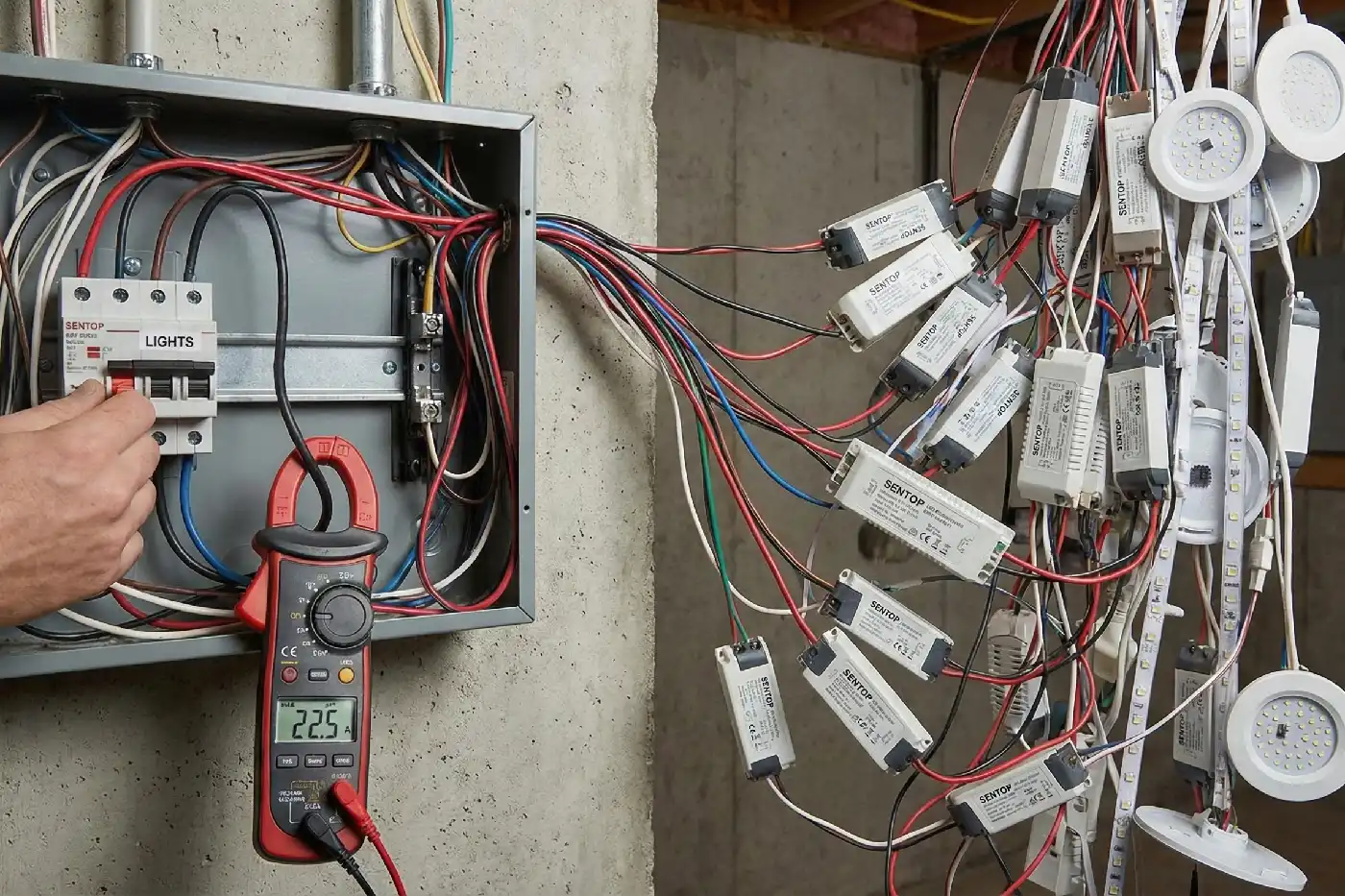
You might think LED lights use very little power, so you can install as many as you want. However, every circuit has a limit. If you connect too many fixtures, you can overload the circuit. For a standard 15-amp circuit, you should not install more than 36 LED fixtures. On a 20-amp circuit, the safe limit is 48 fixtures.
Here are some signs that you have too many lights on one circuit:
- Lights dim or flicker when you turn them on.
- The circuit breaker trips often.
- Outlets feel warm or look discolored.
- You smell something burning.
- You hear strange noises from outlets or switches.
If you notice these signs, you should reduce the number of fixtures or spread them across different circuits. Overloading is a common reason why LED Lights Trip Circuit Breakers in modern homes.
Failed Bulbs and Wiring Faults
Sometimes, a single faulty bulb or a problem with the wiring can cause trouble. If an LED bulb fails, it may create a short circuit or a ground fault. This can make the breaker trip right away. Loose wires, damaged sockets, or poor connections can also lead to the same problem.
You should check for bulbs that do not light up or flicker often. If you find one, replace it with a new, high-quality LED bulb. If the problem continues, you may need to check the wiring or call an electrician.
Dimmer Switch and Outdoor System Issues
Dimmer switches can also cause LED Lights Trip Circuit Breakers if they are not designed for LED technology. Many older dimmers work well with incandescent bulbs but not with LEDs. These dimmers use resistors to lower the voltage, which does not match how LEDs work. This mismatch can cause flickering, buzzing, or even breaker trips.
- Traditional dimmers may cause flickering in LED bulbs.
- Trailing edge dimmers work better with LED lights and provide smooth, silent control.
- Using the right dimmer switch helps your LED bulbs last longer and work without problems.
Outdoor lighting systems can also trip breakers if water gets into the wiring or if there is arcing. Always use weatherproof fixtures and check for damaged wires outside.
Tip: If your LED lights flicker or trip the breaker when you use a dimmer, try switching to a trailing edge dimmer made for LEDs. This simple change can solve many problems.
You may have heard that LEDs cannot be dimmed or need special wiring. Most modern LEDs work with standard fixtures and can be dimmed if you use the right switch. Always check the packaging to make sure your bulbs and dimmers are compatible.
How LED Drivers Affect Breakers
Capacitors and Initial Power Surge
When you turn on your LED lights, the driver starts working right away. The capacitor is an important part inside the driver. It stores energy and helps the light work well. When you first switch on the light, the capacitor charges very fast. This causes a quick rush of electricity called inrush current. The inrush current is much higher than the normal power your light uses. It can be 70 to 100 times more than the steady current. This surge only lasts for a moment, but it can make your circuit breaker trip. If you have many LED lights on one circuit, the inrush current adds up. This makes it more likely for the breaker to shut off the power.
Note: The efficiency of LED drivers is very important. High-efficiency drivers make less heat and last longer. They also help your electrical system by handling inrush current better.
Some new LED drivers use special technology to lower inrush current. For example, inrush current limiters and better circuit designs help you use more lights on one breaker without trouble.
Breaker Sensitivity in Modern Homes
Modern homes have circuit breakers that are more sensitive than old ones. These breakers keep your home safe by turning off power if they sense a problem. This is good for safety, but it means they can react fast to short bursts of high current from LED lights.
LED bulbs use much less power than old bulbs. Most LEDs need only 6 to 20 watts. Older bulbs used 40 to 100 watts. Using less power helps your home wiring last longer and saves energy. But the quick power surge from LED drivers can still confuse sensitive breakers.
Some circuit breakers, like Type C or Type D, can handle inrush current better. You can also use power conditioners or isolators to manage small leaks of electricity from LED drivers. These tools help stop nuisance trips and keep your lights working well.
If you see that LED Lights Trip Circuit Breakers often, check if your breakers are the right type for your lights. Upgrading to a breaker that can handle higher inrush current can fix many problems.
Diagnosing LED Lights Trip Circuit Breakers
Checking for Overload and Faulty Fixtures
You can start by checking if your circuit has too many devices. Count the number of LED fixtures and other electronics connected to the same line. If you see frequent trips, try unplugging some devices and see if the problem stops. You should also look for faulty bulbs. Remove each bulb and check for dark spots or broken parts. Swap in a working bulb to test if the fixture works. Use a multimeter to measure voltage at the socket. If the reading is too high or too low, you may have a wiring issue.
Tip: Use your smartphone camera to spot flickering. Point the camera at the LED bulb. If you see lines or flashes, the bulb may be faulty.
Here is a table to help you understand what the timing of a breaker trip can mean:
| Trip Timing | What It Means | Homeowner Tips |
|---|---|---|
| Trips instantly (< 1 second) | Ground fault or grounded neutral | Look for moisture in outlets, damaged cords, or water leaks. |
| Trips after ~2 seconds | Arc fault (loose wiring or sparking connection) | Check for loose plugs, damaged cords, or worn-out outlets. |
| Trips after ~5 seconds (or no trip) | Overload or short circuit | Reduce load on the circuit and try again. If it trips again, call an electrician. |
Isolating Problem Circuits
You can find the source of the problem by isolating circuits. Turn off all breakers, then turn them on one at a time. Watch which circuit causes the trip. If only one circuit trips, focus your checks there. Remove devices and bulbs from that circuit and test each one. Sometimes, issues like capacitive leakage or harmonics from LED lighting can cause nuisance trips. In some cases, moving breakers or adding isolation transformers can help.
- Turn off all breakers.
- Turn on each breaker one by one.
- Test each fixture and device on the problem circuit.
- If the trip happens again, you may need to relocate the breaker or consult an electrician.
Using Basic Diagnostic Tools
You have several tools to help you diagnose problems:
- Multimeter: Check voltage at outlets and fixtures.
- Wire Tester: Find loose wires or poor connections.
- Smartphone Camera: Detect flicker in LED bulbs.
- Bulb Swap: Replace suspect bulbs with known working ones.
- Fixture Inspection: Look for damage or loose wires in fixtures.
- Control System Check: Reset smart lighting apps or dimmers.
If you follow these steps, you can often find out why LED Lights Trip Circuit Breakers in your home. You may need to redistribute the load or replace faulty bulbs. If the problem continues, call a licensed electrician for help.
Fixes and Prevention
Reducing Inrush Current
You can help stop breaker trips by lowering inrush current from your LED lights. Inrush current is a quick burst of electricity when you turn on the lights. The driver inside the light causes this surge. There are a few ways to make this surge smaller:
| Method | Description |
|---|---|
| Inrush Current Limiters | Devices that lower the short, high current when AC power starts or when there are capacitive loads. |
| Soft Start Modules | These slowly raise the current to the LED driver, letting capacitors charge before full power goes through. |
| Planning Lighting Design | Limit how many drivers you put on each breaker to keep inrush current low. |
- Soft start modules go between the power source and the LED driver. They help control the current and let power rise slowly.
- You can plan your lighting so you do not put too many drivers on one breaker.
Tip: Put your LED fixtures on different circuits. This keeps inrush current low and helps stop breaker trips.
Safe Installation and Wiring
You should always use safe steps when putting in LED fixtures. Good planning and correct wiring help stop electrical problems and keep your home safe.
- Plan before you start. Measure your space and think about how much light you need.
- Use the right wires and connect them well. Follow the manufacturer’s rules for wiring.
- Put fixtures at the right height and angle. Make sure air can move around them and keep them out of direct sunlight.
- Clean your fixtures often. Check the wires and connections for damage.
- Follow NEC rules to make sure your work is safe and meets national standards.
Note: Turn off the power at the breaker before you start. Use a voltage tester to make sure the wires are safe to touch.
When to Call a Professional
Sometimes, you need an expert to fix breaker trips that will not stop. Call a licensed electrician if:
- The breaker trips again right after you reset it.
- You smell burning or see marks near outlets or the panel.
- Unplugging everything does not stop the breaker from tripping.
- You see flickering lights, hear buzzing, or the breaker trips a lot.
A professional can check your wiring and fix problems safely. Find an electrician with a license, insurance, and experience with LED lighting. Pick someone who follows safety rules and can do many lighting jobs.
⚡ If you keep resetting a breaker that trips, you could cause a shock or fire. Always stay safe.
You have learned that LED lights can trip circuit breakers for a few reasons. These include inrush current, too many lights, bad bulbs, or wiring problems. Most of these issues are easy to fix. You can follow the steps in this guide to find and stop these problems.
Safety Tips:
- Look for lights that flicker or get too hot.
- Check ground wires and other wiring often.
- Make sure your bulbs and fixtures fit your system.
| Step | Benefit |
|---|---|
| Regular maintenance | Stops breaker trips before they happen |
| Spotting overload signs | Helps you avoid circuit trouble |
| Fixing faults fast | Keeps your home safe and working well |
If you smell burning or the breaker trips a lot, call an electrician with a license. Your safety is the most important thing.
FAQ
Why do my LED lights flicker before the breaker trips?
You may see flickering because the circuit is overloaded or the dimmer switch does not match your LED bulbs. Flickering often warns you about a problem. Try using fewer lights or switch to a compatible dimmer.
Can I use old dimmer switches with new LED bulbs?
Old dimmer switches often do not work well with LED bulbs. You should use trailing edge dimmers made for LEDs. These dimmers help your lights run smoothly and prevent breaker trips.
What should I do if my breaker keeps tripping after I replace the bulbs?
You should check the wiring and connections. Loose wires or damaged sockets can cause breaker trips. If you cannot find the problem, call a licensed electrician for help.
How many LED lights can I safely put on one circuit?
| Circuit Type | Max LED Fixtures |
|---|---|
| 15-amp | 36 |
| 20-amp | 48 |
You should count your fixtures and spread them across circuits to avoid overload.
See also
How many lights can a circuit breaker control?
How to Tell If You Need a Junction Box for Outdoor Lighting
What hand and power tools are used to install a distribution box
Can a circuit breaker cause lights to flicker
How to Calculate the Load Capacity of a 32 Amp MCB