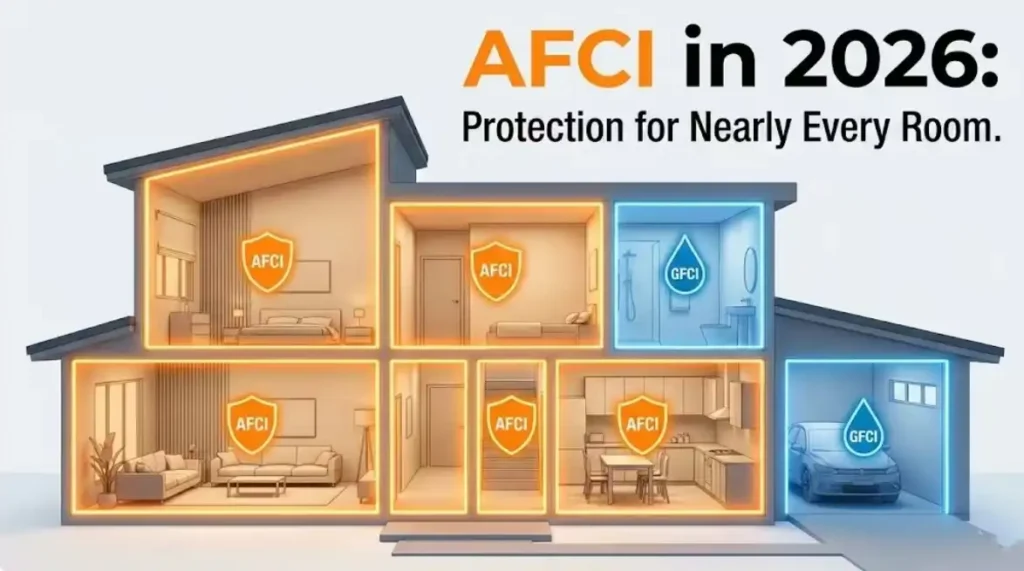
You should know which rooms need an AFCI arc fault circuit breaker for safety and to follow the rules. The 2026 NEC says you have to put afci protection in almost every part of the house where people live or hang out. These rooms are:
- Bedrooms
- Living rooms
- Dining rooms
- Kitchens
- Family rooms
- Sunrooms
- Parlors
- Libraries
- Dens
- Recreation rooms
- Closets
- Hallways
- Laundry areas
Arc faults cause about 30% of all home electrical fires in the United States. You must use these rules for new buildings and most remodels. Always check your local code because your town might have more rules. For quick help, use a checklist when you plan your project.
Key Takeaways
- AFCI protection is needed in most rooms where people stay. This includes bedrooms, living rooms, and kitchens. Arc faults start about 30% of home electrical fires. AFCI breakers help keep people safe. Always look at local codes for AFCI rules. These rules can be different in each place. Use AFCI and GFCI protection in kitchens and laundry rooms. This helps stop fires and electric shocks. Ask a licensed electrician for help when you change or fix circuits. This makes sure you follow AFCI rules.
AFCI Arc Fault Circuit Breaker Room List
Bedrooms

You have to put an AFCI arc fault circuit breaker in every bedroom. Bedrooms are risky for fires because people use many devices while sleeping. The National Fire Protection Association says bedrooms in homes and dorms have the same fire dangers. The code wants AFCI protection here to stop arc faults from causing fires.
| Rationale for AFCI Protection in Bedrooms | Evidence Supporting the Rationale |
|---|---|
| Need to protect against electrical fires caused by arc faults | Studies show fires in homes and dorms are alike. |
| Similar living conditions in dormitories and traditional dwelling units | This is why AFCI protection is needed in dorm bedrooms. |
Living Rooms
You must use an AFCI arc fault circuit breaker in all living rooms. Living rooms have lots of outlets for TVs and games. The 2026 National Electrical Code says living rooms need AFCI protection. This rule helps stop fires in a room your family uses a lot.
Dining Rooms
Dining rooms also need AFCI arc fault circuit breaker protection. People plug in lamps or small appliances here. The code includes dining rooms because outlets can get old or break. Protecting dining rooms lowers the chance of arc faults and keeps everyone safe during meals.
Kitchens
You need to put an AFCI arc fault circuit breaker on all 15- and 20-amp, 120-volt kitchen circuits. Kitchens have many appliances and get used a lot, so wiring problems can happen. The most common arc faults in kitchens come from bad wire connections or wrong links to the panel’s neutral bus bar.
| Requirement | Description |
|---|---|
| AFCI Protection | All 15- and 20-amp, 120-volt kitchen circuits need AFCI protection to lower fire risks from arc faults. |
- Bad connections of the white neutral wire to the ground wire.
- Wrong connections back to the panel’s neutral bus bar.
Family Rooms
You must protect all family rooms with an AFCI arc fault circuit breaker. Family rooms are busy places for watching TV or playing games. The code added AFCI protection to family rooms because they have lots of devices and get used often. This helps stop fires in rooms where families spend time.
- The NEC now says AFCI protection is needed in family rooms, dining rooms, living rooms, parlors, libraries, dens, bedrooms, sunrooms, recreation rooms, closets, hallways, and similar spaces since 2002.
- The 2008 NEC added AFCI protection to family rooms and other living spaces to make homes safer.
Sunrooms
You need AFCI arc fault circuit breaker protection in sunrooms. The code treats sunrooms like bedrooms and living rooms. Sunrooms have outlets for fans, lights, or small appliances. Adding AFCI protection helps stop fires, especially if the wiring is old or the room gets hot or cold.
| Area | AFCI Requirement |
|---|---|
| Sunrooms | Required |
Parlors
You must use an AFCI arc fault circuit breaker in parlors. Parlors in older homes may have old wiring that can cause fires. Electrical problems are a top reason for home fires, and parlors can have these issues too. The code now says parlors need AFCI protection to help stop fires.
- AFCI protection helps prevent fires, especially in older homes with old wiring.
- Data shows electrical problems cause about 13% of home fires.
- The code now requires AFCI protection in parlors, not just bedrooms.
Libraries
You need to put an AFCI arc fault circuit breaker in libraries. Libraries have many outlets for lamps, computers, and chargers. The code says all library outlets need AFCI protection to stop fires from arc faults.
| Code Reference | Requirement |
|---|---|
| 2020 NEC 210.12 (A) | Needs AFCI protection for outlets in libraries and other places. |
| 2021 IRC E3902.2 | Says AFCI protection is needed for circuits in libraries. |
Dens
You must use an AFCI arc fault circuit breaker in dens. Dens are formal or sometimes-used rooms, but they still need protection. The code treats dens like living rooms and dining rooms. AFCI circuit breakers are needed in dens to stop fires from bad wiring or broken outlets.
| Room/Area | AFCI Required? | GFCI Required? | Critical Notes |
|---|---|---|---|
| Dens | ✅ Yes | ❌ No | Formal and sometimes-used rooms included |
Recreation Rooms
You need AFCI arc fault circuit breaker protection in recreation rooms. Recreation rooms have lots of outlets for games and TVs. The code says all 15A or 20A, 120V circuits in living spaces, including recreation rooms, need AFCI protection. This rule keeps your family safe while having fun.
| Requirement Type | Description |
|---|---|
| AFCI Protection | Needed for 15A or 20A, 120V circuits in homes for outlets in living spaces, including bedrooms, family rooms, and similar rooms. |
Closets
You must put an AFCI arc fault circuit breaker for outlets in closets. Closets may seem safe, but they have outlets for lights or small appliances. The code includes closets to make sure every possible arc fault is covered.
Hallways
You need AFCI arc fault circuit breaker protection in hallways. Hallways connect rooms and have outlets for lights or cleaning tools. The code says new homes need AFCI protection in hallways to stop fires in these busy areas.
| Area | AFCI Requirement |
|---|---|
| Hallways | Needed in new homes |
Laundry Areas
You must use an AFCI arc fault circuit breaker in laundry areas. Laundry rooms have outlets for washers, dryers, and ironing tools. The code lists laundry areas as needing AFCI protection because heavy appliances can cause electrical problems.
Tip: Always check your local code before you start electrical work. Some towns may have extra rules or exceptions for AFCI arc fault circuit breaker installation.
AFCI Exceptions
Bathrooms
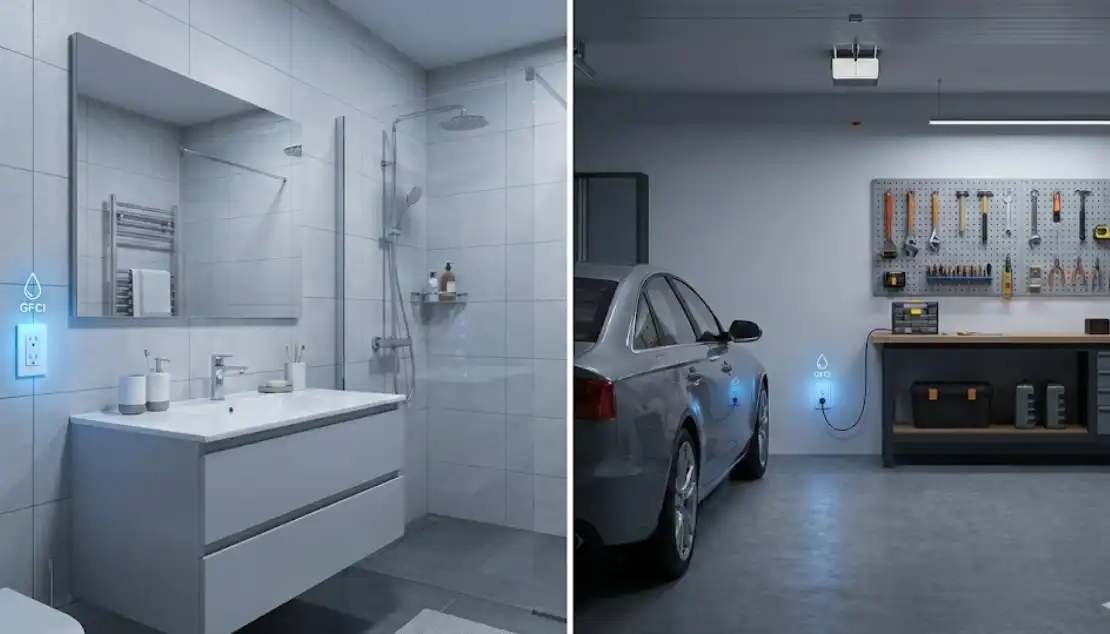
You do not have to put an AFCI arc fault circuit breaker in bathrooms. The National Electrical Code does not make you use this for bathroom outlets or lights. Bathrooms have lots of water and get wet, so you need GFCI protection instead. GFCI keeps you safe from getting shocked by electricity. Always look at your local code because some places might have more safety rules for bathrooms.
Garages
Most garage circuits do not need AFCI protection. The code does not call garages living spaces. People use garages to park cars, store tools, or work on things. Most garages need GFCI protection for outlets, especially if you use power tools or plug in machines. Some towns might want AFCI in attached garages, so always check with your city or county.
Unfinished Basements
The rules for basements change based on how you use them. If your basement is finished, you must use AFCI protection for every circuit. For unfinished basements, the code says you need AFCI for outlets and lights. You can see the rules in this table:
| Area | AFCI Requirement |
|---|---|
| Finished Basements | Required for all circuits |
| Unfinished Basements | Required for outlets and lighting |
| Crawl Spaces | Required for lighting or receptacles |
If you want to finish your basement, you must follow the finished basement rules. Always check your local code for any updates.
Outdoor Circuits
You do not need AFCI protection for outdoor circuits. The code does not ask for it on outside outlets or lights. Outdoor circuits have other dangers, like rain or snow. You must use GFCI protection for outdoor outlets to stop electric shock. Some cities may have extra rules, so check before you do any outdoor wiring.
Note: Local codes can change these rules. Always ask your local building department if you are not sure about AFCI rules.
AFCI and GFCI Protection

Kitchens
You have to use both AFCI and GFCI in kitchens. The 2026 National Electrical Code says this is a rule. One breaker stops arc faults. Another breaker helps stop electric shocks. Kitchens have water and many appliances. People use outlets for microwaves and fridges. Coffee makers also need outlets. Using both types of protection keeps you safe from fires and shocks.
| Requirement Type | Description |
|---|---|
| AFCI Protection | Needed for every outlet in a kitchen under the 2020 NEC. |
| GFCI Protection | Dual GFCI/AFCI breakers are best for kitchen appliances like fridges and microwaves. |
You should pick a breaker that has both AFCI and GFCI. This breaker protects all kitchen outlets and appliances.
Laundry Areas
You must use both AFCI and GFCI in laundry rooms. The code says you need a breaker for arc faults and one for shocks. Laundry rooms have water and big machines. People use outlets for washers and dryers. Irons also plug into these outlets. Dual breakers help keep your home safe from fires and shocks.
| Requirement | Description |
|---|---|
| GFCI Protection | Needed to stop shocks in wet laundry rooms. |
| AFCI Protection | Needed to stop fires from arc faults. |
| Dual-Function Circuit Breakers | These breakers give both GFCI and AFCI protection for safety. |
You should use a breaker that gives both types of protection for every laundry outlet.
Wet Bars
You need GFCI protection for all outlets near wet bars. The code says every 15- and 20-amp, 125-volt outlet in wet bars needs this. Wet bars have sinks and water. This means a higher risk of shock. If an outlet is within 6 feet of a sink or wet bar, you must use a GFCI breaker. The National Electrical Code says GFCI outlets are needed in all wet or damp places, including wet bars.
Tip: Dual AFCI and GFCI breakers give the best safety in kitchens, laundry rooms, and wet bars. You lower the risk of fire and shock by using the right breaker in each area.
AFCI in New Construction and Renovations
When you build a new house or fix your wiring, you must follow the newest afci rules. The 2026 National Electrical Code says you need arc-fault protection in almost every room people use. You should learn how these rules work for remodels, additions, and circuit upgrades.
Remodels
If you change your home, you must add arc-fault protection to any branch circuit you move, change, or make longer. The code does not let you skip this rule. Even if you only add one outlet or put in a new light, you must use arc-fault breakers. This rule helps stop fires from old wires or broken outlets.
| Requirement | Description |
|---|---|
| AFCI Protection | Needed for branch circuits that get changed, moved, or made longer. |
| Compliance | You must follow AFCI rules when you change circuits. |
| Permitted Methods | The code lists ways and places to follow AFCI rules during remodels. |
Tip: Always talk to a licensed electrician before you start a remodel. This helps you follow every afci rule and keeps your family safe.
Additions
If you build a new room or space, you must follow the newest arc-fault protection rules. The code says you need afci in bedrooms, living rooms, and home offices. If you add a kitchen or bedroom, you must use a combination afci breaker for all new circuits. This extra protection helps stop fires early.
| Requirement Type | Description |
|---|---|
| AFCI Protection | Needed in more rooms, like bedrooms, living spaces, and home offices. |
| Renovation Compliance | New AFCI and GFCI rules apply to kitchen changes, bedroom additions, and electrical upgrades. |
Circuit Upgrades
If you upgrade old circuits, you must use arc-fault protection for most 120-volt, single-phase, 15 and 20 amp branch circuits. You do not have to replace old afci devices, but you should think about it for better safety. New arc-fault breakers help stop fires from bad wiring. You make your home safer by following these rules.
- The code covers new homes and most upgrades.
- You should use arc-fault protection in living rooms, bedrooms, and other main rooms.
- You do not need to change old afci breakers unless you upgrade the circuit.
Note: Always ask your local building department if you have questions about afci rules for your project.
Local Code Variations for AFCI
You should always check your local rules before doing electrical work. The national electrical code gives the main rules for AFCI arc fault circuit breakers. Local governments can add more rules or change some parts. You need to know what your state and city want. This helps you follow the law and keeps your home safe.
State Differences
Each state can change the national electrical code if it wants. Some states use the newest version of the code. Other states use an older version or add extra rules. For example, one state might ask for AFCI protection in more rooms than the national electrical code. Another state might give exceptions for some homes or buildings.
You should visit your state’s building department website. Look for the electrical section on the site. You can find out which version of the national electrical code your state uses. You can also see if your state has special rules for AFCI arc fault circuit breakers.
Tip: Call your state’s electrical inspector if you have questions. They can explain the rules and help you not make mistakes.
City Requirements
Cities and towns can also change the national electrical code. Your city might have stricter rules than your state. For example, a city could require AFCI protection in garages or outdoor outlets, even if the national electrical code does not. Some cities want you to use special types of circuit breakers.
You should check your city’s building department website. Many cities put their electrical codes online. You can also go to the office in person. Ask for a copy of the local rules. This helps you follow both the national electrical code and your city’s rules.
Here are some ways to find local code information:
- Search for your city or state building department online.
- Ask a licensed electrician in your area.
- Visit your local library for code books.
- Call your city or state electrical inspector.
You must follow the national electrical code and all local rules. This keeps your home safe and helps you pass inspections.
You help keep your home safe from electrical fires. Always put afci circuit breakers where the rules say. Look at both national and local codes before you do any electrical work. If you are not sure, ask a licensed electrician for help. These rules protect your family and your house.
FAQ
What is an afci receptacle and how does it work?
An afci receptacle finds dangerous electrical arcs. You put it where a regular outlet goes. If it finds an arc, it turns off the power to stop fires. People use afci receptacle devices in bedrooms, living rooms, and other rooms where people stay.
Do I need an afci receptacle in every room?
Most rooms where people live or hang out need an afci receptacle. Bedrooms, family rooms, and kitchens must have afci receptacle protection. Bathrooms and garages do not need afci receptacle devices. Always look at your local code for more rules.
Can I use an afci receptacle instead of a breaker?
You can use an afci receptacle if your panel cannot fit an arc-fault circuit-interrupter protection breaker. The afci receptacle gives the same safety at the outlet. You must put it at the first outlet on the circuit for full protection.
Tip: Put afci receptacle devices in outlets when you fix or upgrade them. This helps you follow the code and keeps your home safe.
How do I test my afci receptacle?
Press the “Test” button on your afci receptacle. The power should go off. Press “Reset” to turn the power back on. Test your afci receptacle every month to make sure it works. If it does not reset, you need to replace it right away.
What is the difference between arc-fault circuit-interrupter protection and afci receptacle?
Arc-fault circuit-interrupter protection covers the whole circuit with a breaker. An afci receptacle protects only the outlets after where you put it. Using both gives better safety in your home.
| Device Type | Protection Area |
|---|---|
| afci receptacle | Outlets after the device |
| Breaker | Whole circuit |
See also
Common Misconceptions and Solutions for Office Socket Layout
What Does AFCI Mean in Electrical Engineering
Why Room Circuit Breaker Choice Matters for Your Safety
Do I need a GFCI socket if I have an AFCI circuit breaker?
Why does my brand new arc fault circuit breaker keep tripping?