You need to know what makes miniature circuit breakers and fuses different. A miniature circuit breaker can be reset after it trips, but a fuse must be replaced when it blows. Understanding these differences helps you keep your home and devices safe. Choosing the right one protects your electrical system from damage and reduces the risk of fire or shock.
Key Takeaways
- Miniature circuit breakers (MCBs) can be reset after they trip, while fuses must be replaced when they blow.
- Fuses react faster to electrical faults, protecting devices quickly, but MCBs offer adjustable settings and longer-term convenience.
- MCBs provide better safety with certifications, visual indicators, and lower fire risk compared to fuses.
- Choosing the right device depends on your needs: use MCBs for homes and industries, and fuses for fast protection in electronics.
- MCBs save money over time by reducing replacements and downtime, even though they cost more upfront.
Key Difference
Main Operational Contrast
You need to know how these two devices work to protect your electrical system. Fuses and circuit breakers both stop dangerous currents, but they do it in different ways. A fuse uses a thin metal wire that melts quickly when too much current flows. This action breaks the circuit almost instantly. A circuit breaker uses a switch that trips open when it senses too much current. You can reset a breaker, but you must replace a blown fuse.
- Fuses act faster than most circuit breakers. In many cases, a fuse can clear a fault in about 0.004 seconds. Standard circuit breakers take between 0.08 and 0.25 seconds to trip.
- Fuses limit the energy released during a fault, which helps protect equipment from damage.
- Circuit breakers can handle higher fault currents and offer adjustable trip settings.
- You can reset a breaker after it trips, but you must replace a fuse each time it blows.
Here is a table that shows some measured differences:
| Protection Type | Interrupting Capacity (AIC) | Response Time (seconds) | Reset Capability |
|---|---|---|---|
| Current-Limiting Fuse | 200,000 – 300,000 | ~0.004 | No (requires replacement) |
| Standard Circuit Breaker | 10,000 – 65,000 | 0.08 – 0.25 | Yes (manual reset) |
| High-Interrupting Breaker | 100,000 – 200,000 | 0.05 – 0.16 | Yes (manual reset) |
Why It Matters
Understanding these differences helps you make safer choices. Fuses protect quickly, which lowers the risk of fire and equipment damage. They also reduce the energy released during a fault, so you need less protective gear. However, you must replace them after each use, which takes time and can be risky if you are not careful.
Circuit breakers save you time because you can reset them. This feature reduces downtime and limits your exposure to live parts. Breakers also work better in complex systems, where you need to adjust settings for different loads. You get more reliable protection in places with high fault currents.
Tip: Always choose the right device for your needs. Fast protection is important, but so is easy maintenance and safety during repairs.
Miniature Circuit Breakers
KC3-H-4-pole-circuit-breaker.webp)
What Is an MCB
You use a miniature circuit breaker, or MCB, to protect electrical circuits from damage caused by too much current. An MCB acts as a switch that trips and stops the flow of electricity when it senses a problem. You can reset it after it trips, so you do not need to replace it like a fuse. MCBs come in many types and sizes. Market research shows that you can find MCBs with amperage ratings from below 20 amps for small circuits to over 100 amps for heavy-duty industrial use. Manufacturers like Schneider Electric, Siemens, and ABB produce MCBs for homes, businesses, and factories. You can choose from different trip curve types, such as Type B for fast trips or Type D for circuits with motors.
| Characteristic | Options/Segments |
|---|---|
| Amperage Ratings | <20A, 20-40A, 40-60A, 60-80A, 80-100A, >100A |
| Trip Curve Types | B, C, D, K |
| Mounting Methods | Panel, Surface, DIN Rail |
| Breaking Capacity | <6 kA, 6-10 kA, 10-16 kA, 16-20 kA |
| Number of Poles | 1, 2, 3, 4 |
How MCBs Work
You can understand how an MCB works by looking at its main parts. Inside, you find two key mechanisms: a thermal trip unit and a magnetic trip unit.
- The thermal trip unit uses a bimetal strip. When too much current flows, the strip heats up and bends. This bending action opens the contacts and breaks the circuit.
- The magnetic trip unit uses an electromagnet. If a short circuit happens, the high current creates a strong magnetic field. This field moves an armature that trips the breaker almost instantly, sometimes in less than a millisecond.
- Arc runners and arc chutes help manage the electric arc that forms when the contacts open. These parts split and cool the arc, making the breaker safer and more reliable.
Some MCBs use a combination of these methods. For example, the thermomagnetic method gives you both time-delay and fast-acting protection. Engineering studies show that these features help MCBs respond to both slow overloads and sudden faults.
Note: MCBs can trip due to mechanical faults, not just electrical problems. Modern designs use vibration analysis and smart diagnostics to spot these issues early.
Where MCBs Are Used
You find MCBs in many places. In homes, you use them to protect lighting and power outlets. In offices and stores, they guard computers, lights, and air conditioners. Factories use larger MCBs for machines and heavy equipment. Utilities and infrastructure projects also rely on MCBs for safe power distribution. You can mount MCBs on panels, surfaces, or DIN rails, depending on your needs. North America has the largest market for MCBs, but Asia-Pacific is growing fast. You can select the right MCB by checking the load size, trip curve, and mounting style.
Fuses
What Is a Fuse
You use a fuse as a safety device that protects electrical circuits from too much current. A fuse contains a thin metal wire or strip inside a small casing. When the current in your circuit gets too high, the wire heats up and melts. This action breaks the circuit and stops the flow of electricity. Fuses come in many shapes and sizes, from tiny chip fuses in electronics to large cartridge fuses in power systems. Over time, fuse designs have improved to meet strict safety standards like UL, DIN, and ISO. You can find fuses rated for different voltages and currents, so you must pick the right one for your needs.
| Parameter/Aspect | Description/Details |
|---|---|
| Current Ratings | Normal, maximum continuous, and surge currents considered |
| Voltage Ratings | Must match or exceed your system’s voltage |
| Breaking Capacity | Needs to interrupt the highest possible fault current |
| Pre-Arcing Time Limits | Shows how quickly the fuse melts at different currents |
| Melting Integral (I²t) | Measures how much energy the fuse can handle before melting |
| Safety Standards | UL, DIN, ISO, and other international standards |
How Fuses Work
You rely on a fuse to act fast when a problem occurs. When too much current flows, the metal link inside the fuse heats up and melts almost instantly. This melting action opens the circuit and stops the current. Studies show that fuses can interrupt a fault in just a few milliseconds. The breaking time, or how quickly a fuse reacts, depends on its design and the manufacturer. Some fuses from different brands may react faster than others, even if they have the same rating. That is why you should choose branded fuses for better safety and reliability. Fuses also need to match the maximum fault current in your system. If you pick the wrong fuse, it might not protect your devices or could even cause more damage.
Note: Fuses are sensitive to temperature. You should use only 75-80% of the rated current for continuous loads, especially if the room is hot.
Where Fuses Are Used
You see fuses in many places. In cars, fuses protect circuits that run on 12 or 24 volts. Many home appliances, like coffee makers and hair dryers, use thermal fuses to prevent overheating. Factories use fuses to protect electric motors from short circuits. Power companies use large fuses in transformers and high-voltage lines, sometimes up to 115,000 volts. Surface-mount fuses now protect electric vehicles and hybrid cars from battery faults. You also find fuses in battery chargers, cable limiters, and even inside your phone charger. As technology grows, new fuse designs help keep your devices and systems safe.
Miniature Circuit Breakers and Fuses: Comparison
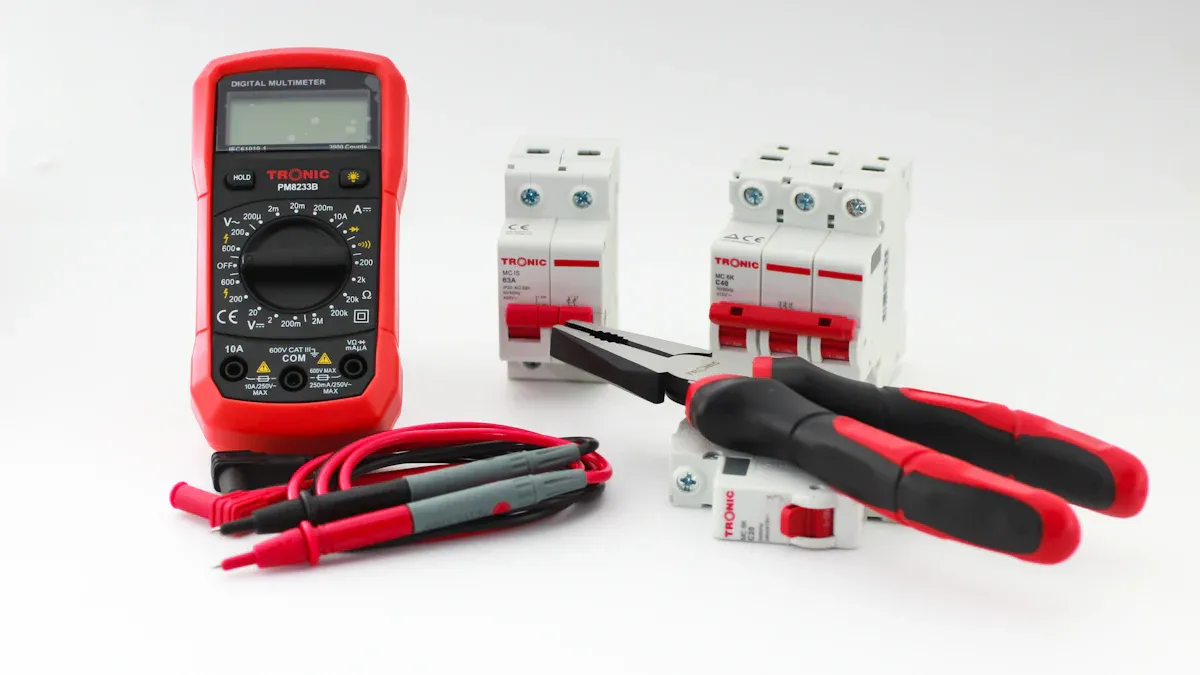
Operation and Speed
When you compare miniature circuit breakers and fuses, you notice a big difference in how they work and how fast they react. Fuses respond almost instantly when a fault happens. The metal wire inside melts in a fraction of a second, which stops the current right away. This quick action helps protect your devices from damage during sudden surges.
Miniature circuit breakers use a switch that trips when it senses too much current. They do not react as fast as fuses, but they still work quickly enough to keep your system safe. MCBs also let you choose different trip curves, so you can match the protection to your needs. You get more control over how and when the breaker trips.
- Fuses act faster than most MCBs, especially during extreme short circuits.
- MCBs offer adjustable protection with different trip curves.
- Both devices stop dangerous currents, but their speed and method differ.
Safety and Reliability
You want your electrical system to be safe and reliable. Miniature circuit breakers and fuses both help, but they do it in different ways. MCBs follow strict safety standards like IEC 60898 and UL 489. Manufacturers test them for thousands of operations, so you know they will last. MCBs also have visual indicators that show when they trip, making it easy for you to spot a problem.
Fuses do not have the same level of certification. They protect by melting, which works well for fast faults, but you must replace them every time. If you use the wrong fuse or replace it incorrectly, you risk fire or more damage. MCBs lower this risk because you only need to reset them. You do not need spare parts or special skills.
Here is a table that shows how safety and reliability compare:
| Aspect | Miniature Circuit Breakers (MCBs) | Fuses |
|---|---|---|
| Safety Standards | Certified to IEC 60898; tested for 10,000+ operations | No standardized certification |
| Heat Resistance | Stable up to 140°F (60°C) | Not specified |
| Tripping Mechanism | Precise trip curves for different needs | Melts quickly in extreme faults |
| Fire Risk | Low, due to correct rating and reset feature | Higher, if replaced incorrectly |
| Convenience | Resettable; visual indicator | Needs replacement; requires spare fuses |
Tip: Always check the rating and certification before you choose a device for your system.
Reusability and Cost
You save time and money when you use a device that lasts. Miniature circuit breakers are reusable. After a trip, you just reset the switch. You do not need to buy new parts or call an electrician every time. This feature makes MCBs a smart choice for long-term use.
Fuses cost less at first, but you must replace them after every fault. Over time, the cost of buying new fuses adds up. You also need to keep spare fuses on hand, which can be a hassle. MCBs cost more upfront, but you avoid extra expenses later.
- MCBs have higher initial costs but lower maintenance costs.
- Fuses are cheaper to buy but cost more over time due to replacements.
- MCBs do not need spare parts, while fuses do.
Application Suitability
You need to pick the right device for your situation. Miniature circuit breakers and fuses both work well, but each fits different needs.
- Use MCBs in homes, offices, and factories where you want easy reset and long-term value.
- Choose fuses for places where fast reaction is critical, like in some electronics or car circuits.
- MCBs work with smart home systems, solar panels, and industrial automation.
- Fuses fit best in simple circuits or where you need very fast protection.
Here is a side-by-side table to help you compare:
| Feature | Miniature Circuit Breakers (MCBs) | Fuses |
|---|---|---|
| Operation | Switch trips open | Metal wire melts |
| Speed | 0.08–0.25 seconds | ~0.004 seconds |
| Safety | Certified, resettable, visual indicator | Single-use, risk if misused |
| Reusability | Yes, resettable | No, must replace |
| Cost | Higher upfront, lower long-term | Lower upfront, higher over time |
| Typical Applications | Homes, offices, factories, smart systems | Cars, electronics, simple circuits |
Note: Fuses act faster but are single-use. MCBs are resettable and give you better value over time.
Pros and Cons
MCB Advantages
You get many benefits when you use a miniature circuit breaker (MCB) in your electrical system.
- You can reset an MCB after it trips, so you do not need to replace it each time.
- You find MCBs easy to maintain and operate.
- Many MCBs come with advanced safety features, such as Ground Fault Circuit Interrupter (GFCI) and Arc Fault Circuit Interrupter (AFCI).
- You can use MCBs in homes, offices, and factories to protect against overloads and short circuits.
- MCBs work well for many years and help prevent fires, wire damage, and appliance failure.
- You can choose from different types and ratings, making them fit for many jobs.
- Some smart MCBs let you monitor faults and reset them remotely.
Here is a quick look at some key features:
| Feature | Details |
|---|---|
| Adjustable Trip Settings | 0.5 to 63 amps |
| Maximum Voltage | 125/250 volts AC/DC |
| Installation | DIN rail or panel mounting |
| Reliability | Long-term operation |
| Application Range | Homes, factories, solar, data centers |
Tip: MCBs can isolate a fault without shutting down your whole system, which keeps your other devices running.
MCB Limitations
You should also know the limits of MCBs.
- MCBs cost more at first than fuses.
- They react a bit slower than fuses, but the difference is small for most uses.
- You need to test and maintain MCBs to keep them safe and reliable.
- Studies show that circuit breakers, including MCBs, can fail more than 15% of the time if not checked.
- Problems like worn contacts or insulation can cause the breaker to trip by mistake or not trip when needed.
- You must use special tests, such as contact resistance and insulation checks, to spot these issues.
Note: Always schedule regular checks for your MCBs to avoid hidden faults.
Fuse Advantages
You find that fuses offer some strong points, especially for quick protection.
- Fuses cost less to buy, so they fit small budgets.
- They react very fast to electrical faults, often in just milliseconds.
- Fuses have a simple design with no moving parts, so they rarely fail from mechanical problems.
- You can use fuses in many places, from cars to electronics, because they handle different voltages and currents.
Here is a table showing some important fuse features:
| Metric | Advantage |
|---|---|
| Action Time | Fast response to overcurrent |
| Power Loss | Low, so they save energy |
| Maximum Voltage | Withstand high voltages |
| Holding Current | Stable operation under normal use |
| Compact Size | Fits in small spaces |
Tip: Fuses work best when you need fast action and simple protection.
Fuse Limitations
You also need to consider the downsides of fuses.
- Fuses are single-use, so you must replace them after every fault.
- You need to keep spare fuses ready, or you risk long downtime.
- Fuses do not protect as well in complex systems with many circuits.
- If you use the wrong fuse or install it wrong, you can cause more damage or even a fire.
- Fuses do not offer advanced safety features like MCBs.
Note: Always match the fuse rating to your device to avoid safety risks.
Choosing Between Miniature Circuit Breakers and Fuses
When you choose between miniature circuit breakers and fuses, you need to think about where and how you will use them. Each setting—home, industrial, or electronics—has its own needs. You want to keep your devices safe, avoid downtime, and save money over time. Let’s look at how you can make the best choice for each situation.
For Home Use
You want your home to be safe and your appliances to last. Most homes today use miniature circuit breakers because they are easy to reset and maintain. If a breaker trips, you just flip the switch back on. You do not need to buy a new part every time. This makes MCBs a smart choice for busy families and anyone who wants less hassle.
Consumer Reports and other guides suggest that you look for devices that match your home’s needs. For example, if you have a smart home system, solar panels, or an electric vehicle charger, you need protection that can handle new technology. Modern MCBs work well with these systems. They also meet safety standards and help prevent fires.
You should also check the trip curve of the MCB. For most homes, Type B MCBs work best. They trip at 3-5 times the normal current, which fits lighting and general wiring. If you have appliances with motors, like air conditioners, you might need Type C.
Tip: Always check the ratings and safety certifications before you buy. This helps you avoid problems and keeps your family safe.
Here is a quick guide:
| Home Feature | Best Protection Type | Why? |
|---|---|---|
| Lighting, outlets | MCB Type B | Fast trip for general use |
| Air conditioners, pumps | MCB Type C | Handles motor surges |
| Sensitive electronics | Fuse or MCB Type Z | Extra-fast protection |
For Industrial Use
Factories and large buildings have different needs. You often deal with heavy machines, motors, and high currents. In these places, you want protection that can handle big surges and keep downtime low. Miniature circuit breakers and fuses both play a role, but you need to match the device to the job.
You should look at the type of load and the risk of current surges. For machines with high inrush currents, like large motors or transformers, Type D or Type K MCBs work best. They trip at higher multiples of the normal current, so they do not shut off during normal start-up surges. Fuses can act faster in some cases, but you must replace them after each fault, which can slow down repairs.
Here is a table to help you choose:
| Industrial Equipment | Best Protection Type | Tripping Range (times full load) | Notes |
|---|---|---|---|
| Large motors, transformers | MCB Type D | 10-20 | Handles high inrush currents |
| Inductive loads | MCB Type K | 8-12 | Quicker response than Type D |
| Sensitive controls | Fuse or MCB Type Z | 2-3 | For low short-circuit tolerance |
You should also think about cost and maintenance. MCBs cost more at first, but you save time because you can reset them. Fuses cost less, but you need to keep spares and spend time replacing them.
Note: Always follow international standards and check the breaking capacity. This keeps your workplace safe and your machines running.
For Electronics
Electronics need special care. Devices like computers, audio systems, and lab equipment can get damaged by even small surges. You want protection that acts fast and does not let too much current through.
Fuses work well for many electronics because they react in milliseconds. They protect sensitive parts from damage. You find fuses in phone chargers, TVs, and small gadgets. For more advanced systems, you might use MCBs with a Type Z curve. These trip at just 2-3 times the normal current, which gives extra-fast protection for delicate circuits.
Here are some things to consider:
- Use fuses for single devices or where you need the fastest action.
- Choose MCB Type Z for sensitive equipment in labs or data centers.
- Always match the rating to your device to avoid false trips or missed faults.
Tip: For electronics, speed matters most. Pick the device that reacts quickly and fits your equipment’s needs.
Key Factors to Consider
When you decide between miniature circuit breakers and fuses, keep these points in mind:
- Reset Capability: MCBs let you reset after a trip. Fuses need replacement.
- Speed: Fuses act faster, which helps protect sensitive electronics.
- Cost: Fuses cost less at first. MCBs save money over time.
- Application Context: Match the device to your setting—home, industrial, or electronics.
You can use this summary table:
| Factor | MCBs | Fuses |
|---|---|---|
| Resettable | Yes | No |
| Speed | Fast, but slower than fuses | Very fast |
| Upfront Cost | Higher | Lower |
| Long-term Cost | Lower | Higher (due to replacements) |
| Best Use | Homes, industry, smart tech | Electronics, simple circuits |
Remember: The right choice depends on your needs. Think about what you want to protect, how often you want to do maintenance, and how much downtime you can accept.
You now know the main differences between miniature circuit breakers and fuses. Miniature circuit breakers let you reset them, while fuses need replacement after each use. Choosing the right device keeps your home or workplace safe and makes repairs easier. Many experts say that using the right protection and safety gear lowers the risk of electrical injuries. If you feel unsure about which device to use, ask a licensed electrician for help.
| Safety Tip | Why It Matters |
|---|---|
| Always use proper electrical protection equipment | Reduces risk of shock and burns in high-risk jobs |
FAQ
What happens if you use the wrong fuse or MCB?
You risk damaging your devices or causing a fire. Always match the rating to your circuit. Using the wrong type can lead to unsafe conditions. If you feel unsure, ask a licensed electrician for help.
Can you replace a fuse with an MCB?
You can switch to an MCB in many cases. Make sure the MCB fits your panel and matches the circuit’s rating. MCBs offer easier resets and better long-term value. Always follow safety guidelines when making changes.
Why do fuses blow more often than MCBs trip?
Fuses react faster to small surges. You might see more blown fuses if your system has frequent spikes. MCBs have adjustable trip curves, so they handle brief surges better. This feature helps prevent unnecessary trips.
How do you know if your MCB or fuse needs replacing?
You see a blown fuse when the metal link breaks. For MCBs, the switch moves to the OFF position. If your circuit keeps tripping or blowing, check for overloads or faults. Replace or reset as needed.
Are MCBs safer than fuses?
MCBs give you more safety features. You can reset them without touching live wires. Many MCBs have visual indicators and certifications. Fuses protect quickly but need careful replacement. Both keep you safe when used correctly.
The following information may be of interest to you
What is the difference between a circuit breaker and a fuse?
The difference between AC MCB and DC MCB
Circuit Breakers vs Miniature Circuit Breakers: What Sets Them Apart
MCB and MCCB Compared Which Circuit Breaker Is Right for You