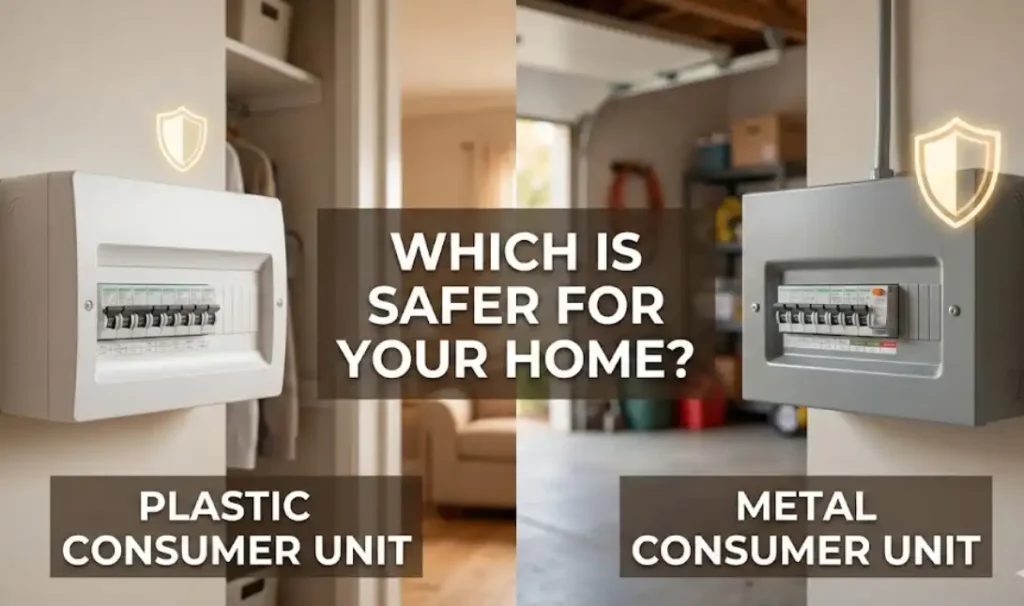
You want your home to be safe. Metal consumer units keep you safer than plastic ones. Metal units do not burn easily. They follow the latest safety rules. If your plastic unit looks fine, you do not need to worry. Experts say to use metal units for new setups. When you compare Plastic vs. Metal, pick what protects your family best. Safety and following rules are very important.
Key Takeaways
- Metal consumer units are safer than plastic ones for fire. Metal does not burn or melt. This lowers the chance of fire spreading at home.
- Check your consumer unit often for cracks or damage. Finding problems early can stop big electrical issues. It also makes your home safer.
- Pick metal units when you install new ones. This follows the newest safety rules. Metal units keep your home and family safer.
- Metal consumer units cost more at first. But they last longer and need fewer replacements. This saves money over time.
- Always ask a licensed electrician to install or fix your unit. Getting help from a pro keeps things safe. It also follows electrical rules.
Plastic vs. Metal: Fire Safety
Plastic: Fire Response
Plastic consumer units can be risky during electrical faults. If wires get too hot or spark, plastic may melt or burn. You might smell something burning or see black marks on the panel. These signs mean there is a problem. Too many things plugged in or loose parts can make it worse. If you do not fix these problems, the wire covering can break. This makes fire more likely. Old plastic units can help fires spread faster and make dangerous smoke. Always turn off the main power and call a licensed electrician if you see or smell anything strange.
Metal: Fire Response
Metal consumer units protect you better during electrical faults. Metal does not burn or melt like plastic. If a fire starts inside, the metal box keeps flames and heat from spreading. This helps keep your home safer, even if wires have problems. Metal units follow the newest safety rules because they use non-combustible materials. When you look at Plastic vs. Metal, you see metal units stop fire better and lower the chance of damage to your home.
Fire Hazard Prevention
You can do things to make your home safer, no matter which consumer unit you have. Here are some important fire safety steps:
| Fire Safety Measure | Description |
|---|---|
| Installation of smoke alarms | Smoke alarms help you find fires early and stay safe. |
| Fire extinguishers | Keep them in important places for quick use on small fires. |
| Fire-retardant blankets | Use these to put out small fires and protect yourself. |
| Fire escape plan | Practice your plan so everyone knows how to leave safely. |
| Fire sprinkler system | Sprinklers can stop fires from spreading and protect your home. |
Tip: Test your smoke alarms every month. Make sure everyone in your family knows what to do if there is a fire.
It is good to know about real events. In 2011, the London Fire Brigade saw more fires start in consumer units. Many fires happened because of loose wires and bad breakers. Fires in plastic units often spread fast and put people in danger, especially if the units are near exits. Because of these dangers, new rules now say to use metal consumer units for new setups. This helps keep you and your family safer.
When you think about Plastic vs. Metal, remember that metal units meet the newest safety standards. They help stop fires from spreading and give you more time to act if something goes wrong.
Durability & Protection

Impact Resistance
When you look at impact resistance, you want your consumer unit to handle bumps and knocks. Plastic units can crack if you hit them hard. Sometimes, a dropped tool or a strong push can leave a dent or even break the cover. Cracks in plastic can let dust or moisture get inside, which may cause problems with your electrical system.
Metal consumer units give you stronger protection. Metal does not crack or break as easily as plastic. If something hits a metal unit, it usually just leaves a small dent. The metal shell keeps the inside parts safe. You get more peace of mind because metal units stand up better to accidents in busy areas like garages or utility rooms.
Tip: Check your consumer unit for any cracks or dents during your regular home checks. Fixing small problems early helps keep your home safe.
Longevity in Homes
You want your consumer unit to last for many years. The lifespan of your unit depends on the material and the environment in your home. Plastic units can become brittle over time, especially if they sit in direct sunlight or near heat sources. When plastic gets old, it may turn yellow or start to crack. This can lower the safety of your electrical system.
Metal units usually last longer. They resist heat and sunlight better than plastic. You do not have to worry about them getting brittle. Metal also protects the inside parts from dust and pests. When you compare Plastic vs. Metal, you see that metal units often stay in good shape for decades.
Here is a table showing how long some common home appliances last. This helps you see why choosing a durable consumer unit matters:
| Appliance Type | CO2 Emissions (kg·CO2 eq/lifetime) | Optimal Operating Period (years) |
|---|---|---|
| Microwave | 84–261 | 3.4–30 |
| Dishwasher | 317–1330 | 2.7–26.2 |
| Washing Machine | 533–1375 | 4.6–33.9 |
Your consumer unit should last as long as your major appliances. Picking a strong and durable unit means you will not need to replace it often. This saves you money and keeps your home safer for a longer time.
Regulations & Compliance
Current Code Requirements
You want your home to meet the latest safety standards. The 18th Edition Wiring Regulations set the rules for electrical safety in the UK. These rules say that new consumer units must use non-combustible materials. This change helps stop fires from spreading and keeps your family safer. You can see the main requirement in the table below:
| Requirement | Description |
|---|---|
| Materials for Consumer Units | Must be made of non-combustible materials to prevent fire spread and enhance safety standards. |
If you plan to install a new consumer unit, you need to choose a metal one. Metal units do not burn, so they protect your home better. This is a key reason why many experts recommend metal when you compare Plastic vs. Metal.
Inspection and Insurance
You may wonder if your plastic consumer unit is still okay. Inspectors will check if your unit follows the rules and is safe to use. Plastic units can still be compliant if you follow some important steps:
- Make sure wiring systems are safe from water or condensation.
- Keep plastic units out of direct sunlight to prevent overheating or damage.
- Mount the unit above the flood line if you live in a flood-risk area.
When inspectors visit your home, they look for many things to keep you safe:
- They check the electrical panel for wear or old parts.
- They look at wires for fraying or damage.
- They test outlets and switches for overheating.
- They check lighting for flickering or old fixtures.
- They make sure backup power systems work.
- They check grounding and bonding to prevent shocks.
- They review if your setup follows all codes.
Insurance companies also want your home to be safe. If your consumer unit does not meet the latest rules, you may have trouble with claims after a fire or electrical problem. Upgrading to a metal unit can help you avoid these issues and protect your home.
Installation & Maintenance
Installation Safety
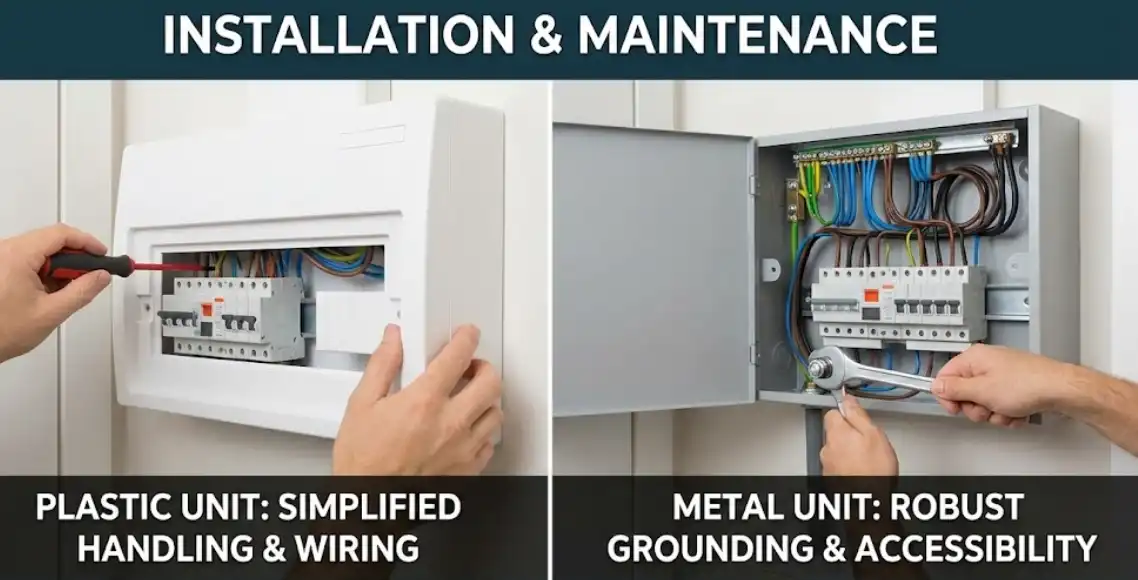
You want your consumer unit to keep your home safe. The material you pick changes how you install it. It also changes how well it protects your family. Metal consumer units need grounding. This is because metal lets electricity pass through. Grounding makes things safer. But it means you must follow more rules when you install it. Plastic units do not let electricity pass through. You do not need to ground them. This makes them easier to install. But plastic does not protect as well in tough places.
Here is a table that shows the main differences between metal and plastic consumer units during installation:
| Feature | Metal Electrical Boxes | Plastic Electrical Boxes |
|---|---|---|
| Conductivity | Conductive, requires grounding | Non-conductive, no grounding needed |
| Durability | Strong, suitable for high-stress environments | Weaker, prone to warping or cracking under stress |
| Temperature Resistance | Can withstand high temperatures | Can melt in high temperatures |
| Security | Provides extra security against tampering | Less secure, easier to access unauthorizedly |
| Ideal Use | Areas with high heat, chemical exposure, and heavy loads | Residential use, where grounding is not a concern |
Tip: Always have a licensed electrician install your consumer unit. This keeps your home safe and follows the rules.
Maintenance Needs
You want your consumer unit to last a long time. Plastic units often need more care. Sometimes, the breakers trip a lot. This means something is wrong inside. You might hear a cracking sound. This can mean arcing, which is dangerous. If you smell burning or see burn marks, act fast. These problems can cause fires.
Common maintenance issues with plastic consumer units include:
- Breakers that trip often
- Cracking sounds from the panel
- Burn marks or burning smells
Metal units need less care. They handle heat and damage better. You still need to check for loose wires and dust. Clean your unit and test the breakers every few months. If you see anything odd, call an electrician right away.
Note: Regular checks help you find problems early. This keeps your home safe and your consumer unit working well.
Cost vs. Safety
Upfront Costs
When you choose a consumer unit, you want to know how much it will cost. Metal consumer units usually start from around £350. If you need to replace a small garage consumer unit, you can expect to pay about £350, as long as there are no extra problems. Plastic consumer units may cost a little less, but the difference is often small. You might think saving a bit of money is a good idea, but you should always think about safety first.
Here is a quick look at what you might pay:
- Metal consumer unit: starts from £350
- Small garage unit replacement: about £350
- Plastic consumer unit: usually a bit less, but not by much
Tip: Always ask your electrician for a full quote. The price can change if your wiring needs extra work.
Long-Term Value
You want your investment to last. Metal consumer units give you better value over time. They last longer and protect your home better. You do not have to worry about them melting or cracking. This means you will not need to replace them as often. Metal units also meet the latest safety rules, so you avoid problems with inspections or insurance.
Plastic units may seem cheaper at first. Over time, they can become brittle or damaged. If you need to replace a plastic unit later, you may end up spending more. You also risk not meeting new safety codes.
Here is a table to help you compare:
| Feature | Metal Consumer Unit | Plastic Consumer Unit |
|---|---|---|
| Upfront Cost | Higher | Slightly Lower |
| Lifespan | Longer | Shorter |
| Fire Resistance | Excellent | Poor |
| Meets Latest Codes | Yes | Not for new installs |
🛡️ Remember: Spending a little more now can save you money and stress in the future. Your safety is worth it.
Picking a metal consumer unit helps keep your home safer. Metal units stop fires from spreading and protect your family better. Experts say metal is best because electrical fires hurt many people each year. Plastic units can still be safe if they are not broken. They should not go under wooden stairs or in the only way out:
| Condition | Requirement |
|---|---|
| Location | Not under wooden staircase |
| Not within a sole route of escape |
Always ask a licensed electrician to check or upgrade your unit. Your safety and peace of mind are very important. 🏡
FAQ
Can you keep your old plastic consumer unit?
You can keep your plastic unit if it is undamaged and safe. Inspect it often. If you see cracks, burns, or loose wires, call an electrician. New rules require metal units for new installs.
Do metal consumer units need special care?
You should check your metal unit for dust and loose wires. Clean it gently. Test breakers every few months. Metal units last longer and need less care than plastic ones.
Will a metal consumer unit stop all fires?
A metal unit helps stop fire from spreading. It does not prevent all fires. You still need to fix electrical problems quickly. Install smoke alarms for extra safety.
Is it expensive to upgrade to a metal consumer unit?
Upgrading costs more at first. You pay for better safety and longer life. Metal units meet new rules. Ask your electrician for a quote. The price depends on your home’s wiring.
see also
RCBO Replaces MCB What You Need to Know
Metal or Plastic Socket Cover Which Is Better for Your Home
Common troubleshooting of molded case circuit breakers
Where is the best place to install a molded case circuit breaker?
What Type of Breaker Works Best for a 1.5 Ton AC Unit