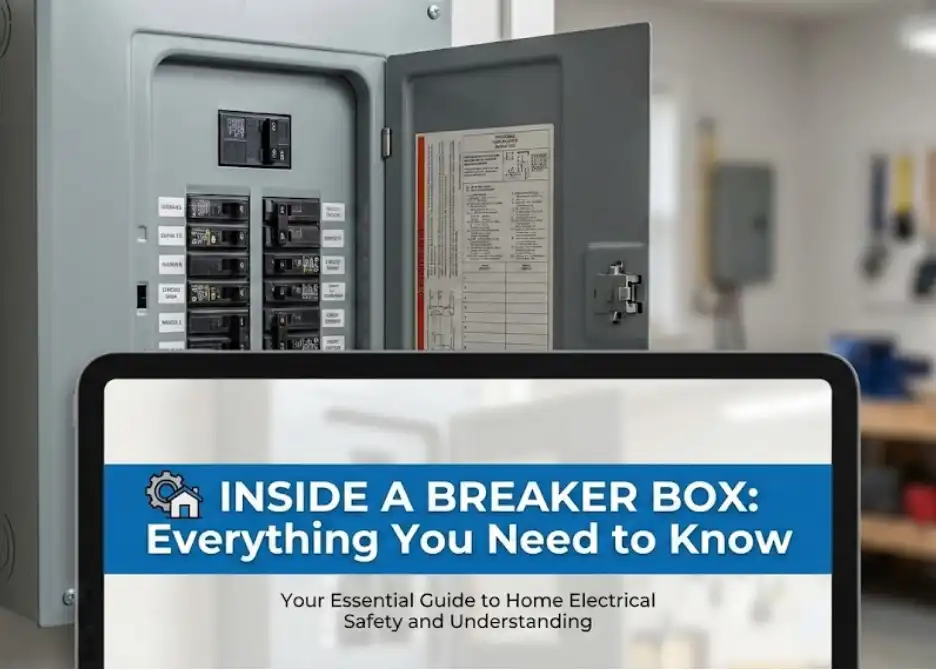
A breaker box, also known as the breaker box anatomy, is where electricity enters your house. It distributes power to various circuits throughout your home. This metal box is designed to keep you safe by stopping electricity flow if there is an overload or a short circuit, which helps prevent fires from starting. Understanding how a breaker box works can help you avoid electrical dangers. Inside the box, you’ll find important components that make up its anatomy, including bus bars, circuit breakers, and a ground bar.
- Bus bars are responsible for sending electricity to each breaker.
- Circuit breakers monitor each circuit and will turn off if something goes wrong.
- Ground bar safeguards your system by connecting grounding wires.
By learning to identify these parts of the breaker box anatomy, you will feel more confident in addressing small electrical issues, ultimately contributing to the safety of your home.
Key Takeaways
- Learn what is inside a breaker box. Knowing about bus bars and circuit breakers helps you fix electrical problems safely.
- Check your breaker box often for any damage. Watch for rust, loose wires, or burn marks to stop electrical dangers.
- Find out where your main breaker is. In an emergency, you can turn off all power fast to keep your home safe.
- Do not put too many things on one circuit. Use only 80% of a breaker’s power to stop overheating and fires.
- Think about getting a new breaker box if your power trips a lot or lights flicker. A new panel makes your home safer and works better for new devices.
Breaker Box Basics
What Is a Breaker Box
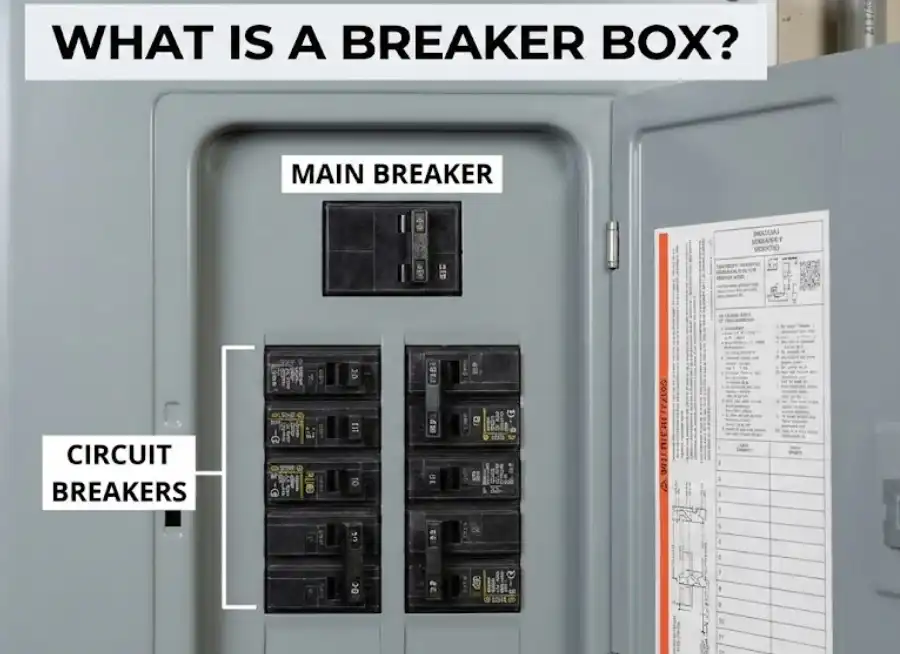
A breaker box is like the main control room for your home’s electricity. It does more than just turn things on and off. The breaker box anatomy has many important parts that work together to keep your home safe and powered. When electricity comes into your house, the breaker box splits it into smaller circuits. Each circuit sends power to different rooms or appliances. The main breaker lets you turn off all the electricity if there is an emergency. Circuit breakers inside the box protect each circuit by stopping the electricity if something is wrong.
Tip: Some people think putting in a bigger breaker will stop it from tripping. This is not true and can be very dangerous. You should always fix the real problem, like bad wiring or too many things plugged in.
Breaker boxes are now used instead of old fuse boxes in most homes. Here is a quick comparison:
| Feature | Breaker Box | Fuse Box |
|---|---|---|
| Reset Mechanism | Can be reset after tripping | Needs a new fuse if blown |
| Safety Risk | Lower chance of electrical fires | Higher risk if wrong fuse is used |
| Convenience | Easier for today’s needs | Less easy, must change fuses by hand |
| Suitability for Demand | Works better for modern homes | Old style, not as good for new needs |
Why It Matters
Knowing about breaker box anatomy helps you avoid common electrical problems. You might have trouble like breakers tripping a lot, outlets not working, or lights flickering if you do not know how your breaker box works. Too many things plugged in or wires touching can also cause overloaded circuits and short circuits.
Breaker boxes help keep your home safe and working well. They let you turn the power back on fast and lower the chance of electrical fires. If you know how your breaker box works, you can find problems early and keep your home running smoothly.
Breaker Box Power Flow
Main Breaker Function
The main breaker is like a guard for your home’s electricity. When power comes from the utility company, it goes to the main breaker first. The main breaker is a big switch. You can use it to turn off all the power in your house if you need to be safe or if there is an emergency.
- The main breaker controls the big amount of electricity from outside wires.
- It sends this power to smaller branch breakers inside the panel.
- If your house uses too much electricity, the main breaker will turn off everything to keep your wires safe.
- The main breaker also acts fast if there is a big problem, like a power surge, by stopping the electricity.
After the main breaker, electricity moves through two metal bus bars. These bus bars send power to the other breakers in your panel.
Tip: You should always know where your main breaker is. In an emergency, you can turn off all the power quickly.
Branch Breakers and Distribution
Branch breakers get electricity from the bus bars and send it to different parts of your house. Each branch breaker controls one circuit, like your kitchen, living room, or bedroom. This helps keep your home safe and neat.
- Each branch circuit gives power to lights, outlets, and devices in one area.
- Branch breakers stop too many things from being on one circuit.
- If something is wrong, like too many things plugged in, the branch breaker will trip and stop power to that area.
- You will see three main wires in each branch circuit: a hot wire with 120 volts, a neutral wire that brings electricity back, and a ground wire for safety.
- Some circuits use 240 volts for big appliances, like ovens or dryers.
This setup lets you fix problems in just one part of your house. The rest of your home can still have power while you fix things.
Breaker Box Anatomy
Main Breaker Location
When you open the breaker box, you will see the main breaker. It is usually at the top or sometimes at the bottom. This big switch controls all the electricity in your house. You can use it to turn off power everywhere at once. The main breaker is bigger than the other breakers. It also has a higher amperage rating. You should always know where the main breaker is. In an emergency, you can flip this switch to turn off all the power fast.
Here is a table that shows the main parts inside a breaker box and what they do:
| Component | Description |
|---|---|
| Circuit Breakers | Electrical switches that protect circuits from damage due to short circuits, available in various poles. |
| Main Breaker | Controls electricity flow from main wires to bus bars, disrupting the circuit when tripped. |
The way breakers are arranged helps you know which one controls each part of your house. The main breaker is set apart from the smaller branch breakers. This makes it easy to find.
Bus Bars and Wiring
Bus bars are metal strips inside the breaker box. They work like highways for electricity. The main breaker sends power to the bus bars. The bus bars then send power to each branch breaker. This keeps the wiring neat and tidy. There are two main bus bars: one for hot wires and one for neutral wires. Some breaker boxes have a ground bus bar for safety.
Bus bars move large amounts of electricity from one place to many circuits. They are the main connection points for power. This setup makes power sharing simple and safe. It also helps keep wires organized and lowers mistakes.
The types of wiring on bus bars in homes include hot bus bars, neutral bus bars, and ground bus bars. The neutral bus bar splits the voltage from the utility transformer. This makes the voltage lower for smaller things. The ground bus bar connects circuits to the ground for safety.
Each branch breaker connects to the bus bars. Wires from these breakers carry electricity to rooms and appliances. This part of breaker box anatomy keeps your home safe and helps power move smoothly.
Panel Cover and Expansion Slots
The panel cover is a steel door that protects the inside parts of your breaker box. You should always keep the cover closed. This stops dust, water, or people from touching live wires. The cover also keeps hands away from dangerous parts.
Expansion slots are empty spaces in the breaker box. These slots let you add new breakers if you need more circuits. You might need them for new appliances or outdoor outlets. You can see these slots as blank spots or knockouts on the cover.
- The panel cover protects the inside parts of the breaker box.
- Expansion slots let you add new circuits when you need them.
- The breaker box sends electricity to different circuits in your house.
- It makes sure power is safe and steady.
You should check your breaker box often. Look for damage, like cuts or worn wires and breakers. Make sure all connections are tight so nothing gets too hot. Checking your breaker box helps you find problems early. This can stop fires or power failures.
- Look for damage, like cuts or worn wires and breakers, to stop electrical dangers.
- Check that connections are tight to stop overheating and keep things safe.
- Regular checks help you find and fix power problems that can hurt your devices.
- Checking for damage and tight connections keeps your electrical system safe and working well.
Breaker box anatomy shows you how electricity moves in your house. If you know where the main breaker is, how bus bars and wires work, and what the panel cover and slots do, you can keep your electrical system safe and ready for new needs.
Types and Placement
Main Panel vs. Sub-Panel
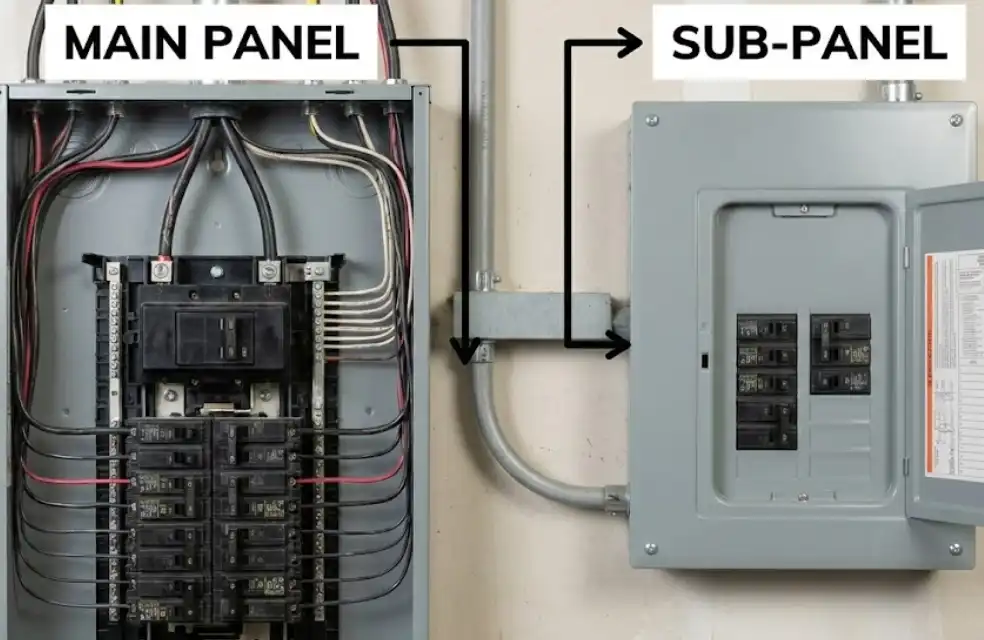
Most homes have two main types of breaker boxes. These are the main panel and the sub-panel. The main panel is also called the service panel. It is the heart of your home’s electrical system. It connects right to the utility company’s power. The main panel sends electricity to all the circuits in your house. It also handles grounding and bonding to keep your system safe.
A sub-panel helps the main panel. You use a sub-panel if you need more circuits. It is also good for controlling power in one area, like a garage or workshop. The sub-panel gets its power from the main panel. It then splits this power into smaller circuits for different uses. This setup makes it easier to control electricity in certain parts of your home.
Here is a table that shows the differences:
| Feature | Main Panel | Sub-Panel |
|---|---|---|
| Power Source | Directly connected to utility power | Receives power from main panel |
| Function | Distributes power to all circuits | Adds circuits for specific areas |
| Installation | Needs professional installation | Homeowners can sometimes install |
| Applications | Central power for the whole house | Used for garages, additions, or high-demand areas |
| Circuit Management | Main junction for all circuits | Splits larger circuits into smaller ones |
Tip: Adding a sub-panel gives you more space. It also makes power management easier and more convenient in your home.
Typical Home Locations
You should always know where your breaker box is. Most homes have the main panel in a basement, garage, or utility room. These places keep the panel safe and easy to reach. You want your breaker box in a dry spot with no clutter.
Think about safety and access when picking a location. Never put the panel in a bathroom, closet, or above stairs. National rules say you need at least 3 feet of clear space in front of the panel. The panel should not be higher than 6 feet 7 inches. This makes it easy for you or an electrician to work on the box.
- Safety: Pick a spot away from water and fire risks.
- Utility: Place the panel close to utility lines for easy connections.
- Efficiency: Good placement saves time and money when you need repairs.
Always keep the area around your breaker box clear. Quick access can help a lot in an emergency.
Breaker Safety and Upgrades
Tripping Mechanism
Your breaker box keeps your home safe with a tripping mechanism. If too much electricity goes through a circuit, the breaker trips and shuts off the power. This stops wires from getting too hot and lowers fire risk. Circuit breakers watch the current and trip if it gets too high. They also act fast when there is a short circuit or a sudden surge, cutting off power before anything gets damaged.
- The tripping mechanism turns off the electricity if there is too much current. This keeps wires from getting too hot and stops fires.
- Circuit breakers check the current and trip if it goes over the safe level. This protects your wires and devices from harm.
- They also stop short circuits by noticing quick surges in current. This keeps your home safe from overheating and fires.
You might see a breaker trip if you use too many things at once, smell burning, or see black marks on outlets. These signs mean your breaker box is working to protect you.
| Trip Cause | Common Symptoms | Typical Solutions |
|---|---|---|
| Overloaded Circuit | Breaker trips with many devices | Move devices; add more circuits |
| Short Circuit | Burning smell; blackened outlets | Call a professional to fix it |
| Ground Fault | Trips in wet areas | Check for water; replace bad appliances |
Amperage Capacity
It is important to know your breaker box’s amperage capacity. Each breaker has a number, like 15 or 20 amps. You should only use 80% of this number to stay safe. For example, a 15-amp breaker should not have more than 12 amps on it. Add up the amps of all devices on a circuit to make sure you are not using too much.
- Find the breaker’s rating (usually 15 or 20 amps).
- Figure out 80% of the breaker’s number for safety.
- Add up the amps of everything plugged into the circuit.
If you use more than the safe amount, wires can get too hot. This can cause electrical problems and fires. Always keep your use under 80% of the panel’s total amps. For a 150-amp panel, do not go over 120 amps.
Tip: Never put in a bigger breaker to stop tripping. Fix the real problem instead.
When to Upgrade

You should get a new breaker box if you see warning signs. If breakers trip a lot, lights flicker, or you smell burning, your panel may be too small. Old fuse boxes, rust, or burn marks show the panel is old. Buzzing sounds, weak appliances, or cracked covers are also bad signs. If your panel brand is old or you need more power for new things, it is time to upgrade.
| Sign of Issue | Description |
|---|---|
| Frequent circuit breaker trips | Panel cannot handle all your devices |
| Outdated fuse box systems | Does not have safety features you need |
| Flickering or dimming lights | Panel is too small for your needs |
| Age-related deterioration | Rust or burn marks mean it is not safe |
| Audible and olfactory warnings | Buzzing or burning smells are serious problems |
| Appliance performance issues | Appliances do not work well if panel is too weak |
| Physical damage | Cracks or loose parts are dangerous |
| Obsolete panel brands | Hard to find parts for old panels |
| Increased electrical demands | More power needed means you need an upgrade |
Electric codes say you should change panels every 20 to 30 years. A new panel gives you better safety, more power for new things, and can lower your bills. Some insurance companies give discounts for new panels. A new panel also makes your home worth more and gets you ready for new technology.
Getting a new breaker box helps you stay safe, save money, and be ready for new electrical needs.
Knowing about your breaker box anatomy helps keep your home safe. It also makes sure your electricity works well. If you check your breaker box often, you can find problems early. You might see things like rust or too many wires in one spot. This helps you fix issues before they cause fires or shocks. Taking care of your breaker box helps it last longer. You also lower the chance of danger from loose or broken wires.
- You can find trouble early, like rust or crowded wires.
- You help your breaker box last longer by checking it.
- You stay safe from loose or broken wiring.
To stay safe, do these things:
- Do not touch the panel if there is water close by.
- Put clear labels on all breaker switches.
- Call an electrician if breakers trip a lot.
- Get a licensed expert for any upgrades.
When you know what each part does, you can fix small problems. You will also know when to call a pro for help. You can look up guides and safety tips online. You can also ask a licensed electrician for advice. Learning and checking your breaker box often keeps your home safe. 🏠
FAQ
How do you reset a tripped breaker?
First, find the breaker that is in the “off” position or in the middle. Push it all the way to “off.” Then, flip it back to “on.” You should hear a click. Power should return to that circuit.
What should you do if a breaker keeps tripping?
Unplug everything on that circuit. Try resetting the breaker. If it trips again, you may have a wiring problem or a faulty device. You should call a licensed electrician for help.
Can you add more breakers to your panel?
You can add more breakers if your panel has open expansion slots and enough capacity. Always check the panel’s amperage rating. For safety, ask a professional to install new breakers.
How often should you inspect your breaker box?
You should check your breaker box at least once a year. Look for rust, loose wires, or burn marks. Regular checks help you spot problems early and keep your home safe.
see also
How to Wire a Circuit Breaker Panel Safely at Home
Single Phase Distribution Box Definition and Main Parts
Essential power distribution equipment for shipbuilding industry
Choosing a suitable distribution box and what should be noted
Size configuration of multiple circuit breakers in the distribution box