You can install circuit breakers on DIN rails by following a clear process and using the right tools. Always put safety first and turn off all power before you begin. With careful steps, you can handle this task even if you do not have much experience. Remember, attention to detail helps you avoid mistakes and keeps your work area safe.
Key Takeaways
- Always turn off the main power first. Use a voltage tester before you start. This keeps you safe from electric shock.
- Gather the right tools and materials. You need a flat-head screwdriver, wire stripper, and voltage tester. Make sure you have certified circuit breakers for the 35 mm DIN rail.
- Mount the DIN rail in a clean, dry place. The panel should have good air flow. Snap the circuit breakers onto the rail with the snap-on clips.
- Connect wires with care. Strip the insulation the right way. Tighten screws so they are firm. Label each wire and breaker to help you remember them.
- Test your work before turning the power back on. Check that breakers are tight and wires are secure. Use a multimeter to make sure everything is safe.
Tools and Materials
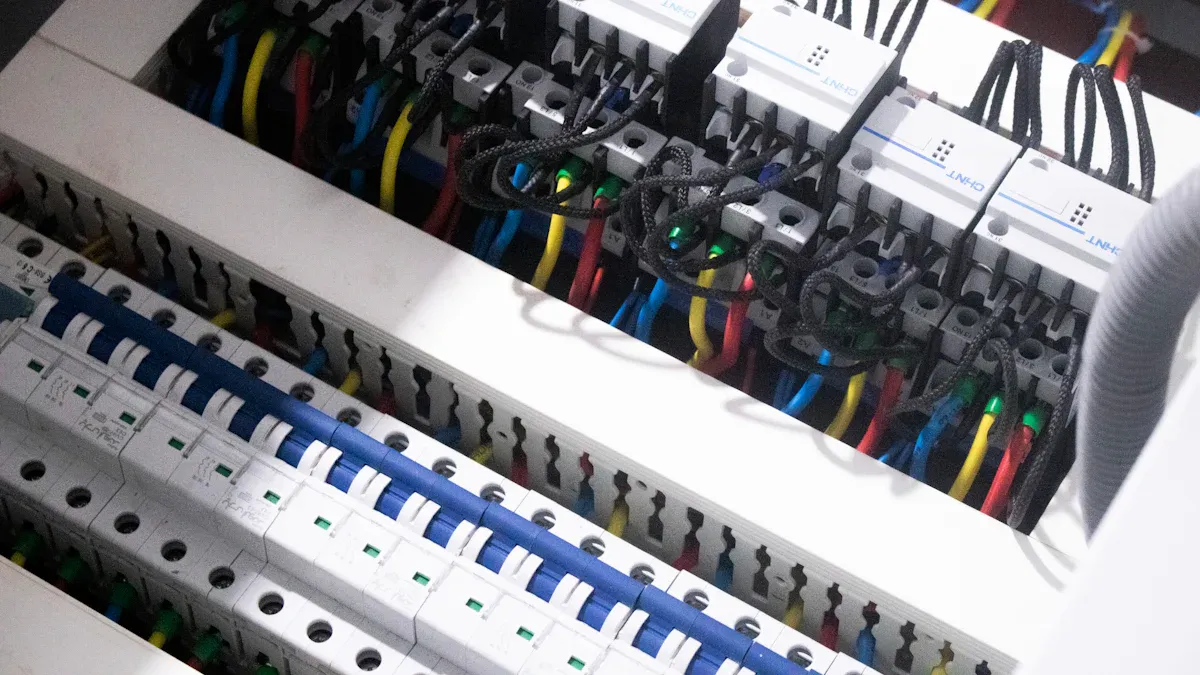
Get your tools and materials before you start. This helps you work safely and quickly. Make sure your tools work well. Your materials should meet the right standards.
Tools Needed
You only need a few simple tools for this job. These tools help you put the DIN rail in place. They also help you attach the circuit breakers and connect wires safely.
- Flat-head screwdriver: Use this to turn mounting clips and screws.
- Wire stripper: This tool takes off wire insulation without harm.
- Needle-nose pliers: Use these to bend or hold wires in small spaces.
- Voltage tester: Always check if the power is off before touching wires.
- Measuring tape: Measure the DIN rail and space to make sure it fits.
- Marker or label maker: Label wires and breakers so you know what they are.
- Safety gloves and goggles: Wear these to keep your hands and eyes safe.
Tip: Wear safety gear and check the power is off before starting.
Materials Checklist
Pick the right materials for your job. Use this list to help you choose safe and good parts.
- Circuit breakers:
- Pick by voltage rating and number of poles. Use a single-pole breaker for 120 VAC. Use a two-pole breaker for 120/240 VAC.
- Check the trip rating by looking at trip curves. This shows how long the breaker can handle too much current.
- Make sure the interrupting capacity is more than the highest fault current.
- Pick the right type for your voltage. Use miniature circuit breakers for under 600 V. For higher voltage, use vacuum or oil-filled breakers.
- Look for certified products like Weidmuller 9926 Series (UL 489 Listed, 10,000 Amp interrupting capacity), Weidmuller CB4200 Series (pushbutton style), or GE IEC DIN Rail Mounted Breakers.
- DIN rail (35 mm standard size)
- Terminal blocks
- Wire ferrules
- Fuses
- Relays
- Power supplies
- Marking systems
- Accessories like mounting clips or adapters
- PCB connectors
- Power distribution parts
- Pushbuttons and indicator lights
- Contactors
Getting these tools and materials ready helps you work safely. Always check labels for certifications and ratings before you start.
Safety Precautions
Preparation
Get ready before you put circuit breakers on DIN rails. Preparing your space and tools keeps you safe. It also helps you finish faster. Do these steps to get started:
- Turn off the main power. This stops shocks and keeps you safe.
- Use lockout-tagout steps. Put a lock or tag so no one turns power on.
- Make sure the power is off. Test all wires and terminals with a voltage tester.
- Wear safety gear. Put on gloves for electrical work and safety goggles.
- Gather your tools. You need wire strippers, crimpers, screwdrivers, and a multimeter.
- Pick the right circuit breaker. It should match the voltage and current you need.
- Find a good spot to install. The place should be easy to reach and dry.
- Check all parts for damage. Look at the circuit breaker and other equipment.
Tip: Keep your workspace clean and bright. A tidy area helps you avoid mistakes and stay safe.
Electrical Safety
You must follow safety rules when working with circuit breakers. These rules keep you safe from shocks and burns.
- Always use tools with insulated handles. They protect you if you touch a live wire.
- Keep the breaker OFF or tripped while you work. This stops the power from turning on by accident.
- Strip wire insulation with care. Use the right tool so you do not hurt the wire.
- Attach wire lugs tight. Use a crimper and tighten screws with the right screwdriver.
- Check all connections again. Loose wires can get hot or start a fire.
- Label each breaker clearly. Good labels help you later with checks and repairs.
⚡ Note: Do not rush when working with electricity. Go slow and check every step. If you are not sure, ask an electrician for help.
Install Circuit Breakers on DIN Rails
Power Off and Panel Prep
Before you install circuit breakers on DIN rails, you must make sure the area is safe. Follow these steps to prepare your panel:
- Turn off the main breaker or utility disconnect. This step keeps you safe from electrical shocks.
- Use a voltage tester to check that there is no power left in the panel.
- Clean the installation area. Remove dust and debris. Good ventilation helps prevent fire hazards.
- Inspect all parts inside the panel. Look at wiring insulation, terminals, and transformers for any damage.
- Make sure the panel is grounded and bonded. This step helps prevent shocks and fires.
- Put on your safety gloves, glasses, and other protective gear.
- Read the manufacturer’s instructions for your circuit breakers and DIN rail.
- Label each circuit and breaker. Clear labels help with future repairs.
- Check that the panel is in a dry, easy-to-reach spot with enough space and ventilation.
- After installation, test and inspect the panel to make sure everything works.
🛑 Tip: Never skip safety checks. Always double-check that the power is off before you touch anything inside the panel.
Mounting the DIN Rail
You need to mount the DIN rail before you can install circuit breakers on DIN rails. Most circuit breakers use the 35 mm Top Hat DIN rail, also called TS35. This size is the industry standard and works for most panels.
Start by measuring the space inside your panel. Cut the DIN rail to fit if needed. Use the holes in the panel to screw the DIN rail in place. Make sure the rail sits flat and does not move. The rail must be secure to hold the breakers safely.
Follow local and national electrical codes, such as the NEC. These codes tell you how to separate different types of wires and how to ground the panel. Use copper wires, and make sure you use the right size. For high voltage, use 12 AWG wire. Strip the wire to the correct length, usually about 8 mm. Tighten the screws to the right torque, about 4 in-lbs.
Note: Choose the right DIN rail type for your panel. The 35 mm rail works for most jobs, but heavier components may need a C-Rail or G-Rail.
Snap-On Installation
Now you can install circuit breakers on DIN rails using the snap-on mechanism. This system makes the job quick and easy.
- Hold the circuit breaker above the DIN rail. Hook the top of the breaker over the rail.
- Push the bottom of the breaker toward the rail until you hear a click. The snap-on clip locks the breaker in place.
- Some breakers have a mounting clip or adapter. Use a flat-head screwdriver to open or close the clip if needed.
- Make sure the breaker does not move along the rail. It should feel solid and secure.
- DIN rails use snap-on clips for fast installation. You do not need custom brackets.
- The snap-on system keeps your panel organized and makes future changes easy.
- This method is safe, cost-effective, and used around the world. It meets DIN, EN, and IEC standards.
- You can remove a breaker by using a screwdriver to release the clip and tilting the breaker off the rail.
⚙️ Tip: Always check that ventilation holes on the breaker are not blocked. Good airflow keeps the breaker cool.
Wiring Connections
After you install circuit breakers on DIN rails, you need to connect the wires. Follow these steps for safe and secure wiring:
- Make sure the power is still off and lockout-tagout is in place.
- Wear your gloves and safety glasses.
- Pick the right wire size for your breaker’s current rating. This step prevents overheating.
- Strip the wire to the correct length. Do not nick or damage the wire.
- Crimp wire lugs tightly for a strong connection.
- Insert the wires into the breaker terminals. Tighten the screws with a screwdriver.
- Double-check that each wire is secure and that no copper is exposed.
- Ground the DIN rail and all equipment to reduce electrical hazards.
- Organize wires with cable ties or wire ducts. Neat wiring helps with safety and future repairs.
- Label each wire and breaker for easy identification.
📝 Note: Always follow the manufacturer’s instructions for wiring. Use the correct torque and wire size.
Secure and Check
You must make sure everything is safe before you turn the power back on. Here is what you should do:
- Check that each circuit breaker is clipped tightly to the DIN rail. Try to move each one. If it moves, snap it in again.
- Inspect all wiring. Look for loose connections or exposed wires.
- Make sure all labels are clear and easy to read.
- Confirm that the panel is grounded and that all safety rules are followed.
- Test the panel and breakers before restoring power. Use a multimeter to check for correct voltage and no shorts.
- Follow UL 489 and NEC standards for safety and wire protection.
✅ Tip: Take your time with these checks. Careful work now prevents problems later.
By following these steps, you can install circuit breakers on DIN rails safely and correctly. This method keeps your electrical panel organized and makes future maintenance easier.
Testing and Troubleshooting
Testing
After you finish installing the circuit breakers on the DIN rail, you need to test your work. Testing helps you make sure everything is safe and works as it should. Follow these steps to check your installation:
- Double-check the power: Use a voltage tester to confirm the main power is still off before you touch anything.
- Inspect the breakers: Try to move each breaker by hand. Each one should feel tight and not slide along the rail.
- Check the wiring: Look at every wire connection. Make sure each wire sits firmly in its terminal. No copper should stick out.
- Label review: Read each label. Labels should match the circuits and be easy to read.
- Restore power: Turn the main breaker back on. Watch for any sparks, smoke, or strange sounds.
- Test each breaker: Flip each breaker on and off. Each one should move smoothly and click into place.
- Use a multimeter: Measure the voltage at each breaker. The readings should match your panel’s rating.
⚡ Tip: If you see or smell anything unusual, turn off the power right away and check your work.
Troubleshooting Tips
Sometimes, you may find problems after you install the breakers. Here are some common issues and how you can fix them:
- Loose breaker on the rail: If a breaker moves, remove it and snap it back on. Use a screwdriver to tighten the mounting clip if needed.
- Breaker does not fit: Check if you have the right size DIN rail and breaker. Use only standard 35 mm rails for most breakers.
- Wiring errors: If a breaker does not work, turn off the power. Check each wire for tightness and correct placement. Re-strip and reconnect wires if needed.
- Labels are missing or wrong: Print new labels and attach them. Good labels help you avoid mistakes later.
- Breaker trips right away: This may mean a short circuit or overload. Check your wiring for crossed wires or too much load.
🛠️ Note: If you cannot fix a problem or feel unsure, call a licensed electrician for help.
You can install circuit breakers on DIN rails by following each step carefully. Start by turning off the power, then mount the DIN rail and snap the breakers in place. Always check your wiring and labels before restoring power. International standards like IEC 60898-1 and IEC 60947-2 help keep your work safe and reliable. If you feel unsure or run into problems, ask a licensed electrician for help. Take your time and double-check your work to protect yourself and your home.
FAQ
How do you know if a circuit breaker fits your DIN rail?
Check the breaker’s label for “35 mm DIN rail” or “TS35.” Most home and industrial breakers use this size. If you see a different size, measure your rail and compare it to the breaker’s mounting clip.
Can you install a circuit breaker without turning off the power?
No, you must turn off the main power before you start. This step keeps you safe from electric shock. Always use a voltage tester to make sure the power is off.
What should you do if a breaker does not snap onto the rail?
Remove the breaker and check for debris or damage on the rail and clip. Try again. If it still does not fit, use a flat-head screwdriver to open the mounting clip. Replace the breaker if it remains loose.
How often should you check your DIN rail breakers?
Inspect your breakers every six months. Look for loose connections, dust, or signs of overheating. Regular checks help you catch problems early and keep your system safe.
Do you need special tools to remove a DIN rail breaker?
You only need a flat-head screwdriver. Insert it into the release slot on the breaker’s clip. Gently pry the clip open and tilt the breaker off the rail.
The following information may be of interest to you
What is a DIN rail mounted miniature circuit breaker and how does it work
Manual transfer switch Din rail 63A
Top 2 Pole Miniature Circuit Breakers for Home Use in 2025
Step-by-Step Guide to Replacing Your Circuit Breaker Panel
Thermal magnetic circuit breaker and electronic circuit breaker