When considering IEC 60898-1 vs IEC 60947-2, you have a straightforward choice. IEC 60898-1 circuit breakers are ideal for residential and office environments, while IEC 60947-2 devices are designed for large industrial systems. It is essential for companies to adhere to these standards to prevent product recalls. The market is rapidly expanding due to the rise of smart technology and urban development. The table below highlights key differences you should be aware of:
| Feature | IEC 60898-1 | IEC 60947-2 |
|---|---|---|
| Current Rating Range | Up to 125A | 125A to 6,300A+ |
| Main Application | Residential | Industrial |
| Breaking Capacity | Up to 25kA | Up to 200kA+ |
Key Takeaways
- Pick IEC 60898-1 for houses and small offices. Use IEC 60947-2 for factories and big buildings.
- Always look at the rated current and voltage before you buy a circuit breaker. This keeps you safe and stops errors.
- Think about who will put in the breaker. IEC 60898-1 is simpler for regular people. IEC 60947-2 needs trained electricians.
- Check how much money you can spend. IEC 60898-1 breakers cost less. IEC 60947-2 has extra features for harder systems.
- Make sure the breaker fits your system’s needs. This keeps your electrical work safe and steady.
IEC 60898-1 vs IEC 60947-2: Key Differences
Practical Overview
When you compare IEC 60898-1 vs IEC 60947-2, you see clear differences in how each standard works for different environments. IEC 60898-1 circuit breakers fit homes and small offices. IEC 60947-2 breakers protect large factories and heavy machinery. You need to know these differences before you choose a device for your project.
Here is a simple table to help you understand the main points:
| Aspect | IEC 60898-1 | IEC 60947-2 |
|---|---|---|
| Application | Residential and similar applications | Industrial applications |
| Rated Voltage | 230V/400V | Up to 1000V AC, 1500V DC |
| Rated Current | Maximum 125A, minimum a few amps | Up to 6300A and higher |
| Short-Circuit Capacity | Maximum 25kA | Higher values for industrial use |
| Impulse Withstand Voltage | 4kV | 6kV or 8kV |
| Intended Users | Ordinary persons | Skilled persons (electricians, etc.) |
| Installation | Simple, plug-in mounting | Complex, often requires panel work |
| Coordination | Basic selectivity | Advanced selectivity and coordination |
| Cost | Lower | Higher |
You see that IEC 60898-1 devices work best for simple setups. You can install them easily, and they cost less. IEC 60947-2 devices handle bigger loads and higher voltages. You need special skills to install them, and they cost more.
Tip: Always check the rated current and voltage before you buy a circuit breaker. This helps you avoid mistakes and keeps your system safe.
Selection Guide
You want to pick the right standard for your needs. Use this quick guide to help you decide:
- Check Your Application
If you work on a home, apartment, or small office, choose IEC 60898-1. If you work in a factory, warehouse, or large building, use IEC 60947-2. - Look at the Current Rating
For loads up to 125A, IEC 60898-1 is enough. For anything above 125A, you need IEC 60947-2. - Consider the Fault Level
If your system faces high fault currents, IEC 60947-2 gives better protection. IEC 60898-1 works for lower fault levels. - Think About Who Will Install
If ordinary people will install or reset the breaker, IEC 60898-1 is safer. If skilled electricians handle the job, IEC 60947-2 is suitable. - Review Your Budget
IEC 60898-1 breakers cost less. IEC 60947-2 breakers cost more but offer extra features for tough jobs. - Check Coordination Needs
If you need advanced selectivity between devices, IEC 60947-2 is the better choice.
Note: IEC 60898-1 vs IEC 60947-2 is not just about size or price. You must match the breaker to your system’s needs for safety and reliability.
You now have a clear view of how IEC 60898-1 vs IEC 60947-2 compare. Use these points to make smart choices for your electrical projects.
Standards Explained

IEC 60898-1 Overview
You see IEC 60898-1 in homes and schools. It is also used in small offices. This standard covers circuit breakers for safety. These breakers protect people and property from electrical faults. They work with alternating current, called AC. They have set voltage and current limits. You can check the table below for more details:
| Part | Description |
|---|---|
| IEC 60898-1 | Circuit breakers for AC operation, applicable to alternating current with specific voltage and current ratings. |
| IEC 60898-2 | Circuit breakers for AC and DC operation, with additional requirements for direct current. |
| IEC 60898-3 | Circuit breakers for DC operation, detailing requirements for DC circuit breakers. |
IEC 60898-1 breakers stop overloads and short circuits. They help keep wires and devices safe. You do not need special training to install them. Most people can reset these breakers if they trip. You find them in distribution boards and consumer units.
Note: IEC 60898-1 is made for safety. It helps everyday users stay safe. You can trust these breakers for basic protection in low-voltage systems.
IEC 60947-2 Overview
You see IEC 60947-2 in factories and big buildings. It is also used in large infrastructure. This standard covers circuit breakers for industrial use. These breakers handle higher voltages and currents. They are not for homes. You need special skills to install and maintain them.
IEC 60947-2 breakers protect machines and motors. They also protect large electrical panels. These breakers have advanced features. They offer adjustable trip settings. They work well with other devices. You often find them in main switchboards and control panels. These breakers help prevent damage to expensive equipment. They also help reduce downtime.
Tip: Use IEC 60947-2 breakers for high-power systems. They give extra protection for important equipment.
When you compare IEC 60898-1 and IEC 60947-2, you see they fit different places. You pick the right one based on your system’s size, voltage, and safety needs.
Applications
IEC 60898-1 Uses
You see IEC 60898-1 circuit breakers in homes and offices. These devices help protect people and things from electrical problems. You can use them for many kinds of circuits. The table below lists some common uses:
| Application Type | Description |
|---|---|
| Residential electrical panels | Used for circuit protection in homes |
| Office buildings | Employed in commercial lighting circuits |
| Small motor protection | Typically protects motors up to 32A |
| HVAC equipment | Used in commercial buildings for HVAC systems |
| Electrical outlets | Provides protection for general-purpose circuits |
| Solar panel installations | Protects solar panel setups |
You can put these breakers in without special training. If they trip, you can reset them easily. These devices help keep your home or office safe.
IEC 60947-2 Uses
You find IEC 60947-2 circuit breakers where lots of power is needed. These breakers protect big machines and large electrical panels. You need special skills to put them in and take care of them. Most factories and big buildings use this standard. You see them in places like:
- Data centers
- Industrial manufacturing facilities
- Commercial buildings with high power density
You use these breakers when you need strong protection. You can change their settings for different machines. They help keep expensive equipment safe and stop long breaks in work.
Mixed Systems
Sometimes, a project uses both standards together. For example, you might have IEC 60898-1 breakers in office rooms. You might have IEC 60947-2 breakers in the main switchboard. You need to pick the right breaker for each job. You must check the current rating and fault level for every part. When you look at IEC 60898-1 vs IEC 60947-2, you see each one is best for a different use. You make your system safe and reliable by choosing the right breaker for each place.
Tip: Always look at your system plan before you pick breakers. This helps you stay safe and avoid mistakes that cost money.
IEC 60898-1 vs IEC 60947-2: Technical Specs
Breaking Capacity
You need to know how much fault current a circuit breaker can stop. This is called breaking capacity. IEC 60898-1 breakers usually handle up to 25kA. This works well for homes and small offices. IEC 60947-2 breakers can stop much higher currents, sometimes over 200kA. You use these in factories or places with big machines. If you pick a breaker with too low a breaking capacity, it may not protect your system during a fault.
Tip: Always check the maximum fault current in your system before you choose a breaker.
Coordination Types
Coordination means how well breakers work together in a system. IEC 60898-1 breakers offer basic selectivity. This means only the breaker closest to the fault trips. It helps keep the rest of your system running. IEC 60947-2 breakers provide advanced selectivity. You can set them to trip in a certain order. This helps protect important equipment and keeps large systems safe.
Trip Curves
Trip curves show how fast a breaker reacts to different fault levels. IEC 60898-1 breakers use simple trip curves, like B, C, or D types. These curves fit most home and office needs. IEC 60947-2 breakers have more options. You can adjust their settings for special machines or loads. This gives you more control in complex systems.
Lifespan
You want your breakers to last a long time. Manufacturers test both types for durability. For example, the Schneider A9F74101 and SQD M9F21204 models both show 20,000 mechanical cycles and 10,000 electrical cycles. This means you can switch them on and off many times before they wear out. Industrial breakers may last longer in tough conditions because they use stronger parts.
| Circuit Breaker Model | Mechanical Durability | Electrical Durability |
|---|---|---|
| Schneider A9F74101 | 20,000 cycles | 10,000 cycles |
| SQD M9F21204 | 20,000 cycles | 10,000 cycles |
When you compare IEC 60898-1 vs IEC 60947-2, you see that each standard offers different technical strengths. You should match the specs to your project for the best safety and performance.
Selection Criteria
Application Assessment
You need to follow steps to pick the right circuit breaker standard. First, look at the basic electrical details for your project.
- Find out if your system uses AC or DC voltage.
- Check the normal load current and trip current you need.
- Count how many poles your setup needs.
- Choose the trip characteristics that work for you.
- Think about the breaker’s shape and how you will connect it.
- Write down any extra features you want, like remote control or lights.
- Look at the environment and safety rules you must follow.
Doing these steps helps you pick the right standard for your needs.
Fault Current Matching
You must match the fault current level to the right standard. Use these tips to help you:
- Pick IEC 60898-1 for homes, shops, offices, schools, and small buildings.
- Pick IEC 60947-2 for factories and places where only trained people work.
If you pick the wrong standard, your system might not be safe during a fault.
Environmental Factors
You should always think about the place where you will put the breaker. Look at these things:
- Changes in temperature
- How humid it is
- If there is dust or chemicals
These things can change how well your breaker works and how long it lasts.
Expert Tips
- Make sure your circuit breakers are the right size for safety.
- Know what kinds of loads you have before you pick a breaker.
- Follow IEC standards when you install to keep things safe.
- Test your breakers often to make sure they work.
Most electrical system failures happen because people pick the wrong product or install it badly, not because the product is bad. Always choose the right breaker for the job and install it the way the manufacturer says.
When you compare IEC 60898-1 and IEC 60947-2, you see that picking and installing carefully keeps your system safe and working well.
Installation Guidelines
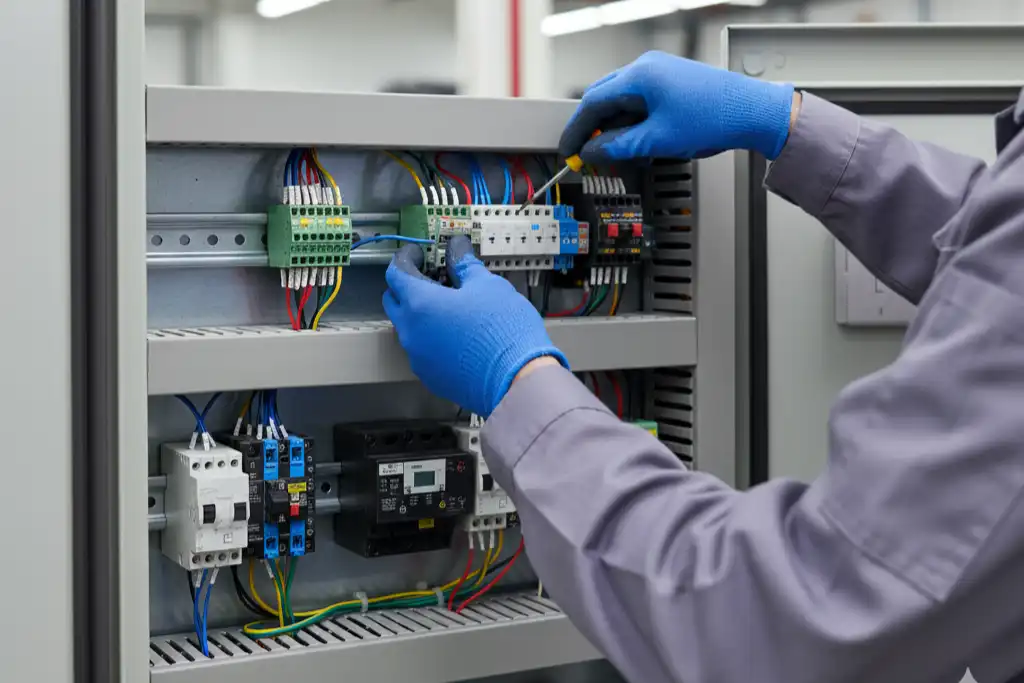
IEC 60898-1 Best Practices
You want your electrical system to be safe. When you put in IEC 60898-1 circuit breakers, follow these tips:
- Pick the right size for your circuit. This stops the breaker from tripping when it should not and keeps your things safe.
- Make sure the breaker is tight on the DIN rail. A tight fit keeps wires from getting loose.
- Check the breaker often. Look for loose wires, rust, or damage.
- Test the breaker by turning it off and on. This helps you see if it works and find problems early.
- Take care of your breakers often. Good care helps them last longer and keeps your circuits safe.
Tip: Checking and testing your breakers often helps you find small problems before they get worse.
IEC 60947-2 Best Practices
Factories and big buildings need strong protection. Follow these steps when you put in IEC 60947-2 circuit breakers:
| Best Practice | Description |
|---|---|
| Load Analysis | Check how much power you use and the highest current. Make sure the breaker is right for your needs. |
| Certification Verification | Look for marks or papers that show the breaker meets IEC 60947-2 rules. |
| Expert Consultation | Ask an engineer or electrician for help. They can help you pick and put in the right breaker. |
| Maintenance Planning | Make a plan to check and fix your breakers. This keeps your system safe and helps your equipment last longer. |
Note: Factories and big systems have more risks. Getting help from experts and checking your breakers often keeps things safe.
Compliance & Documentation
You must follow the rules and keep good records. Always check that your breakers meet the right standard. Keep all papers and certificates in a safe place. Write down every time you put in a breaker or make changes. Good records help you show you followed the rules and make checks easier later.
Remember: Keeping good records and following the rules keeps you, your team, and your business safe from danger and trouble with the law.
Troubleshooting
IEC 60898-1 Issues
You can have problems with IEC 60898-1 circuit breakers. One big problem is overheating. Overheating can start fires and break your equipment. If a breaker gets too hot, wires can melt. This makes the breaker work worse. You might see lights flicker or smell something burning. These are signs you should pay attention to.
Common problems include:
- Breaker gets too hot
- Fire risk from hot parts
- Inside parts get damaged
- Wires melt from heat
- Breaker works less well over time
To fix these problems, you should:
- Find out why the breaker is hot fast
- Do not put too many things on one circuit
- Use big appliances at different times
- Check the breaker box and wires often
- Buy good brands for all your electrical parts
- Keep the breaker box clean and let air move
- Watch for flickering lights or weird smells
Tip: Checking often and using good habits helps you stop most IEC 60898-1 breaker problems.
IEC 60947-2 Issues
You can have other problems with IEC 60947-2 circuit breakers. These happen more in factories. Arc management is very important. If arcs are not controlled, things can get too hot. This can start fires and hurt your system. Modern air circuit breakers have special tools. These tools use magnets and air blasts. They help stop arcs fast.
Problems you might see include:
- Arcs that are not controlled during faults
- System parts get too hot
- Fire risk goes up
You can fix these problems by using breakers with good arc control. Always make sure your breakers have the newest safety tools.
Note: Good arc control keeps your equipment safe and your system working well.
Maintenance
You need to take care of your circuit breakers. Doing regular checks helps you stop most problems. Here are some steps you can follow:
- Look at breakers and wires for damage or wear
- Test breakers to see if they trip when needed
- Clean breaker boxes and keep out dust
- Change any broken or old breakers fast
- Write down all checks and repairs for later
A good care plan keeps your electrical system safe and working. You protect your things and everyone who uses the system.
Remember: Simple checks and quick repairs can stop big problems in the future.
Professional Advice & Quick Reference
When to Consult an Engineer
You should know when to ask for expert help. If you work on a large building or factory, you need an engineer. Complex systems often have high voltages and many circuits. An engineer can help you choose the right breaker and make sure your system is safe. If you see high fault currents or need advanced coordination, call a professional. You also need an engineer if you plan to mix IEC 60898-1 and IEC 60947-2 devices in one system.
Tip: When you feel unsure or see something new, ask an engineer. This keeps your project safe and up to code.
Training Needs
You need the right training to work with circuit breakers. If you install IEC 60898-1 breakers in homes or offices, basic electrical training is enough. You should know how to read labels and follow safety steps. For IEC 60947-2 breakers, you need more skills. These breakers protect big machines and use higher voltages. You must learn about advanced settings and safety checks. Many companies offer training classes for electricians and technicians.
- Learn how to read circuit diagrams.
- Practice safe installation steps.
- Stay updated with new standards and tools.
Note: Good training helps you avoid mistakes and keeps everyone safe.
Quick Specs
You can use this table to compare IEC 60898-1 and IEC 60947-2 circuit breakers quickly:
| Specification | IEC 60898-1 | IEC 60947-2 |
|---|---|---|
| Title | Circuit breakers for overcurrent protection for household and similar installations. | Low-voltage switchgear and controlgear – Part 2: Circuit breakers. |
| Scope | Low-voltage breakers for homes, offices, and light industry. | Breakers for industrial and heavy-duty use. |
| Voltage Rating | Up to 440V AC. | Up to 1000V AC and 1500V DC. |
| Current Rating | Up to 125A. | Often used up to 6300A. |
| Breaking Capacity | 6kA to 10kA typical. | 15kA to 150kA typical. |
Use this table and chart to pick the right breaker for your project. Quick checks save time and help you avoid costly errors.
You now know the big differences between IEC 60898-1 and IEC 60947-2. Pick the right standard for your project’s size, voltage, and safety needs. If you choose, put in, and take care of circuit breakers the right way, you can:
- Stop fires and damage by fixing faults fast.
- Keep people safe from getting shocked.
If your system is hard to understand or very risky, ask an expert for help. Look at what your system needs and always put safety first.
FAQ
What happens if you use the wrong standard?
You risk equipment damage or fire. The breaker may not trip when needed. Always match the breaker to your system’s voltage, current, and fault level.
Can you mix IEC 60898-1 and IEC 60947-2 breakers in one panel?
You can mix them, but you must check compatibility. Use IEC 60947-2 for main protection. Use IEC 60898-1 for branch circuits. Always follow your local code.
How do you identify the standard on a circuit breaker?
Look for the marking on the device. You will see “IEC 60898-1” or “IEC 60947-2” on the label. Check the technical data table:
| Marking | Standard |
|---|---|
| IEC 60898-1 | Household |
| IEC 60947-2 | Industrial |
Do you need special tools to install IEC 60947-2 breakers?
You need basic electrician tools. For large breakers, you may need torque wrenches or panel cutout tools. Always read the manufacturer’s instructions before you start.
See also
A Practical Guide to Translating NEC and IEC Electrical Terms
IEC and UL certification requirements for air circuit breakers
Miniature circuit breakers that keep homes and factories safe
Guide to Certification Standards for Terminal Blocks Worldwide
Best Places to Source Miniature Circuit Breakers in Bulk