
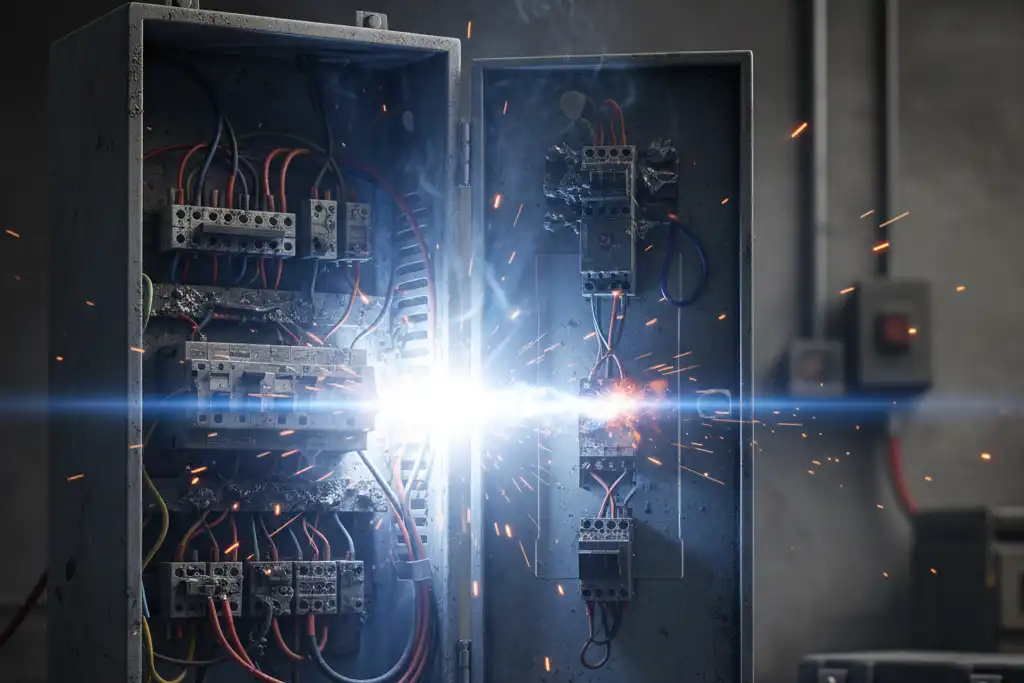
An arc fault happens when electricity jumps between wires or contacts. This makes a spark. The spark can start a fire fast. Things close to the spark can catch fire. You are at risk if wires are damaged or connections are loose in your home or business.
- Every year, arcing faults start more than 28,000 home fires.
- These fires cause hundreds of deaths and injuries.
Stopping arc faults helps keep you, your family, and your things safe.
Key Takeaways
- Arc faults can make dangerous sparks. These sparks can start fires. Check your wires and outlets often for damage. This helps stop these risks.
- Use Arc Fault Circuit Interrupters (AFCIs) to keep your home safe. AFCIs find dangerous sparks. They turn off the power fast to stop fires.
- Check your electrical systems every 2 to 5 years. Regular checks can find hidden problems early. This helps stop big issues.
- Watch for warning signs like flickering lights or odd smells. If you see these, call an electrician right away. This keeps you safe.
- Use safe electrical habits. Do not put too many things in one outlet. Keep cords away from water. These habits help keep your home safe.
Arc Fault Basics
What Is an Arc Fault
You might wonder what happens during an arc fault. An arc fault happens when electricity jumps between wires or contacts. This jump makes a spark. The spark is much stronger than a static shock. It can get very hot. Arc faults often happen when wires are damaged. They also happen when connections are loose. Sometimes, things like dust or moisture get into outlets. These things can cause arc faults.
Here are some common reasons why arc faults happen:
- Dirt or other stuff lowers resistance in the gap. This makes it easier for electricity to jump.
- Bad electrical connections, like misaligned breakers, create gaps. These gaps let arcing happen.
- Old connections can get worse over time. This can lead to arc faults.
- Mistakes made by people during installation or use can cause arcing.
- Design mistakes in protective relay settings let arc faults last longer.
Why Arc Faults Are Dangerous
Arc faults are very dangerous for you and your things. The spark from an arc fault can get hotter than 10,000°F. This heat can melt wire insulation. It can start a fire very fast. You might not see the problem until it is too late.
Scientists have studied why arc faults make so much heat. They also studied why arc faults are so risky. The table below shows what they found:
| Aspect | Description |
|---|---|
| Study Focus | Scientists looked at heat flux and arc formation in home cables |
| Key Findings | They measured how long it takes for arcing to happen with heat and voltage |
| Methodology | They collected voltage and current readings during arcing events |
| Insights | They used a model to predict cable insulation damage and fire risk |
Arc faults can happen in any building. If you ignore damaged wires or loose outlets, your risk goes up. Fires from arc faults spread quickly. They can hurt people or even cause death. Preventing arc faults keeps your home, family, and things safe.
Causes of Arc Faults
Common Wiring Issues
You may find that most arc faults start with problems in your wiring. Damaged wires can create gaps where electricity jumps. Loose connections in outlets or switches also make it easy for sparks to form. Old wiring often breaks down over time. Rodents sometimes chew on wires, which exposes the metal. Water leaks can reach electrical systems and cause trouble.
Here are some common wiring issues that lead to arc faults:
- Cracked or frayed insulation on wires
- Loose wire connections in outlets or switches
- Wires pinched by furniture or doors
- Overloaded circuits with too many devices
- Wires exposed to moisture or pests
Tip: You should check your cords and outlets for damage. If you see any problems, unplug devices and call a professional.
Series vs. Parallel Arc Faults
You may hear about two main types of arc faults: series and parallel. Each type happens in a different way.
| Type | What Happens | Where You Might Find It |
|---|---|---|
| Series | Electricity jumps across a single broken wire | Damaged cords, old lamp wires |
| Parallel | Electricity jumps between two wires or contacts | Outlets, switches, junction boxes |
A series arc fault starts when a wire breaks or gets cut. The electricity tries to cross the gap. This can happen in old extension cords or lamp wires. A parallel arc fault happens when two wires touch or get close. You might see this in outlets or switches with loose connections.
You should know the difference because each type needs careful attention. Series arc faults often hide inside cords. Parallel arc faults can happen in walls or behind outlets. Both types can start fires if you ignore them.
Arc Fault Prevention

Safe Electrical Practices
You can lower your risk by using safe habits at home. Many fires start because people forget safety rules. Never use cords or cables that look damaged. Always check your devices before you plug them in. If you see wires that are frayed or insulation that is cracked, replace them fast.
The National Fire Protection Association says you should use safe electrical habits in these places:
- Bedrooms
- Closets
- Kitchens
- Laundry areas
- Living rooms
- Family rooms
- Rec rooms
- Parlors, libraries, or dens
Do not put too many devices in one outlet. Never run cords under rugs or furniture. Keep electrical things away from water. Do not try to fix wiring if you are not trained. Many people make mistakes that make arc faults more likely. These mistakes include ignoring AFCI and GFCI rules, not labeling electrical panels, and trying to fix things without help.
Tip: Use devices and cords that meet safety rules. If you are not sure about a device, ask a professional before you use it.
Regular Inspections
Regular checks help you find problems before they get bad. You should look at your outlets, switches, and cords for damage. Watch for loose plugs, lights that flicker, or outlets that do not work. If you see any problems, stop using the device and call an expert.
Electrical checks can lower the number of fires from electrical problems. About 10% of home fires come from electrical issues. These fires hurt thousands of people and cost millions each year. Arc-Fault Circuit Interrupters (AFCI) help stop these fires.
You should get electrical checks every 2 to 5 years. How old your home is and what kind of wiring you have changes how often you need checks. Older homes may need checks more often.
| Inspection Frequency | Home Type | Reason for Inspection |
|---|---|---|
| Every 2 years | Older homes, outdated wiring | Wires may break down faster |
| Every 5 years | Newer homes, modern wiring | Regular safety check |
Note: Checks help you find hidden problems. You can stop arc fault fires by finding issues early.
When to Call an Electrician
You should know the signs that mean you need an electrician. Some signs show an arc fault may be there. If you see any of these, call a professional fast:
- Flickering or dimming lights
- Strange smells like burning plastic or rubber
- Buzzing, crackling, or sizzling sounds from outlets or switches
- Loose plugs in an outlet
- Smoking or hot switches or outlets
- Outlets that do not work
- Circuit breakers that trip
- Light bulbs that burn out too soon
- Buzzing outlets or light switches
If lights flicker in other rooms or when appliances turn on, do not wait. If you smell burning plastic, rubber, or hot metal, turn off the power to that circuit. Get help if you hear buzzing, crackling, or sizzling sounds from outlets or switches.
⚠️ Alert: Never ignore these signs. You can keep your home and family safe by calling an electrician for repairs or upgrades.
Always ask for help if you are not sure about your electrical system. Experts know how to find and fix problems that can cause arc fault fires. You can stop serious damage and keep your home safe.
AFCI Protection
How AFCIs Work
You should know how arc fault circuit interrupters (AFCIs) keep your home safe. AFCIs use smart electronics to watch electricity in wires. They look for signs of an arc fault. If they see these signs, AFCIs turn off the power right away. This quick step stops the arc and lowers fire risk.
There are two main kinds of AFCIs: breakers and receptacles. Breaker AFCIs protect whole circuits from the panel. Receptacle AFCIs protect outlets and things plugged in. Combination type AFCI breakers give extra safety. They find both series and parallel arcs in wires and cords. AFCI receptacles protect wiring and devices downstream from both arc types.
Tip: AFCIs act faster than people can. They spot sparks and stop them before a fire starts.
Types of AFCIs
You can pick from different AFCIs. Each type gives a certain level of safety. The table below shows what each kind does:
| Type of AFCI | Detection Capabilities |
|---|---|
| Branch Circuit/Feeder AFCI Breaker | Detects parallel arcing, common in home wiring. |
| Combination Breaker AFCI | Detects both series and parallel arcs for enhanced safety. |
| Dual-Function AFCI/GFCI Protection | Protects against arc faults and ground faults. |
Combination AFCI breakers (CAFI) are special. They find both parallel and series arcing. Standard AFCIs only find parallel arcs. CAFIs trip the circuit for arcs to ground at 30-50mA. They also protect against overloads, short circuits, and both arc types. This wide safety makes CAFIs the best choice for most homes.
| Feature | CAFI (Combination AFCI) | AFI (Standard AFCI) |
|---|---|---|
| Arcing Detection | Detects both parallel and series arcing | Detects only parallel arcing |
| Tripping Conditions | Trips on arcs to ground in the range of 30-50mA | Trips on arcs to ground in the range of 30-50mA |
| Load Current Requirement | 5A or more for certain conditions | 50A or more for certain conditions |
| Protection Scope | Overloads, short circuits, parallel and series arcs | Overloads, short circuits, and parallel arcs |
AFCI vs. Standard Breakers
You may wonder how AFCIs are different from standard circuit breakers. Standard breakers only stop overloads and short circuits. They do not find arc faults. AFCIs use special sensors to spot dangerous arcs and shut off the circuit before a fire can start.
The table below shows how often service calls happen for different breaker types:
| Breaker Type | Percentage of Service Calls |
|---|---|
| Standard Circuit Breakers | 28% |
| AFCI Breakers | 23% |
| Fuses | 18% |
| GFCI Breakers | 17% |
| Dual Function AFCI/GFCI | 14% |
AFCIs protect over 60 million appliances with very few unwanted trips. Contractors see dangerous arcing in 74% of AFCI service calls. AFCIs have helped lower electrical fire incidents from 75,000 per year in the 1980s to 25,000 most recently. Injuries from electrical fires have dropped by 20%. Deaths have gone down by 15%. AFCIs give you much better protection than standard breakers.
Note: AFCIs are important for stopping fires caused by arc faults. Standard breakers cannot find these sparks.
Installation and Maintenance
You can add AFCI protection in your home for $165 to $290 per breaker. This price includes the breaker itself. AFCI circuit breakers turn off power when they find dangerous sparks that could start a fire.
To keep AFCIs working well, you should do these things:
- Make sure all connections are tight and safe.
- Check for frayed or bare wires and replace them fast.
- Keep AFCIs clean from dust and dirt.
Modern AFCIs use smart technology. Some connect to building systems for remote checks. Advanced sensors and AI help AFCIs find arc faults in less than 1.5 milliseconds and stop them in under 4 milliseconds. These features make your electrical system safer and more reliable.
| Feature | Description |
|---|---|
| AI Integration | Uses AI to study sensor data for fault detection. |
| Response Time | Gives warnings or acts within milliseconds. |
| Fault Detection Accuracy | Promises fast and correct fault detection. |
| Detection Time | Finds inside arcs within 1.5 milliseconds. |
| Mitigation Time | Stops arcs in less than 4 milliseconds. |
| Reliability Enhancement | Makes electrical systems safer and more reliable. |
⚡ Alert: AFCIs need regular checks to keep your home safe. Smart AFCIs can warn you before a problem gets bad.
You can see that AFCIs play a special role in stopping arc faults. They use smart technology to find and stop dangerous sparks. Standard breakers cannot do this. Combination AFCI breakers give you the most complete protection for your home.
You have learned that an arc fault can make a lot of heat. This heat can start fires in places you cannot see. Many house fires happen because of bad wires or loose plugs. You can stay safer by using AFCIs. You should also follow safety rules and get your wires checked often.
- AFCIs find dangerous sparks and stop fires before they begin.
- Regular checks help you spot problems early and keep your home safe.
- Groups like NEMA want people to use AFCIs to stop electrical fires.
| Benefit | Description |
|---|---|
| Safety | Checks and AFCIs lower fire and shock risks. |
| Cost-effective | Fixing problems early saves you money. |
| Compliance | You follow safety codes and rules. |
Doing these things helps keep your family and things safe. You make your home or business safer for everyone.
FAQ
What is the main cause of arc faults in homes?
Damaged wires and loose connections cause most arc faults. You should check cords and outlets for cracks or fraying. Rodents and water leaks also damage wires and increase risk.
What does an AFCI do to protect you?
An AFCI watches for dangerous sparks in your wiring. It shuts off power fast when it finds an arc fault. This action helps prevent fires and keeps your home safe.
What signs show you might have an arc fault?
You may notice flickering lights, burning smells, or buzzing sounds from outlets. Hot or smoking switches also warn you. If you see these signs, call an electrician right away.
What rooms need AFCI protection the most?
Bedrooms, living rooms, kitchens, and laundry areas need AFCI protection. These rooms use many devices and have higher fire risk. You should install AFCIs in these spaces for safety.
What should you do if you find a damaged wire?
Unplug the device and avoid using the outlet. You should call a licensed electrician to fix or replace the wire. Never try to repair electrical problems yourself.
See also
What Causes a Circuit Breaker to Generate Sparks
What Is an Arc in a Circuit Breaker and Why Does It Matter
Series and Parallel Surge Protection Devices Explained for Homeowners
Series and Parallel Surge Protection Devices Explained for Homeowners
What Does AFCI Mean in Electrical Engineering