

You often see MCC in electrical engineering. MCC means Motor Control Center. MCCs are big groups with closed parts. These parts hold motor control units and a shared power bus. MCCs help you handle and protect electric motors. This setup lets you control machines from one place. Centralized control helps you run and fix many motors safely and easily.
Key Takeaways
- MCC means Motor Control Center. It lets you control many motors from one place. This makes it easier to manage and protect the motors.
- MCCs help keep people safe. They have things like circuit protection and overload relays. These features stop electrical problems and accidents.
- New MCCs use smart technology. You can check them from far away and automate tasks. This helps work go faster and stops long breaks.
- Checking and fixing MCCs often helps them last longer. It also stops expensive problems and keeps things working well.
- Picking the right MCC for your needs is important. You should think about what you need and the voltage. This helps everything work the best it can.
MCC Overview
What MCC Stands For
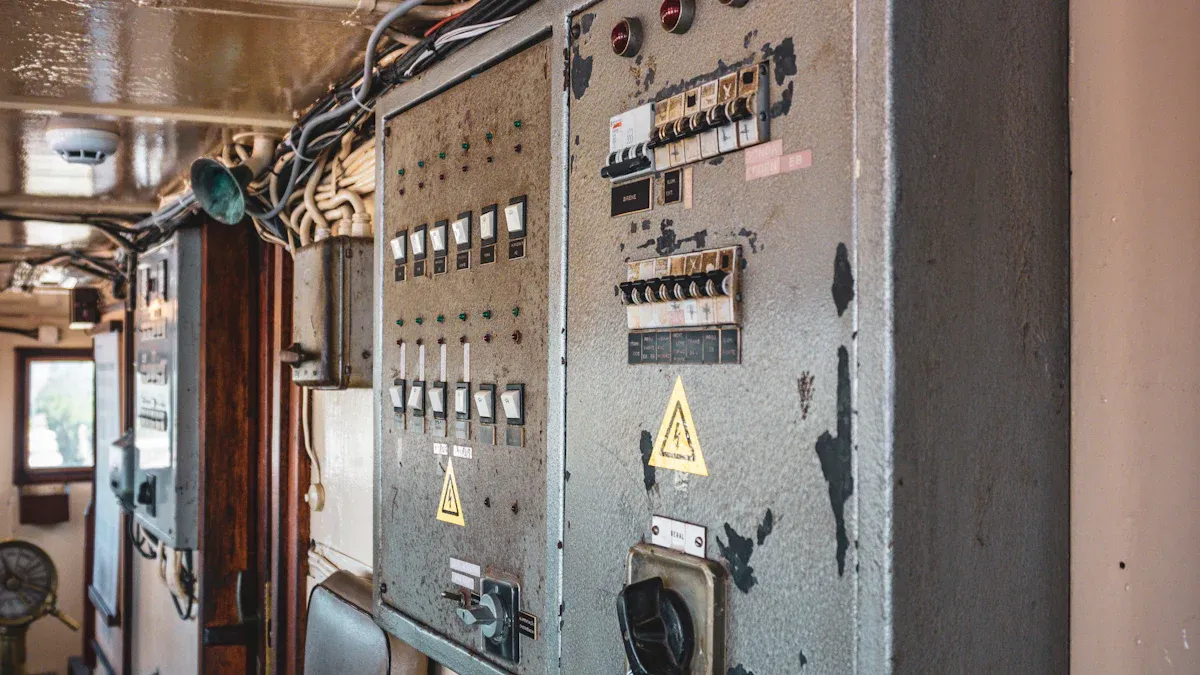
MCC means Motor Control Center. You use an MCC like a special switchboard. It puts many motor control units together. Each unit works with a different motor. You can turn motors on or off. You can keep motors safe from too much power. You can check if motors are working. This setup lets you handle many motors from one spot. MCCs are found in factories and water plants. They are also used where there are lots of machines.
MCC in Power Distribution
An MCC helps you send power to motors safely. The MCC is the main hub for power. It gets electricity from the main supply. Then it sends power to each motor. This makes it easy to control and protect motors.
Note: MCCs help you use less wire, save space, and stay safe. You can find and fix problems fast because everything is together.
MCCs have changed a lot over time. Old MCCs only did simple motor control. Now, MCCs have new features that make them smarter and safer. Here are some ways MCCs are better now:
- AI automation helps motors run better.
- Modular designs let you add or remove units.
- Cyber-physical systems connect MCCs to digital tools.
- MCCs can predict problems before they happen.
- Cybersecurity keeps your equipment safe from hackers.
- Augmented controls and edge analytics give you more data.
You use MCCs for more than just motor control. They help you work better, safer, and greener.
MCC Functions and Components
Main Functions
You use an MCC to control motors in one place. The MCC helps you start and stop motors. It lets you check if motors are working. It keeps motors safe from electrical problems. You can group many motors together in an MCC. This makes it easier to manage them. You save time and space with this setup. You can find and fix problems quickly because everything is together.
When you use an MCC, you get these benefits:
- You control all your motors from one spot.
- You can watch and fix motors easily.
- People and equipment stay safer.
- Power is sent out in an organized way.
Key Components
An MCC has many important parts. Each part does a special job to help the MCC work. Here is a table that shows the main parts and what they do:
| Component | Function |
|---|---|
| Motor control units | These have switches and circuits for each motor. You can start, stop, and check motors. |
| Horizontal bus | This connects the main power to each section of the MCC. |
| Vertical bus | This sends power to starter units and all motors together. |
| Control and monitoring | These features let you control motors from far away. They help you check motors and save energy. |
You will also see other devices inside an MCC:
- The motor starter gives power to the motor when you turn it on.
- Circuit breakers and overload devices watch the electric flow.
- Circuit breakers stop power if something goes wrong.
- Overload protection keeps motors from getting too hot or working too hard.
Tip: If you know what each part does, you can use the MCC safely and fix problems faster.
Circuit Protection
Every MCC needs strong circuit protection. This keeps motors and people safe from electrical faults. Common types of circuit protection in an MCC are:
- Motor Circuit Protectors (MCPs)
- Thermal-magnetic circuit breakers
- Molded case circuit breakers (MCCBs)
Motor Circuit Protectors (MCPs) stop short circuits. They work with thermal overload relays to keep motors from overheating. Thermal-magnetic circuit breakers protect against slow overloads and quick spikes in current. Molded Case Circuit Breakers (MCCBs) give strong and adjustable protection. These are good for bigger motors or groups of motors.
Note: Good circuit protection helps you avoid damage, have less downtime, and keep your workplace safe.
Types and Uses
MCC Types
There are different kinds of motor control centers you can buy. Each kind has special things it can do for certain jobs. The table below shows the types and what makes them different:
| Type | Description |
|---|---|
| Conventional MCCs | These are the usual kind with basic features. |
| Intelligent MCCs | These have smart features and digital tools. |
| Low Voltage MCCs | These work with motors that use less voltage. |
| Medium Voltage MCCs | These are for motors that need more power. |
Conventional MCCs help you do simple motor control. Intelligent MCCs let you use smart tools and watch your motors with computers. Low voltage MCCs are good for small motors. Medium voltage MCCs are for bigger motors that need more electricity.
Tip: Pick the type that fits your system’s voltage and what you want to control.
Common Applications
Motor control centers are used in many places. MCCs help you run pumps, fans, and machines in lots of jobs. Here are some places where you use MCCs:
- Wastewater
- Stormwater
- Clean Water
- Irrigation Systems
- Industrial water
- Flood Control
- Booster Stations
You find MCCs in factories, water plants, and energy stations. The table below shows who uses MCCs and why they are important:
| Sector | Key Insights |
|---|---|
| Manufacturing | MCCs help factories run well by managing motors. |
| Water Treatment | MCCs help control and check water and wastewater systems. |
| Energy Efficiency | Using MCCs helps companies save energy and money. |
| Digitalization | Smart MCCs with IoT make work faster and fix problems early. |
| Regional Demand Variability | Different places need MCCs based on their rules and work. |
MCCs help you control motors in many places. They make your work safer and help you do things better. You can use MCCs to save energy and make your system work well.
MCC vs. Other Panels
Differences
You might wonder how an MCC is different from other panels. The main difference is what each panel does. An MCC controls motors. Other panels, like switchgear or motor control panels, do other jobs.
Here is a table that shows the main differences:
| Feature | Motor Control Center (MCC) | Switchgear | Motor Control Panel (MCP) |
|---|---|---|---|
| Primary Function | Controls motors with contactors | Regulates, protects, or isolates equipment | Controls a single motor |
| Operation Frequency | Starts and stops motors often | Works during faults or manual switching | Operates one motor at a time |
| Structure | Many enclosed sections, common busbars | Compartmentalized, protective devices | Single enclosure for one motor |
| Voltage Level | Works at different voltage levels | Usually high voltage | Usually low voltage |
| Application | Large commercial or industrial sites | Power distribution to devices and panels | Small, simple applications |
An MCC lets you control and protect many motors from one place. Switchgear helps you manage and protect electrical equipment, especially during faults. A motor control panel is best for controlling just one motor.
You find MCCs in places with lots of motors. These places are factories or water plants. Switchgear is used in power stations and big buildings. Motor control panels are good for small jobs. They can run a single pump.
When to Use MCC
You should use an MCC when you need to control many motors. MCCs work best in big systems. You can manage motors from one spot. Here are some reasons to pick an MCC:
- You need to control many motors in one building.
- You want to keep workers safe by controlling motors without shutting down everything.
- You need to update your system easily as your needs change.
- You want to lock out or tag out motors for safety without risking arc flash hazards.
- You need remote monitoring to check motors and fix problems quickly.
When you plan your system, think about these things:
- Check what kind of motors you have and pick the right control units.
- Decide if you want a fixed or draw-out MCC for easier maintenance.
- Look for remote monitoring features for real-time checks.
- Make sure you have good safety devices like overload relays and circuit breakers.
- Choose a trusted supplier to meet safety standards.
If you run a factory, water plant, or any place with many motors, an MCC helps you work safer and smarter. You get better control, faster fixes, and more flexibility.
Practical Considerations
Safety Standards
You need to follow safety rules with a Motor Control Center. These rules keep people and equipment safe. Each motor controller must have clear labels. The labels show who made it, the voltage, and the current. You must write down the fault current at the MCC. Put the fault current and the date on the nameplate. Make sure the short-circuit rating is high enough. It should match or be more than the fault current. Doing these things helps you follow codes like NEC Section 430.8 and Section 110.10.
Tip: Always check local and industry rules before you install or change an MCC. This keeps your system safe and follows the law.
Maintenance
Regular checks help your Motor Control Center work well. Look for damage and rust in the MCC. Make sure all parts are grounded right. Test voltage, current, and resistance to find problems early. Clean the MCC and oil moving parts as the maker says. Write down every check and repair you do. Use infrared tools to look for hot spots and heat changes. Check equipment while it runs to find faults. Train your team and follow safety rules every time. Always wear safety gear and use infrared ports to scan without opening doors.
- Regular checks can help your MCC last over 20 years.
- If you skip checks, you might have big failures and long stops.
- Plan checks every three to six months for best results.
Automation Integration
Modern Motor Control Centers work with smart automation systems. You can connect MCCs to SCADA and PLCs for remote control. These systems show real-time data about how motors work. You can use IIoT platforms to watch energy use and find problems early. Smart panels let you control motors from anywhere. Central control helps you run many motors from one spot. You get better safety with protective devices and faster fixes with remote checks. Variable Frequency Drives help you save energy and lower costs. Real-time checks help you fix problems before they get worse.
Note: Automation makes your MCC smarter, safer, and more efficient.
You have learned that an MCC stands for Motor Control Center. It lets you control and protect motors from one spot. This makes your job easier and your workplace safer.
The electrical bucket in an MCC makes motor control simple. It keeps people and equipment safe with built-in safety tools.
- Controlling everything from one place lowers risks.
- Smart tools help you find problems early.
- Checking often and good planning stop accidents.
If you know how an MCC works, you can keep motors safe and working well.
FAQ
What is a motor control unit in an MCC?
A motor control unit sits inside the MCC. You use it to turn one motor on or off. It helps keep the motor safe. Each unit has switches, fuses, and control tools.
What does an MCC bucket mean?
An MCC bucket is a drawer you can remove from the MCC. It holds the parts for one motor. You can pull out the bucket to fix or change things easily.
What types of motors can you control with an MCC?
You can use an MCC to control many kinds of motors. These include induction motors, synchronous motors, and DC motors. MCCs work best for motors in places like factories and water plants.
What safety features do MCCs have?
MCCs have circuit breakers, overload relays, and lockout-tagout spots. These help protect people and equipment from electrical problems or accidents.
What is the difference between a conventional MCC and an intelligent MCC?
A conventional MCC lets you do simple motor control. An intelligent MCC gives you smart features. You get digital checks, remote control, and better energy use with intelligent MCCs.
See also
Which circuit breakers are used in the Motor Control Center
What Is the Full Name of PCC in Electrical Engineering
How to Match the Type of MCB to Your Electrical Load
Electric motor circuit breaker selection and usage