When you choose between MCB and MCCB, you want the right fit for your needs. For your home, MCBs handle currents from 0.5 to 100 amps and work well for typical household circuits. If you need protection for higher power or industrial equipment, MCCBs cover a much larger range—up to 1,250 amps. You save money and space with MCBs in homes, while MCCBs offer extra safety for bigger jobs.
| Device Type | Rated Current Range | Fault Current Breaking Capacity | Typical Application |
|---|---|---|---|
| MCB | 0.5 to 100 A | Up to 16 kA | Residential |
| MCCB | 100 to 1,250 A | Higher than MCB | Industrial |
Key Takeaways
- MCBs protect low-current circuits up to 100 amps and are ideal for homes and small offices.
- MCCBs handle higher currents up to 2,500 amps and suit industrial, commercial, and large power needs.
- MCBs have fixed trip settings and simple reset, while MCCBs offer adjustable trip settings for precise protection.
- MCBs are small, easy to install, and cost-effective; MCCBs are larger, more expensive, and may need professional installation.
- Choose MCBs for everyday household devices and small equipment to save space and money.
- Use MCCBs for heavy machinery, main power panels, and places requiring strong, flexible protection.
- Always match the breaker’s current rating and interrupting capacity to your circuit to ensure safety and avoid nuisance trips.
- Consult equipment manuals and local safety codes before selecting a breaker to protect your property and people effectively.
MCB Overview
Definition
You use a Miniature Circuit Breaker (MCB) to protect your electrical circuits from damage caused by too much current. An MCB is a small, modular device that fits easily into your home’s electrical panel. It acts as a safety switch that automatically turns off the power when it detects a problem, such as an overload or a short circuit. You can reset it by flipping the switch back on after fixing the issue. MCBs are common in homes and small businesses because they are reliable, easy to use, and cost-effective.
Tip: MCBs replace old-style fuses. You do not need to replace any parts after a trip—just reset the switch.
How It Works
An MCB uses two main parts to protect your circuits: a bimetallic strip and an electromagnetic coil. When too much current flows for a long time, the bimetallic strip heats up and bends. This bending action triggers a latch that opens the contacts, stopping the flow of electricity. If a sudden surge or short circuit happens, the electromagnetic coil creates a strong magnetic field. This field pulls a lever that quickly separates the contacts, cutting off the power almost instantly.
You can see how these parts work together in your home:
- Bimetallic strip: Responds to slow, steady overloads by bending and opening the circuit.
- Electromagnetic coil: Reacts to fast, high surges by snapping the contacts open right away.
- Manual reset: After a trip, you flip the switch to restore power.
- Arc quenching: The MCB safely puts out any electrical arcs that form when the contacts open.
Technical studies show that MCBs use these two protective elements to keep your home safe. The bimetallic strip handles overloads, while the electromagnetic coil deals with short circuits. The device also includes terminal blocks for wiring, a spring system for quick action, and a manual switch for easy operation. Most MCBs in homes work with voltages from 100 to 240 volts AC.
Features
MCBs offer several features that make them ideal for home use. You get compact size, fast response, and easy installation. Here is a quick look at the main features:
| Feature | Description |
|---|---|
| Size | Small and modular, fits on DIN rails in panels |
| Breaking Capacity | Usually 6 to 10 kiloamps, enough for most home circuits |
| Response Time | Rapid action for both overloads and short circuits |
| Protection | Guards against overcurrent and short circuits |
| Installation | Simple slide-on terminals for quick setup |
| Maintenance | Sealed unit, replace when worn out |
| Cost | Affordable for most households |
You can find detailed performance data and specifications for MCBs in product catalogs, technical documents, and quick selection charts from major manufacturers. For example, ABB provides information on tripping mechanisms, breaking capacities up to 25 kA, and compliance with standards like IEC and UL. These resources help you choose the right MCB for your needs.
Note: MCBs are best for protecting branch circuits in homes and small offices. They are not designed for heavy industrial loads.
Applications
You use Miniature Circuit Breakers (MCBs) in many places where you need to protect electrical circuits from damage. MCBs work best in low-voltage systems. You often see them in homes, small offices, and light commercial buildings. Their main job is to keep you and your property safe from electrical faults.
Common Applications for MCBs:
- Residential Electrical Panels:
You find MCBs in almost every home. They protect lighting circuits, power outlets, and kitchen appliances. When a fault happens, the MCB trips and stops the flow of electricity. This action helps prevent fires and damage to your devices. - Small Office Buildings:
You use MCBs to protect computers, printers, and lighting systems. They help keep your office running smoothly by stopping electrical problems before they cause harm. - Retail Stores:
MCBs guard cash registers, display lighting, and security systems. You avoid costly downtime and equipment damage with the right circuit protection. - Schools and Educational Facilities:
You rely on MCBs to protect classroom lights, projectors, and lab equipment. Safe circuits mean fewer interruptions to learning. - Apartment Complexes:
Each unit often has its own set of MCBs. You get individual protection for every apartment, which makes maintenance and troubleshooting easier. - Small Workshops and Garages:
MCBs protect power tools, lighting, and small machinery. You reduce the risk of accidents and equipment failure.
Tip:
Always check the rated current of your MCB before installing it. Using the wrong size can lead to nuisance tripping or, worse, unsafe conditions.
Here is a quick reference table to help you see where you might use MCBs:
| Application Area | Typical Loads Protected | Why Use MCBs? |
|---|---|---|
| Homes | Lights, outlets, appliances | Safety, easy reset, low cost |
| Offices | Computers, printers, lights | Reliable protection |
| Retail Stores | Registers, lighting, alarms | Prevents downtime |
| Schools | Classroom equipment, lights | Keeps learning safe |
| Apartments | Unit circuits, appliances | Individual unit safety |
| Workshops/Garages | Tools, small machines, lights | Protects equipment and users |
You should choose MCBs when you need simple, effective protection for circuits that do not carry very high currents. MCBs give you peace of mind in most everyday electrical systems. If you manage a home or a small business, you will likely use MCBs to keep your electrical setup safe and reliable.
MCCB Overview
Solution-for-molded-case-circuit-breakers.webp)
Definition
You use a Molded Case Circuit Breaker (MCCB) to protect electrical circuits that carry higher currents than what an MCB can handle. MCCBs work well in places where you need to control and protect large electrical loads, such as factories, commercial buildings, and big machines. The molded case around the breaker keeps the internal parts safe and helps get rid of heat. You can find MCCBs with current ratings from 10 amps up to 2,500 amps, making them suitable for many different power needs. MCCBs also let you adjust the trip settings, so you can match the protection to your specific circuit.
Note:
MCCBs are not just for industrial use. You can use them in commercial buildings, large offices, and even renewable energy systems like solar power installations.
How It Works
MCCBs use both thermal and magnetic protection to keep your circuits safe. When too much current flows for a long time, a bimetallic strip inside the MCCB heats up and bends. This bending action trips the breaker and stops the flow of electricity, protecting your wires from overheating. If a sudden, large surge happens—like a short circuit—a magnetic coil inside the MCCB reacts instantly. The coil pulls a lever that opens the contacts and cuts off the power right away.
Some MCCBs use electronic trip units. These units sense current with coils and solid-state circuits. They can trip the breaker much faster than mechanical parts, sometimes in just a few milliseconds. You can adjust these electronic units to set the exact level of protection you need. Some advanced MCCBs even store trip history and show you what kind of fault happened.
Here is a table showing the different types of MCCBs and how they respond to various loads:
| MCCB Type | Trip Current Range (times rated current) | Tripping Time (seconds) | Typical Applications |
|---|---|---|---|
| Type B | 3 to 5 | 0.04 to 13 | Resistive loads, sensitive to small surges |
| Type C | 5 to 10 | 0.04 to 5 | Small motors, transformers |
| Type D | 10 to 20 | 0.04 to 3 | Large motors with high inrush current |
| Type K | 10 to 12 | 0.04 to 5 | Inductive loads with high inrush current |
| Type Z | 2 to 3 | Very sensitive | Sensitive semiconductor equipment |
You can see that MCCBs are designed to handle many types of electrical loads, from simple lights to powerful motors.
Features
MCCBs give you many features that make them a top choice for high-power and industrial circuits. You get strong protection, flexibility, and easy installation. Here are some key features:
- Wide current range: MCCBs cover from 10A up to 2,500A, so you can use them for small or large circuits.
- High interrupting capacity: They can safely break high fault currents without damage.
- Adjustable trip settings: You can set the breaker to trip at the right current for your equipment.
- Thermal and magnetic protection: Both slow overloads and fast surges are covered.
- Electronic trip units: Some models offer precise, fast, and flexible protection.
- Compact and lightweight: Easy to install in panels or switchboards.
- Standards compliance: MCCBs meet safety standards like IEC 60947-2.
- Maintenance: You can inspect, clean, and test MCCBs to keep them working well.
- Compatibility: MCCBs work with extra devices like auxiliary contacts and shunt releases.
| Aspect | Details |
|---|---|
| Standards Compliance | MCCBs comply with IEC 60947-1 and IEC 60947-2 for safety and reliability. |
| Raw Materials Quality Control | Strict checks ensure strong and reliable performance. |
| Auxiliary Equipment | You can add contacts, shunt releases, and emergency contacts. |
| Documentation | Manuals, datasheets, and test reports come with the product. |
| Packaging | MCCBs are packed with foam and clear labels for safety and easy identification. |
Tip:
Always check the trip settings and ratings before you install an MCCB. This helps you match the breaker to your circuit and keeps your system safe.
Applications
You use Molded Case Circuit Breakers (MCCBs) when you need to protect circuits that carry large amounts of electricity. MCCBs work best in places where regular circuit breakers cannot handle the load. You often see MCCBs in factories, big commercial buildings, and places with heavy machines.
Common Applications for MCCBs:
- Industrial Plants:
You protect large motors, conveyor belts, and heavy machinery with MCCBs. These machines draw a lot of power. MCCBs prevent damage from overloads or short circuits. - Commercial Buildings:
You find MCCBs in shopping malls, hospitals, and office towers. They protect main power panels, elevators, air conditioning units, and backup generators. - Renewable Energy Systems:
You use MCCBs in solar farms and wind power stations. They guard the main circuits that connect solar panels or wind turbines to the grid. - Data Centers:
You rely on MCCBs to protect servers, cooling systems, and backup power supplies. MCCBs help keep your data safe by stopping electrical faults before they cause damage. - Large Residential Complexes:
You install MCCBs in apartment buildings with high power needs. They protect main feeders and large equipment like water pumps and central heating systems. - Marine and Mining Operations:
You use MCCBs on ships and in mines. These places need strong protection because of harsh conditions and powerful equipment.
Tip:
Always check the current rating and trip settings before you choose an MCCB for your project. Picking the right breaker keeps your equipment safe and avoids costly repairs.
Here is a table to help you match MCCBs to different uses:
| Application Area | Typical Loads Protected | Why Use MCCBs? |
|---|---|---|
| Factories | Motors, machines, welding units | High current, adjustable protection |
| Hospitals | Elevators, HVAC, generators | Reliable power, safety for equipment |
| Solar Farms | Main solar panel circuits | Handles high fault currents |
| Data Centers | Servers, cooling, UPS systems | Prevents downtime, protects hardware |
| Apartment Complexes | Main feeders, pumps, heaters | Manages large loads safely |
| Ships/Mines | Engines, drills, pumps | Withstands tough environments |
You should choose MCCBs when you need strong, flexible protection for circuits that carry a lot of power. MCCBs give you peace of mind in places where safety and reliability matter most. If you manage a large building or run heavy equipment, MCCBs help you keep everything running smoothly and safely.
MCB and MCCB Differences
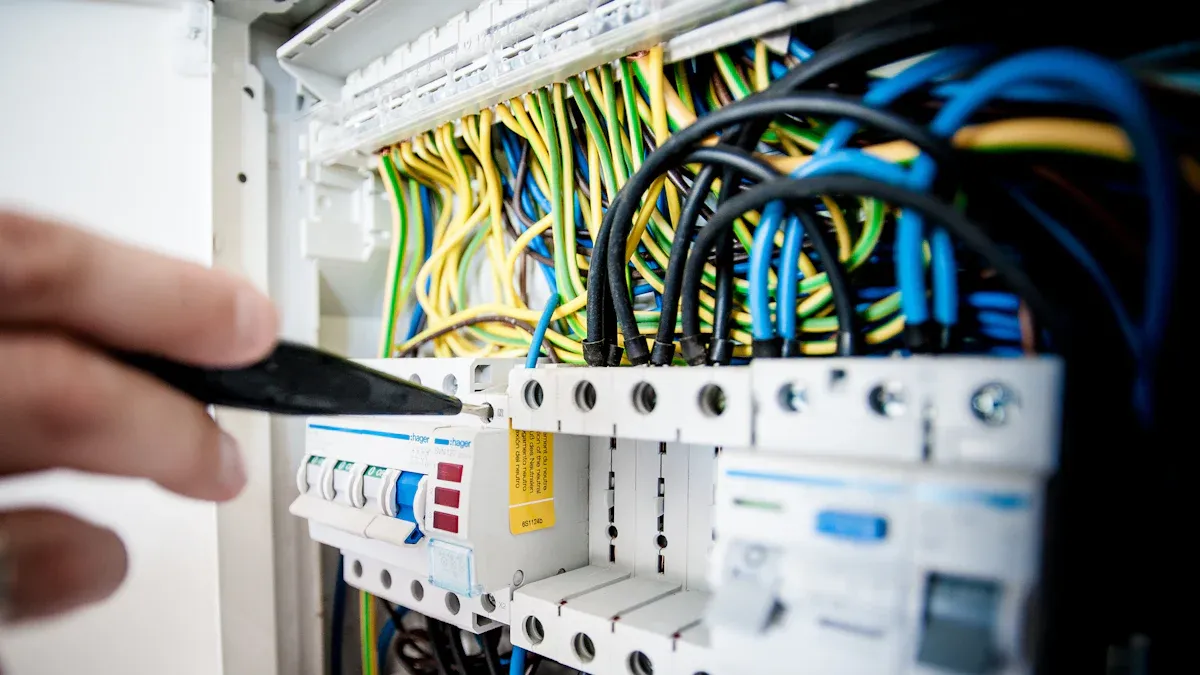
Tripping Mechanism
You need to know how each breaker reacts to electrical problems. MCBs use a bimetallic strip for thermal tripping. This strip bends when it gets hot from too much current. The breaker trips and cuts off the power. MCBs also have a fixed trip setting. You cannot change how much current will make them trip.
MCCBs use both electromagnetic and thermal magnetic protection. The electromagnetic part reacts fast to big surges, like a short circuit. The thermal part works for slow overloads. You can adjust the trip settings on most MCCBs. This means you can set the breaker to trip at the right current for your equipment.
Here is a quick comparison:
| Feature | MCB (Miniature Circuit Breaker) | MCCB (Molded Case Circuit Breaker) |
|---|---|---|
| Tripping Mechanism | Bimetallic strip for thermal tripping; fixed trip settings | Electromagnetic and thermal magnetic protection; adjustable trip settings |
Tip:
If you want more control over when your breaker trips, choose an MCCB. If you want simple, fixed protection, an MCB works well.
Current Rating
You must match the breaker’s current rating to your circuit. MCBs usually cover a range from 0.5 amps to 125 amps. This makes them perfect for homes and small offices. You do not need a high current rating for most household devices.
MCCBs have a much wider range. You can find MCCBs rated from 10 amps up to 2,500 amps. This wide range lets you protect large machines, main power panels, and industrial equipment. MCCBs also let you adjust the rated current in many models. You can fine-tune the protection for your exact needs.
| Feature | MCB (Miniature Circuit Breaker) | MCCB (Molded Case Circuit Breaker) |
|---|---|---|
| Current Ratings | 0.5A to 125A; for homes and small offices | 10A to 2,500A; for industry and large loads |
You should always check the current rating before you install a breaker. Using the wrong rating can cause nuisance tripping or leave your system unprotected.
Interrupting Capacity
Interrupting capacity tells you how much fault current a breaker can safely stop. MCBs usually have an interrupting capacity up to 10 kiloamps (kA). This is enough for most home and small business circuits.
MCCBs have much higher interrupting capacities. Standard MCCBs can handle 10 kA, 18 kA, 25 kA, or even 65 kA. Some custom MCCBs can interrupt up to 150 kA. You need this higher capacity in places with large transformers or heavy machinery. Choosing the right interrupting capacity keeps your system safe during big faults.
| Feature | MCB (Miniature Circuit Breaker) | MCCB (Molded Case Circuit Breaker) |
|---|---|---|
| Interrupting Capacity | Up to 10 kA or less | 10 kA to 65 kA (standard); up to 150 kA (custom) |
Always select a breaker with an interrupting capacity that matches your system’s needs. This helps prevent damage during a fault.
Size and Mounting
You need to think about the size and mounting style when you choose between MCB and MCCB. MCBs have a small and compact design. You can easily fit them into standard home electrical panels. Most MCBs snap onto DIN rails, which are metal strips inside your breaker box. This makes installation quick and simple. You can replace or add MCBs without much trouble.
MCCBs have a larger and heavier body. You often see them in big panels or switchboards. You need more space to install an MCCB. Most MCCBs use bolt-on mounting or special brackets. You may need a professional to install or replace an MCCB because of the size and wiring.
| Feature | MCB | MCCB |
|---|---|---|
| Size | Small, lightweight | Large, heavy |
| Mounting | DIN rail, snap-in | Bolt-on, bracket, panel mount |
| Installation | Easy, tool-free | Needs tools, more complex |
Tip:
If you want a simple upgrade or replacement in your home, choose an MCB. If you work with large equipment or main power panels, you need the extra space for an MCCB.
Adjustability
You get different levels of control with MCB and MCCB. MCBs have fixed trip settings. You cannot change how much current will make them trip. This makes MCBs easy to use. You do not need to adjust anything after installation.
MCCBs give you more options. You can adjust the trip settings on most MCCBs. You set the breaker to trip at the right current for your equipment. Some MCCBs have dials or switches for this purpose. Advanced MCCBs even let you set time delays or use electronic trip units for precise control.
- MCB: Fixed settings, no adjustment needed.
- MCCB: Adjustable settings, more control for special needs.
You should pick an MCCB if you want to fine-tune protection for different machines or circuits.
Cost
You need to consider cost when you choose between MCB and MCCB. MCBs cost less than MCCBs. You can buy and install MCBs for a low price. This makes them a good choice for homes and small offices.
MCCBs cost more because they handle higher currents and offer more features. You pay extra for adjustability, higher interrupting capacity, and stronger construction. You also need to think about installation costs. MCCBs may require a professional electrician, which adds to the total price.
| Feature | MCB | MCCB |
|---|---|---|
| Device Cost | Low | High |
| Installation | Simple, low cost | Complex, higher cost |
| Maintenance | Replace if faulty | Can be serviced or tested |
Note:
Always balance your budget with your safety needs. Do not pick a breaker just because it is cheaper. Make sure it matches your power and protection needs.
Use Cases
You need to choose the right circuit breaker for your project. The best way to decide is to look at where you plan to use it. MCB and MCCB each fit different types of jobs. Here is how you can match them to your needs:
When to Use MCB
- You want to protect circuits in your home.
- You need to guard lights, fans, and small appliances.
- You work with low current, usually less than 100 amps.
- You want a simple device that is easy to install and reset.
- You have a small office or shop with basic electrical needs.
MCBs work best for everyday protection in places where you do not expect very high currents or big machines.
When to Use MCCB
- You need to protect large machines or heavy equipment.
- You work in factories, hospitals, or big commercial buildings.
- You deal with high current, sometimes up to 2,500 amps.
- You want to adjust the trip settings for special equipment.
- You need strong protection for main power panels or feeders.
MCCBs give you more control and higher safety for places with big power needs.
Side-by-Side Comparison Table
| Use Case | MCB (Miniature Circuit Breaker) | MCCB (Molded Case Circuit Breaker) |
|---|---|---|
| Homes | ✅ Best choice | ❌ Not needed |
| Small offices/shops | ✅ Good fit | ❌ Too large |
| Large commercial buildings | ❌ Not enough protection | ✅ Best choice |
| Factories/industrial | ❌ Not suitable | ✅ Handles heavy loads |
| Main power panels | ❌ Too small | ✅ Designed for this |
| Individual appliances | ✅ Protects small devices | ❌ Overkill |
| Adjustable protection | ❌ Fixed settings | ✅ Adjustable trip settings |
Quick Tips
- Pick MCBs for simple, low-power circuits.
- Choose MCCBs for high-power, adjustable, or industrial circuits.
- Always check the current rating and interrupting capacity before you decide.
You can see that MCB and MCCB serve different roles. If you use the wrong one, you might risk safety or waste money. Think about your power needs, the size of your equipment, and how much control you want over your protection.
Choosing the Right Breaker
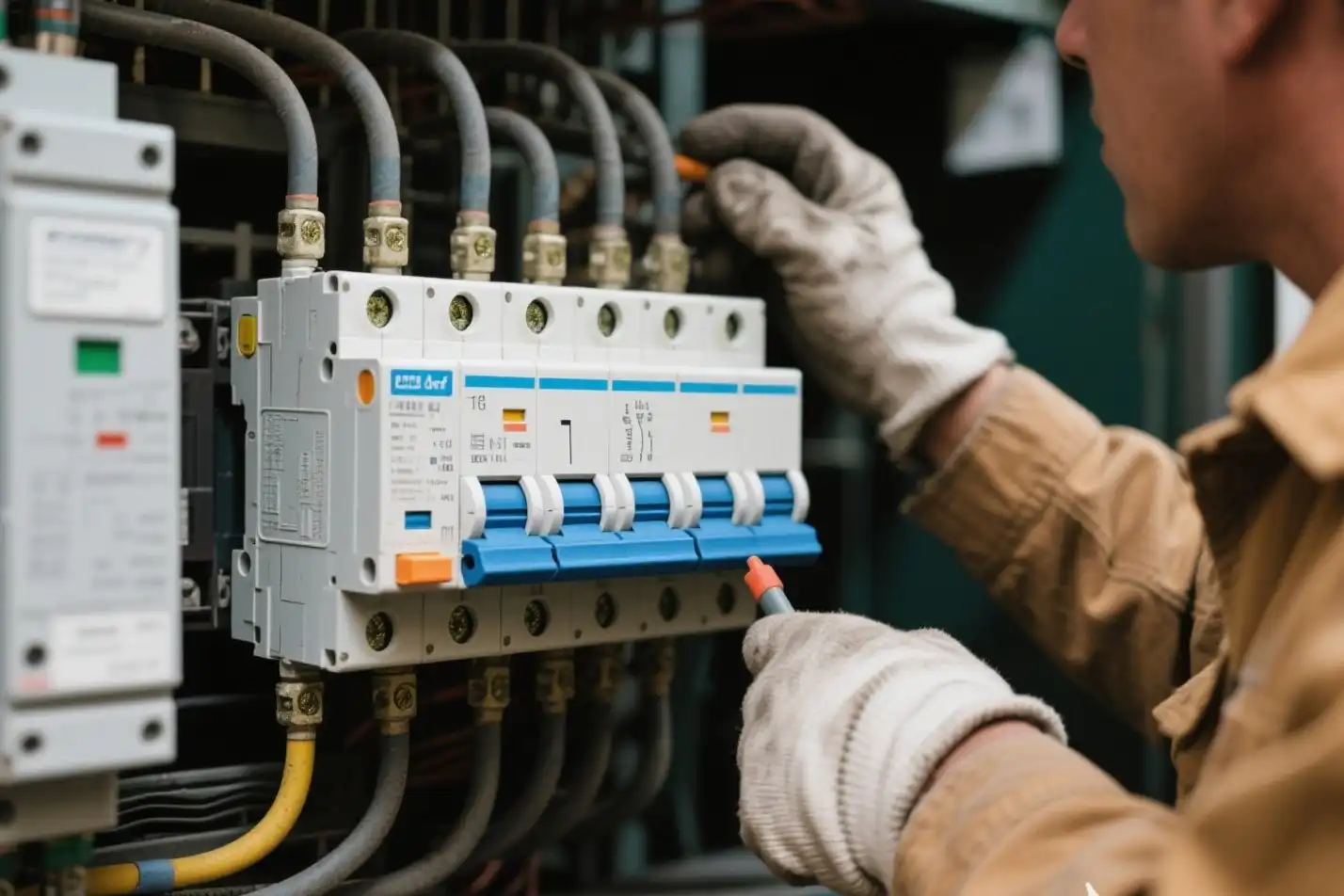
Power Needs
You should always start by looking at your power needs. Think about how much electricity your circuits use every day. In a home, you usually have lights, fans, and small appliances. These do not draw much current. An MCB works well for these loads because it protects circuits up to about 100 amps. You can install it easily in your panel, and it will trip if something goes wrong.
If you work in a factory, hospital, or large building, your power needs are much higher. Machines, elevators, and big air conditioners use a lot of electricity. Here, you need a breaker that can handle heavy loads. An MCCB is the right choice. It covers a wide range of current ratings, from 10 amps up to 2,500 amps. You can adjust its settings to match your equipment. This flexibility helps you protect both small and large machines.
Tip:
Always check the current rating of your devices before you pick a breaker. Using the wrong size can cause nuisance tripping or leave your system unprotected.
Safety
Safety should always come first when you choose between MCB and MCCB. You want to make sure your breaker can stop dangerous faults before they cause damage or fire. MCBs give you reliable protection for home circuits. They trip quickly if there is an overload or short circuit. You can reset them easily after fixing the problem.
MCCBs offer extra safety features for bigger jobs. They have higher breaking capacities, so they can stop large fault currents safely. Many MCCBs let you adjust the trip settings. This means you can fine-tune the protection for each machine or circuit. Some models even have electronic trip units that react faster and store fault history. These features help you keep your equipment and people safe, especially in places with high power needs.
In some regions, safety rules are strict. For example, North America uses UL 489 standards, while Europe follows IEC rules. Some countries require breakers that can handle earthquakes or wildfires. Always check local codes before you buy.
Note:
Choose a breaker with a breaking capacity higher than the largest fault current you expect. This keeps your system safe during emergencies.
Budget
Your budget plays a big role in your decision. MCBs cost less and work well for most homes and small offices. You can install them quickly, and you do not need special tools. If you need to replace one, the cost stays low.
MCCBs cost more because they offer more features and handle higher currents. In some markets, like Southeast Asia and India, price sensitivity is high. People often compare brands and negotiate prices before buying. In other places, like the Middle East, buyers prefer top brands even if they cost more. You should also think about long-term costs. MCCBs last longer and can be serviced, which may save money over time.
| Breaker Type | Upfront Cost | Installation | Maintenance | Typical Lifespan |
|---|---|---|---|---|
| MCB | Low | Simple | Replace | 10-15 years |
| MCCB | High | Complex | Serviceable | 15-25 years |
Tip:
Do not pick a breaker just because it is cheap. Make sure it matches your power needs and safety requirements. Spending a little more now can prevent costly repairs later.
Application Match
You need to match the right circuit breaker to your specific application. This step helps you avoid problems and keeps your electrical system safe. Start by looking at where you plan to use the breaker. Each setting has its own needs.
1. Residential Use
You live in a house or apartment. You use lights, fans, TVs, and kitchen appliances. These devices do not draw much power. You want a breaker that is easy to install and reset. You also want something that fits in a small panel. In this case, you should choose a miniature circuit breaker (MCB). It gives you enough protection for daily use.
2. Commercial Buildings
You work in an office, school, or store. You have more equipment than a home. You may use computers, printers, air conditioners, and elevators. These places need breakers that can handle more power. You also want to keep downtime low. For most commercial buildings, you can use MCBs for small circuits. For main panels or large equipment, you should use a molded case circuit breaker (MCCB).
3. Industrial Settings
You manage a factory, warehouse, or plant. You run heavy machines, motors, and large pumps. These machines need a lot of power. You also want to adjust the breaker settings for each machine. In these places, you should use MCCBs. They give you high current ratings and adjustable protection.
4. Special Applications
Some places have unique needs. Data centers need strong protection for servers. Hospitals must keep power running for life-saving equipment. Solar farms and wind plants need breakers that can handle high fault currents. In these cases, you should always check the equipment requirements. Choose a breaker that matches the load and safety rules.
Tip:
Always read the equipment manual before you pick a breaker. The manual tells you the right current rating and type.
Here is a quick table to help you match the right breaker to your application:
| Application Area | Typical Loads | Best Breaker Type | Why This Choice? |
|---|---|---|---|
| Home | Lights, outlets | MCB | Easy, safe, low cost |
| Small Office | Computers, printers | MCB | Reliable, simple installation |
| Large Office/School | HVAC, elevators | MCCB (main), MCB (branch) | Handles more power, flexible |
| Factory/Warehouse | Motors, machines | MCCB | High current, adjustable |
| Hospital/Data Center | Life support, servers | MCCB | High safety, strong protection |
| Solar/Wind Plant | Main circuits | MCCB | High fault current, durable |
You should always match the breaker to your real-world needs. Think about the size of your load, the type of building, and the safety rules in your area. If you are not sure, ask a licensed electrician for help.
Note:
Using the wrong breaker can cause safety risks or damage your equipment. Take time to check your application before you buy.
Comparison Table
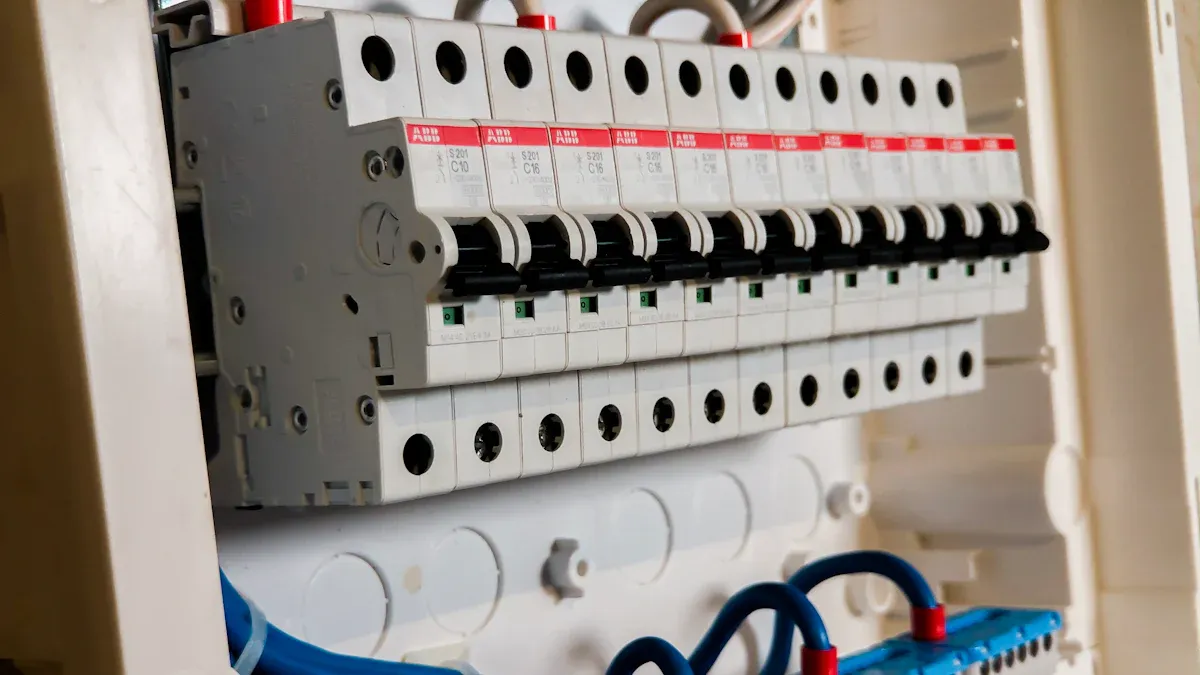
Features Table
You want to see the differences between MCBs and MCCBs at a glance. A clear table helps you compare the most important features side by side. This makes your decision easier when you choose a circuit breaker for your project.
| Feature/Aspect | MCB (Miniature Circuit Breaker) | MCCB (Molded Case Circuit Breaker) |
|---|---|---|
| Current Rating | Up to 100 Amps | Adjustable from 10 Amps up to 2,500 Amps |
| Interrupting Capacity | Up to 18,000 Amps | 10,000 to 200,000 Amps |
| Trip Characteristics | Fixed, non-adjustable | Adjustable trip settings |
| Physical Size | Compact, fits in residential panels | Larger, needs more panel space |
| Cost | Lower cost, budget-friendly | Higher cost, advanced features |
| Maintenance | Replace when faulty | Can be serviced and tested |
| Extra Features | Basic protection | Advanced: remote monitoring, communication options |
Tip:
MCCBs offer advanced features like adjustable trip settings and remote monitoring. You get more control and safety for demanding environments.
You notice that MCCBs handle much higher currents and offer more flexibility. Their larger size and higher price reflect their advanced capabilities. MCBs give you a simple, cost-effective solution for everyday needs.
Applications Table
You need to match the right breaker to your application. The table below shows where each type works best. This helps you avoid mistakes and keeps your electrical system safe.
| Application Area | MCB (Miniature Circuit Breaker) | MCCB (Molded Case Circuit Breaker) |
|---|---|---|
| Homes | ✅ Best choice for lights, outlets | ❌ Not needed |
| Small Offices | ✅ Good for computers, printers | ❌ Too large |
| Large Commercial | ❌ Not enough protection | ✅ Main panels, elevators, HVAC |
| Factories/Industrial | ❌ Not suitable | ✅ Motors, heavy machines, main feeders |
| Data Centers | ❌ Lacks advanced features | ✅ Protects servers, cooling, UPS |
| Renewable Energy (Solar/Wind) | ❌ Not robust enough | ✅ Handles high fault currents, outdoor use |
| EV Charging Stations | ❌ Insufficient for high current | ✅ Protects circuits over 50 Amps, outdoor ready |
- MCBs work well in homes and small offices. You get easy installation and reliable protection for low-power circuits.
- MCCBs fit best in places with high energy needs. You protect large equipment, main power panels, and even outdoor systems.
Note:
Always check your power needs and local codes before you choose a breaker. The right choice keeps your property and people safe.
You should choose MCBs for your home because they meet residential safety standards like IEC 60898-1 and work well for typical household circuits. For factories or large buildings, MCCBs provide stronger protection and meet industrial standards such as IEC 60947-2. Market trends show that MCCBs handle higher currents and harsh conditions, making them the top pick for heavy-duty jobs. Always think about your safety and efficiency needs. For complex projects, ask a licensed electrician for advice. Protect your property by selecting the right breaker for your system.
FAQ
What is the main difference between an MCB and an MCCB?
You use an MCB for low current circuits, like in homes. You use an MCCB for higher current circuits, such as in factories. MCBs have fixed settings. MCCBs let you adjust settings for more control.
Can you use an MCCB in a home?
You can use an MCCB in a home, but it is usually too large and expensive for most household needs. You get better value and easier installation with an MCB for typical home circuits.
How do you reset a tripped MCB or MCCB?
You reset both by switching the breaker handle back to the ON position after fixing the problem. Always check for the cause of the trip before you reset the breaker.
Do MCBs and MCCBs need regular maintenance?
You do not need to maintain MCBs. You replace them if they fail. You should inspect MCCBs regularly, clean them, and test their function. MCCBs last longer with proper care.
What happens if you use the wrong breaker size?
If you use a breaker that is too small, it trips often. If you use one that is too large, it may not protect your wires or devices. Always match the breaker size to your circuit.
Are MCBs and MCCBs safe for outdoor use?
Most MCBs work best indoors. Some MCCBs have weatherproof enclosures for outdoor use. Always check the product label for outdoor ratings.
Can you upgrade from MCB to MCCB easily?
You cannot swap MCBs for MCCBs directly. MCCBs need more space and different mounting. You may need to change your panel or wiring.
How do you choose the right breaker for solar panels?
You check the current rating and fault current of your solar system. You use an MCCB for main circuits in large solar setups. You use an MCB for small branch
circuits.
The following information may be of interest to you
Key factors to consider when choosing a molded case circuit breaker
Exploring the Components of Molded Case Circuit Breakers
The difference between AC MCB and DC MCB
Circuit Breakers vs Miniature Circuit Breakers: What Sets Them Apart