

If you want to know how many circuit breakers fit on a 125 ampere panel, you need to think about a few things.
- The number of breakers depends on their size, like 15A or 20A, and how your panel is made.
- Companies and the National Electrical Code set rules to keep you safe.
- You must make sure the total load stays under 125 amps, even if you use smaller breakers or backfeed choices.
Most homes do not have 125 ampere panels because service entry cables for this size are not common. Always look at your panel label and talk to a licensed electrician who knows the code. They can help you choose if you need a subpanel or if you should upgrade your system.
Key Takeaways
- A 125 ampere panel can usually hold 24 to 30 circuits with 15-amp breakers. It can hold 16 to 20 circuits with 20-amp breakers. Always look at your panel’s label to know the exact number.
- Make sure the total load stays under 125 amps. This helps stop your panel from getting too full. Do a load analysis before you add new circuits to keep things safe.
- Tandem breakers can let you add more circuits in some panels. But not every panel lets you use them. Always check if your panel can use tandem breakers before you put them in.
- Always follow the National Electrical Code and what the maker says. This keeps your installation safe. If you do not follow the rules, your panel could get too full and be dangerous.
- If your panel is full or almost full, think about getting a bigger panel or adding a subpanel. Talk to a licensed electrician to get good advice.
125 Ampere Panel Limits
Maximum Breaker Count
When you look at a 125 ampere panel, you might wonder how many circuit breakers you can install. Most panels of this size support between 24 and 30 circuits if you use 15-amp breakers. If you use 20-amp breakers, you usually get 16 to 20 circuits. Some modern designs allow up to 42 circuits, but this depends on the panel model and manufacturer.
Always check the label inside your panel. The label tells you the exact number of spaces and circuits allowed.
Manufacturers set clear limits for each panel. Here is a table with examples:
| Panel Model | Number of Spaces | Number of Circuits | Maximum Amperage |
|---|---|---|---|
| QO330MQ125 | 30 | 30 | 125A |
| Square-D Homeline | 12 | 24 | 125A |
You should never install more breakers than your panel allows. The National Electrical Code also sets rules. For example:
- The six disconnect rule appears in Article 230.71 of the 2008 NEC.
- Branch breakers should be smaller than the main breaker for safety.
- Subpanel breakers should not exceed 80% of the main panel’s rating.
Load Capacity
You might see that the total amperage of all your breakers adds up to more than 125 amps. This is normal. Not every circuit runs at full power at the same time. Electricians use a load analysis to make sure your panel stays safe.
- A 125 ampere panel is rated for the main breaker or bus bar.
- The total amperage of all breakers can be higher than 125 amps because you rarely use every circuit at once.
- You must keep the total load under 125 amps during normal use.
If you add too many high-power devices, you risk overloading your panel. Always plan your circuits so the total load does not go over the panel’s rating. If you are not sure, ask a licensed electrician to check your setup.
Breaker Quantity Factors
Physical Slots
When you open your electrical panel, you see rows of slots. Each slot is made to hold one circuit breaker. The number of slots tells you how many breakers you can put in. Some panels have 20 slots. Others have 30 or even more. You need to count the slots to find your panel’s limit. Different brands make panels with different slot setups. Here is a table to compare:
| Brand | Current Rating | Maximum Number of Circuits | Maximum Number of Spaces | Breaker Mounting | Neutral Type |
|---|---|---|---|---|---|
| Square D | 125 Ampere | 20 | 20 | Bolt-On | Bonded |
| SENTOP circuit breaker | 125 Ampere | 8 | 4 | Bolt-On | Split Branch |
You should always look at your panel’s label to see the exact number of slots and spaces.
Tandem Breakers
Sometimes, people want to add more circuits to their panel. Tandem breakers let you fit two circuits into one slot. This can almost double the number of circuits in some panels.
Tandem breakers are half as wide as normal single-pole breakers. Two of them fit in one regular slot. These 2-for-1 breakers can almost double the space in a panel. But not every panel lets you use them in every slot.
Not all 125 ampere panels allow tandem breakers. Some panels only let you use them in certain places. You need to check your panel’s paperwork before using tandem breakers.
Code and Manufacturer Rules
You have to follow rules from the National Electrical Code and the company that made your panel. These rules help keep your house safe and stop electrical problems.
- The Chicago Electrical Code does not let you use tandem breakers as overcurrent devices.
Manufacturers also set limits on how many and what kind of breakers you can use. You should read the label and manual before you change anything. If you do not follow these rules, you could overload your panel or break the law. Always ask a licensed electrician if you are not sure about your panel or local codes.
Check Panel Capacity
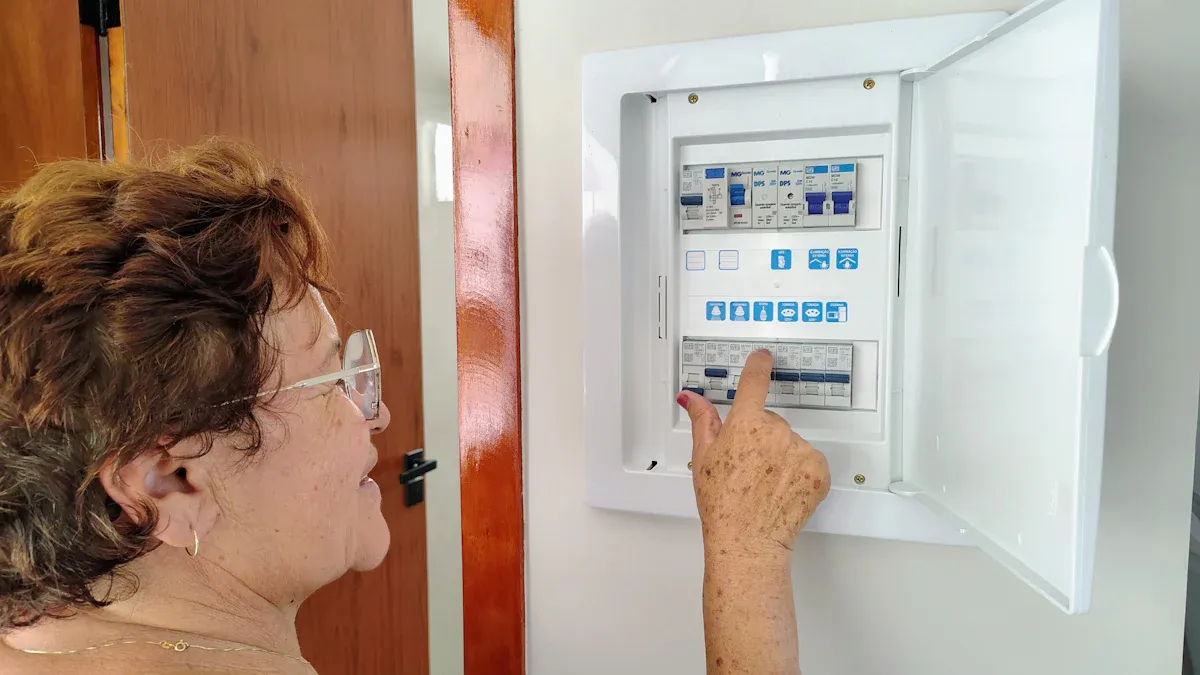
Panel Label
You can learn a lot from the label inside your panel door. The label tells you how much current your panel can handle. It shows numbers like 100A, 125A, or 200A. You will also see the voltage rating, such as 120/240V, which is common in homes. Some labels have notes from the manufacturer. These notes tell you which breakers you can use and any special wiring rules.
Tip: Always check the label before you add or change breakers. The label helps you avoid mistakes and keeps your home safe.
Allowed Breakers
You need to know which breakers are allowed in your panel. The manufacturer’s paperwork gives you this information. It tells you the biggest size for branch circuit breakers and sub-feed breakers. You should always follow these rules to keep your panel safe.
- Check the paperwork for the most breakers you can use.
- Look for the largest breaker size you can install.
- Only use breaker types listed by the manufacturer.
If you cannot find the answer, ask the manufacturer or a licensed electrician. They can help you follow the rules for your 125 ampere panel.
Documentation Review
You should read all the instructions that came with your panel. This helps you put in breakers the right way and follow safety codes. Here is a simple checklist:
- Find the label on the panel door.
- See what the main breaker rating is.
- Check if the voltage matches your home.
- Look for notes about which breakers to use.
- Make sure all wires are tight and meet code.
- Always turn off the main power before you work inside.
- Follow the steps from the manufacturer.
Note: If you are not sure about any step, ask a professional. This keeps your electrical system safe and up to code.
125 Ampere Panel Load Calculation
Total Load
You need to know how much electricity your home uses before you add new breakers to your 125 ampere panel. Start by listing all the appliances, lights, and outlets you plan to connect. Add up their wattage or volt-ampere (VA) ratings. This gives you the total load.
Here is a simple way to calculate your total load:
| Step | Description | Calculation |
|---|---|---|
| 1 | Add up all appliance and lighting VA | 5,100 VA (lighting, receptacles) + 25,300 VA (appliances) = 30,400 VA |
| 2 | Convert VA to Amperes | 30,400 VA / 240 V = 126.7 Amperes |
| 3 | Check service size | Minimum service must be 126.7 Amperes, so use 150A service |
| 4 | Use NEC rules for conductor size | Table 310.12(A) helps you pick the right wire |
You should always keep your total load below the panel’s rating. The National Electrical Code says your service-entrance conductor must match your maximum load. Table 310.12(A) helps you choose the right wire size for your panel.
- Make a list of all devices and their VA ratings.
- Add up the numbers to get your total load.
- Divide by your panel voltage to find the amperes.
- Make sure the total does not go over 125 amps.
Tip: If your total load is close to 125 amps, you should consider upgrading your panel or adding a subpanel.
Overload Risks
If you add too many breakers or connect too many devices, you risk overloading your panel. Overload can cause breakers to trip, wires to overheat, or even start a fire. You need to watch for signs of trouble.
| Cause | Explanation |
|---|---|
| Increased Energy Demands | New appliances and devices use more electricity, which can overload your panel. |
| Outdated Electrical Systems | Older panels may not handle today’s energy needs, raising the risk of overload. |
You should check your panel often. Look for warm spots, buzzing sounds, or breakers that trip often. If you see these signs, call a licensed electrician right away.
Note: Never ignore overload warnings. Keeping your 125 ampere panel safe protects your home and family.
Common Mistakes
Overloading
Some people think more breakers mean more power. But this can cause overloading. Overloading happens when you plug in too many things. Your panel cannot handle too much electricity. This can make breakers trip or wires get hot. Sometimes, it can even start a fire. People also make mistakes like using too much power or not attaching neutral wires right. Always check your panel’s rating before adding circuits.
| Mistake Type | Description |
|---|---|
| Over-amping | Using devices that need more power than the panel can give. |
| Incorrect attachment of neutrals | Not connecting neutral wires right, which can be unsafe. |
| Exceeding breaker limits | Putting breakers in slots that cannot handle their power. |
Tip: Add up all the power you use before adding breakers. If you do not know how, ask a licensed electrician.
Ignoring Limits
If you ignore your panel’s limits, you can have big problems. You cannot use any breaker you want or fill every slot. Each panel has rules you must follow. If you put twin breakers in the wrong slots, it can get too hot and start a fire. Double-tapping means putting two wires in one breaker. This is not allowed and can make wires loose. Using breakers from other brands can make bad fits and cause sparks.
| Code Violation | Description |
|---|---|
| Twin Breakers | Some panels cannot use twin breakers. This can make them too hot and cause fires. |
| Unauthorized Installation of Twin Breakers | Putting twin breakers in wrong slots can be a fire risk. |
| Double-Tapped Breakers | Two wires in one breaker can get too hot and is not safe. |
| Incompatible Breakers | Using different brands can make bad connections and cause fires. |
Note: Always follow the maker’s instructions and local rules. This keeps your home safe and up to code.
Misusing Tandem Breakers
You might want to use tandem breakers for more circuits. But using them wrong can be dangerous. If you use tandem breakers with shared neutral wires, the neutral can get too much power. This is not safe. If you use the wrong breaker, it may not trip when it should. This can cause a fire or damage. Breakers that do not fit right can spark or get hot. Not following the rules can hurt your insurance or home value.
- Too much power on the neutral wire is not safe.
- Wrong breakers may not trip if there is a problem.
- Breakers that do not fit can spark or get hot.
- Using breakers not allowed can break rules and hurt insurance.
⚠️ Always check if your panel can use tandem breakers. If you are not sure, ask a professional before you change anything.
You have to think about a few things before adding breakers to a 125 ampere panel.
- The panel’s amperage, breaker size, and how it is built decide how many breakers you can put in safely.
- The 80% rule means you should not use more than 80% of the panel’s power. This helps stop overloads and keeps things safe.
Here are some steps to follow for safety:
- Switch off the main breaker first.
- Look at the panel to see if anything is broken.
- Write clear labels for every circuit.
| Compliance Requirement | Description |
|---|---|
| Legible markings | Labels must be easy to read and not fall off |
| Accurate descriptions | Each label should show what the circuit is for |
Always look at your panel’s label. If you are not sure, ask a licensed electrician for help.
FAQ
How do you know if your 125 amp panel is full?
Check the label inside your panel door. Count the number of breakers installed. If every slot has a breaker and the label says you reached the maximum, your panel is full.
Tip: Always check for open slots before adding new breakers.
Can you use tandem breakers in every 125 amp panel?
No, you cannot use tandem breakers in every panel. Only some panels allow them. Check your panel’s label or manual. If you use them in the wrong slots, you risk overheating and code violations.
What happens if you overload a 125 amp panel?
If you overload your panel, breakers may trip. Wires can overheat. This can cause fires or damage. You should always keep your total load under 125 amps to stay safe.
How do you calculate the total load on your panel?
List all devices and their wattage. Add the numbers. Divide the total by your panel voltage (usually 240V). This gives you the amperage. Make sure the number stays below 125 amps.
| Step | Action |
|---|---|
| 1 | List device wattages |
| 2 | Add them up |
| 3 | Divide by 240 |
Should you upgrade your panel if you need more circuits?
Yes, you should upgrade your panel or add a subpanel if you need more circuits than your 125 amp panel allows. This keeps your home safe and meets code.
Always ask a licensed electrician before making changes.
See also
How many circuit breakers can be operated on a 100 ampere panel
How many watts can a 20 ampere circuit breaker handle
How to Check the Ampere Number on Your Circuit Breaker
Relationship Between Circuit Breaker Size and Installation Space