Before you put in or change an air conditioner, check the nameplate on your unit. You will see numbers for “minimum circuit ampacity” and “maximum overcurrent protection.” These numbers show what size circuit breaker keeps your system safe. Most homes use a 16-amp or 20-amp breaker for a 1.5-ton AC. If something uses more than seven amps, it needs its own breaker. If the nameplate is not there, the NEC says you can figure out breaker size by the amp draw.
| Breaker Type | Key Features for AC Units |
|---|---|
| Miniature Circuit Breaker (MCB) | Small, trips fast, good for homes and small offices |
| Molded Case Circuit Breaker (MCCB) | Handles more current, can be set, used in industry |
| Air Circuit Breaker (ACB) | Used in big buildings, limits current |
| Vacuum/SF6 Breakers | Used in substations, not used for home AC units |
Key Takeaways
- Always look at the nameplate on your air conditioner. Find the Minimum Circuit Ampacity (MCA) and Maximum Overcurrent Protection (MOP). This helps you pick the right circuit breaker size.
- Use a dedicated circuit for your air conditioner. This stops overloads and keeps things safe. The circuit should only be for the air conditioner.
- Follow the National Electrical Code (NEC) rules. Make the breaker size 125% of the air conditioner’s running current. This gives extra safety.
- Do not use breakers that are too big. They can let too much current flow. This can cause overheating and even fires.
- If you are not sure about electrical work, ask a licensed electrician. This keeps you safe and follows local rules.
Finding the Right Circuit Breaker Size
Check the Nameplate Information
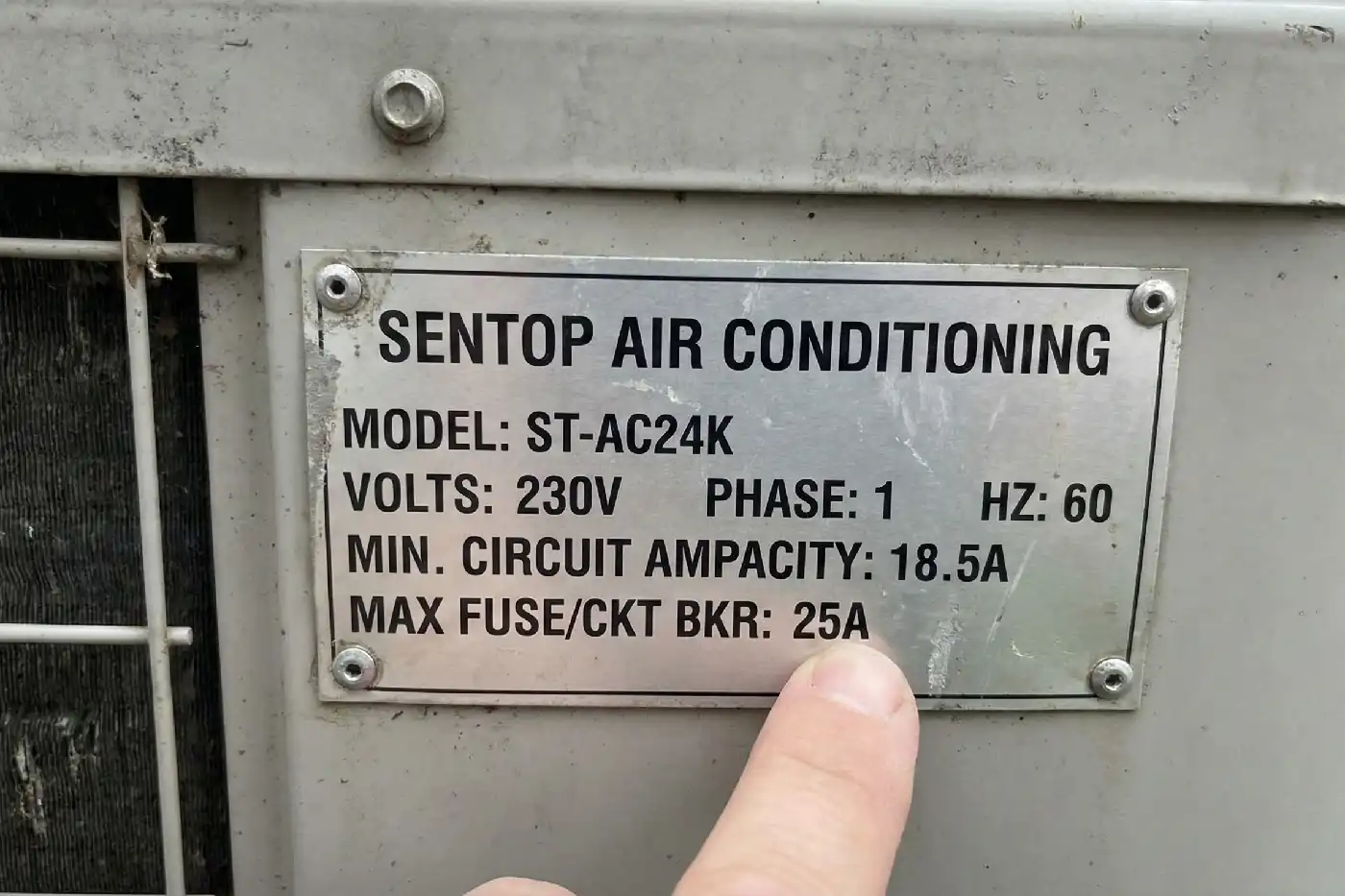
Start by finding the nameplate on your air conditioner. This tag has important details you need. Here’s how to find and read it:
- Look for the nameplate on the side or back. Sometimes, it is inside the access panel.
- Make sure the nameplate is clear and not broken. If it is hard to see, use a flashlight.
- Find the main details. You should see the maker’s name, model, serial number, voltage, current, power use, and refrigerant type.
- Focus on the numbers called “Minimum Circuit Ampacity” and “Maximum Overcurrent Protection.” These numbers show what size circuit breaker you need.
- If you can’t find the nameplate, check your owner’s manual or ask the maker for help.
Tip: The nameplate is made from strong metal or plastic. This helps it last in hot, cold, or sunny weather.
Minimum Circuit Ampacity and Maximum Overcurrent Protection
When you look at the nameplate, two numbers are most important for your circuit breaker. The Minimum Circuit Ampacity (MCA) shows the lowest current your wires must handle. Makers get the MCA by taking 1.25 times the total current from motors and heaters in your air conditioner. This keeps wires from getting too hot.
The Maximum Overcurrent Protection (MOP) shows the biggest breaker or fuse you can use. To get this, makers multiply the largest motor’s current by 2.25 and add other loads. This makes sure your circuit breaker will trip if there is a problem, like a short or overload. These numbers keep your air conditioner safe and help stop electrical fires.
What If the Nameplate Is Missing?
If you can’t find the nameplate, don’t worry. You can still find the right circuit breaker size by using the National Electrical Code (NEC). The NEC says to size the breaker at 125% of the air conditioner’s running current. This means you take the normal running amps and multiply by 1.25. This extra amount helps protect your wires and keeps your system safe.
Note: If you use a circuit breaker that does not match the nameplate or NEC, you could have problems. The breaker might not trip when needed, which can cause fires or damage your air conditioner. You might also have trouble with home inspections or insurance.
Here’s a quick look at what can happen if you don’t follow NEC rules:
| Evidence | Explanation |
|---|---|
| The breaker does not act as overload protection, which is built into the unit, only short-circuit protection. | Without the right size, your air conditioner may not have enough protection against overloads. |
| The function of the overcurrent protective device is for ground fault and short circuit only. | The breaker won’t protect against overheating, which can damage your unit. |
| Inspectors may look to listing requirements of equipment, before becoming mired in code-specific calculations or tables. | Not following the rules can cause trouble during safety inspections. |
Always try to match the circuit breaker size to the numbers on your air conditioner’s nameplate. If you can’t, use the NEC formula to stay safe and follow the rules.
Circuit Breaker Sizing Steps
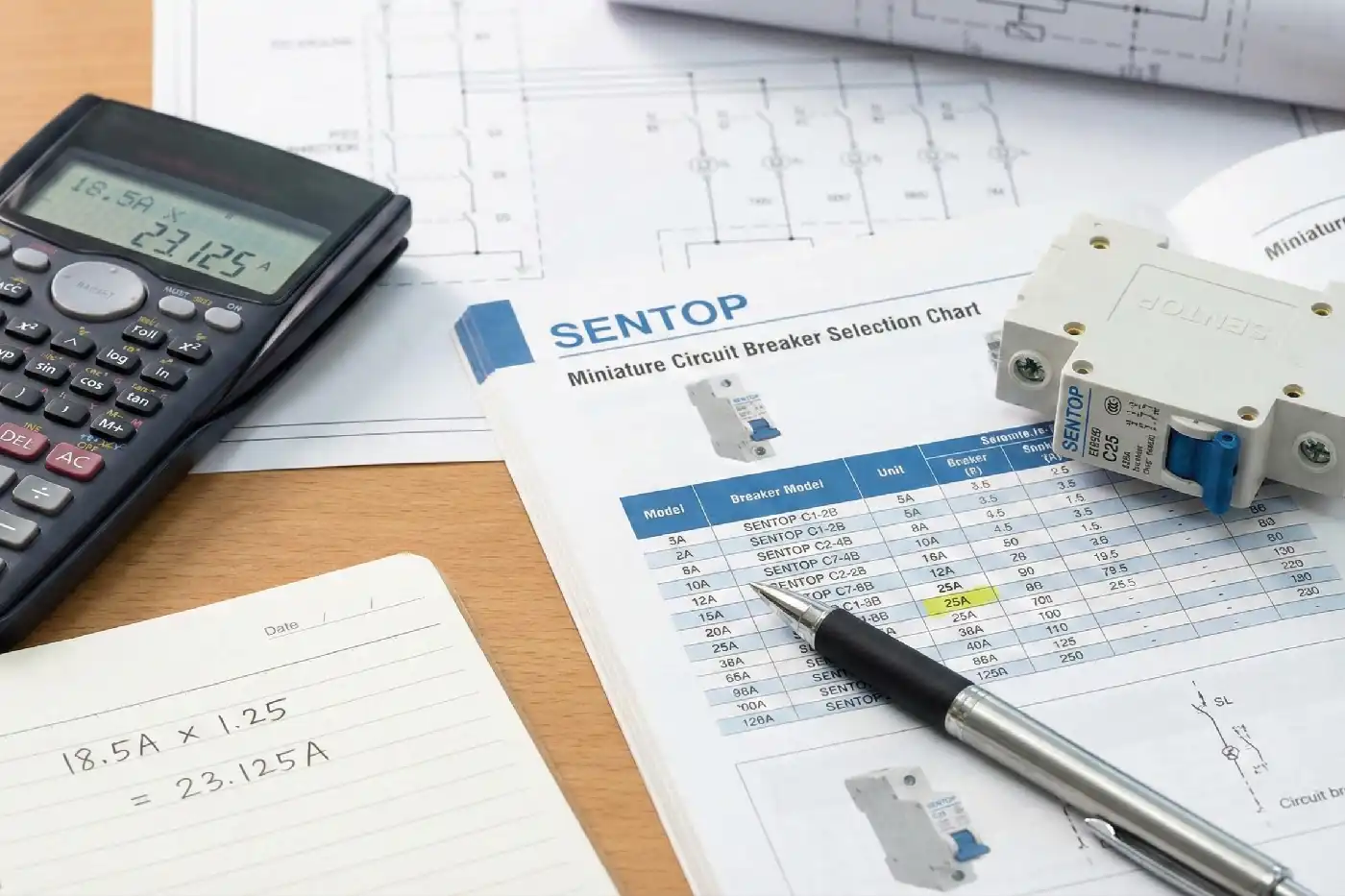
Compare Nameplate Values to Breaker Ratings
You want to make sure your air conditioner and your circuit breaker work well together. Here’s a simple way to compare the numbers you see on the nameplate with the breaker you plan to use:
- Check that the voltage on your air conditioner matches the voltage rating on your circuit breaker.
- Pick a circuit breaker size that is just above the amps listed on your air conditioner’s nameplate.
- Look for the “minimum circuit ampacity” (MCA) and “maximum fuse or breaker size” on the label.
- Always use a dedicated circuit for your air conditioner. This helps prevent overloads and keeps your system safe.
- If your air conditioner is near water, think about using a ground-fault (GFCI) breaker for extra protection.
Tip: If you follow these steps, you lower the risk of tripping breakers or damaging your air conditioner.
NEC Safety Margin Calculation
The National Electrical Code (NEC) gives you clear rules for sizing your circuit breaker. You don’t have to guess. The NEC says you should size the breaker at 125% of the air conditioner’s running current. This extra margin helps protect your wires and your equipment.
Here’s a quick example:
| Minimum Circuit Ampacity (MCA) | Minimum OCPD | Circuit Breaker Size |
|---|---|---|
| 28.2 amps | 30 amps | 30 amp circuit breaker works |
You can see that if your air conditioner needs 28.2 amps, a 30 amp circuit breaker is the right choice. The NEC also has special rules for air conditioners. For example, Article 440 covers HVAC systems and says you must use a breaker that matches the compressor’s needs. The code also says you need a disconnect switch nearby and that the breaker should handle 175% of the compressor’s current for startup, but not more than 225%.
- The NEC has special sizing rules for air conditioning equipment.
- For most home wires, a 12 AWG wire should not have a breaker bigger than 20 amps, unless the code says it’s okay.
- Article 440 adds extra rules for air conditioners, so always check this part of the code.
Note: If you’re not sure, ask a licensed electrician to double-check your work.
Dedicated Circuit Requirements
Air conditioners use a lot of power. That’s why you need a dedicated circuit for your unit. This means the circuit only serves your air conditioner and nothing else. Here’s what you should know:
- Central AC units, heat pumps, and big window units often need between 15 and 60 amps.
- These systems must have their own circuit breaker to meet electrical codes and keep your home safe.
- Most breaker sizes for these units range from 30 to 60 amps at 240 volts.
- Other big appliances, like washers and dryers, also need dedicated circuits.
- The National Electrical Code says large appliances, including refrigerators and electric ranges, must have their own circuits.
If you use a dedicated circuit, you help your air conditioner run better and avoid problems like tripped breakers or overheated wires.
Remember: Sharing a circuit with other appliances can cause overloads and even damage your air conditioner.
Common Mistakes with Circuit Breakers
Oversized Breaker Risks
If you pick a breaker that is too big, it can be dangerous. Some people think a bigger breaker is safer, but that is not true. An oversized breaker lets too much electricity go through the wires. This can make the wires get very hot and maybe even start a fire. Your air conditioner will not have the safety it needs if there is a problem.
- Too much electricity can make wires hot and hurt the covering.
- Hot wires might start a fire or melt plastic parts.
- Your air conditioner is not safe and could break or cause a fire.
Tip: Always use the breaker size your air conditioner needs. A bigger breaker does not mean more safety.
Undersized Breaker Risks
A breaker that is too small is also a problem. If your breaker keeps turning off, your air conditioner will not work well. Your house may get too warm, or the unit might stop working suddenly. These electrical problems are annoying and can be unsafe.
- Electrical problems cause about 13% of house fires each year, says the National Fire Protection Association.
- Bad wiring causes over 400 deaths in the U.S. every year.
- Local rules, like in Colorado, say you must use the right breaker size for air conditioners. If you do not follow these rules, you might have trouble with insurance or selling your house.
Note: A breaker that is too small cannot handle the power your air conditioner needs to start. You need a breaker that matches or is just above the amp rating.
Ignoring Manufacturer Guidelines
Some people do not read the instructions and guess the breaker size. This can cost you money and is not safe. Manufacturers test their air conditioners and know what breaker works best. If you do not listen to them, you might use the wrong voltage or forget a time-delay breaker.
Here is a simple checklist to help you avoid mistakes:
- Look at your unit’s amp rating and pick the right breaker.
- Make sure you use the correct voltage—some units need a 240-volt double pole breaker.
- Use a time-delay breaker for the extra power needed when starting.
If you follow the manufacturer’s rules, your air conditioner will be safer and you can avoid expensive repairs.
Why Correct Circuit Breaker Sizing Matters
Safety and Code Compliance
You might wonder why the right breaker size is such a big deal. It’s not just about following rules. It’s about keeping your home and family safe. When you use the correct breaker, you lower the risk of electrical fires and damage. Here’s what can happen if you don’t pick the right size:
- You could see severe damage to your air conditioning system.
- Oversized breakers might not trip when they should, which means wires and parts can overheat.
- Many people use breakers that are too big when replacing old ones. This creates safety problems.
- Air conditioning compressors have thermal cutouts, but these can’t always protect your system if the breaker is wrong.
- Proper installation and selection of breakers keep your electrical system safe and strong.
- Following the manufacturer’s specs helps you pass inspections and keeps your home up to code.
Tip: Always check your local electrical codes. Inspectors look for the right breaker size during home checks.
Protecting Your Air Conditioner
You want your air conditioner to last for years. The right breaker helps make that happen. When you size the breaker correctly, you stop too much current from flowing through your system. This keeps wires from getting too hot and starting a fire. If there’s a problem, the breaker trips and protects your air conditioner’s parts from electrical damage.
The breaker acts like a shield. It stands guard and cuts off power if something goes wrong. This simple device can save you from expensive repairs or even a total system failure. You also avoid the stress of sudden breakdowns on hot days.
Remember, picking the right circuit breaker is not just about comfort. It’s about safety, saving money, and making sure your air conditioner works when you need it most.
When to Call a Professional
Signs You Need Expert Help
Sometimes, you just need to call in a pro. You might feel confident with small electrical jobs, but air conditioner circuits can get tricky. Here are some signs that tell you it’s time to reach out to a licensed electrician:
- Your air conditioner or other appliances work on and off, or seem weak.
- You hear buzzing sounds from your circuit breaker panel.
- You see dark or discolored spots on the panel.
- The breaker trips again and again, even after you reset it.
- You smell something burning or notice heat around the panel.
- You spot any damage or melted spots on the panel cover.
- You just added a big appliance, like a new AC, but haven’t checked your breaker panel.
If you notice any of these, don’t wait. These problems can mean sparks, fire hazards, or bigger electrical issues. An electrician knows how to fix these safely.
Tip: If you feel unsure or see anything strange with your electrical panel, play it safe and call a pro.
Permits and Electrical Codes
You want your air conditioner to work well and stay safe. That means following local codes and getting the right permits. Here’s what you should know:
- Most window AC units don’t need a work permit unless they are very large (over three tons or 36,000 BTU/hr).
- Central air systems and duct heaters must be easy to reach for service and repairs.
- You need to keep enough space around controls and heating parts for safe adjustments.
- Local codes often require a special outlet within 25 feet of your air conditioner.
- Never connect neutral and ground wires together in subpanels after the main disconnect.
- Make sure your electrical boxes aren’t too crowded with wires or devices.
| Common Code Violation Description | Code Reference |
|---|---|
| At least one 15 or 20 amp, 125 volt outlet must be within 25 feet of an air conditioner. | [210.63] |
| Neutral to ground connection is not allowed downstream of the service disconnect. | [250.24(A)(5)] |
| Box fill: Count each hot and neutral (except pigtails) as one conductor; devices count as two. | [314.16] |
Note: Codes can change from city to city. Always check with your local building department or ask your electrician about permits before you start.
Picking the right circuit breaker helps keep your home safe. It also helps your air conditioner work well. You should always use the breaker size shown on your air conditioner. Make sure to follow NEC rules, like the ones in this table:
| NEC Article | Description |
|---|---|
| 240 | Rules for stopping too much current |
| 430 | Rules for protecting motor circuits |
| 110 | Basic rules for setting things up |
- Give your air conditioner its own circuit and check wires.
- Call a licensed expert if you are not sure what to do.
- Get the right permits and follow local rules to stay out of trouble.
Stay safe—your comfort and feeling calm are very important!
FAQ
How do I know if my air conditioner needs a dedicated circuit breaker?
You should check your air conditioner’s nameplate. If it uses more than seven amps, you need a dedicated breaker. Most central AC units and large window units require their own circuit.
Can I use a bigger breaker than the manufacturer recommends?
No, you shouldn’t use a bigger breaker. Oversized breakers can let too much current flow, which may cause wires to overheat and start a fire. Always follow the manufacturer’s instructions.
What happens if my breaker keeps tripping?
If your breaker trips often, your air conditioner may draw too much power or have a wiring problem. You should call a licensed electrician to check for safety issues.
Do I need a permit to install a new air conditioner circuit?
Yes, you usually need a permit for new AC circuits. Local codes require permits to make sure your installation is safe and meets all rules. Ask your city or a professional for help.
Where can I find the minimum circuit ampacity on my air conditioner?
You can find the minimum circuit ampacity on the nameplate. Look for a metal or plastic tag on the side, back, or inside the access panel. This number helps you pick the right breaker.
See also
Analysis of the cause of air conditioning circuit breaker tripping
Why Inductive Loads Need Dedicated Circuits but Air Fryers Don’t
Most Common Appliances Requiring a 40 Amp Breaker
Minimum Order Requirements for Custom Circuit Breakers
How to calculate the wire size for circuit breakers with different currents